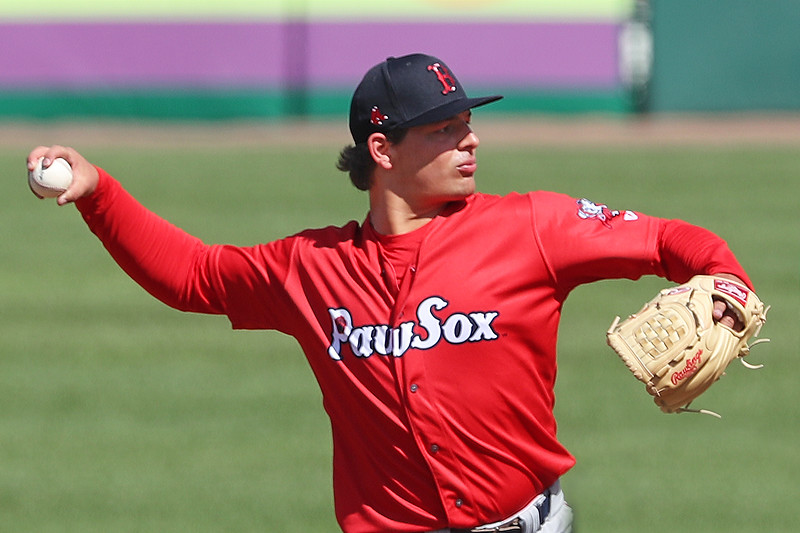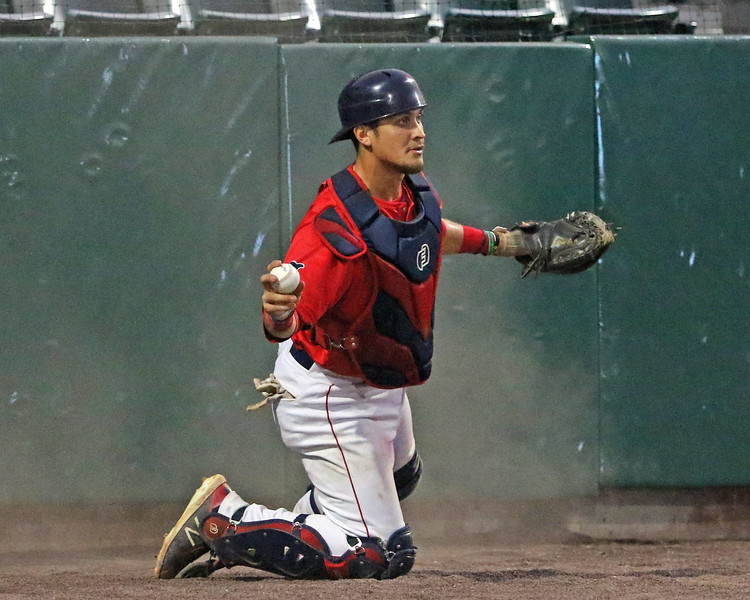
Prep shortstops Brady House, Jordan Lawlar linked to Red Sox in MLB Pipeline’s latest 2021 mock draft

In his latest mock draft for MLB Pipeline, MLB.com’s Jonathan Mayo has the Red Sox selecting Eastlake High School (Calif.) shortstop Marcelo Mayer with the fourth overall pick in this summer’s draft come July 11.

That much is not surprising given the fact that Mayer has previously been linked to the Red Sox.

What is surprising, though, is that Mayo links the Red Sox to two other prep shortstops in Jordan Lawlar, who he has going to the Rangers at No. 2 (in between Vanderbilt’s Jack Leiter and Kumar Rocker), and Brady House, who he has going to the Orioles at No. 5.

On Lawlar, Mayo writes “the Red Sox would love one of those top three to be here, particularly Leiter or Lawlar, which could easily happen if Mayer goes above.”

Lawlar, who turns 19 in July, is currently regarded by Baseball America as the third-ranked prospect in this year’s draft class, which is tops among high schoolers and all position players.

The 6-foot-2, 185 pound shortstop throws with his right hand, hits from the right side of the plate, and is committed to play college baseball at Vanderbilt University.

Through 28 games played for Dallas Jesuit High School this spring, Lawlar — a Texas native — is slashing a gaudy .425/.552/.713 with four home runs and 31 RBI over 105 plate appearances.

As a Dallas-area native, Lawlar has drawn comparisons to Royals top prospect Bobby Witt Jr., who the club selected with the No. 2 overall pick in the 2019 draft.

Per his MLB Pipeline scouting report, Lawlar is “a legitimate candidate” to go the Pirates at No. 1 if it’s not Leiter or Rocker.

“Lawlar is a more polished hitter than Witt was at the same stage with a quick, compact right-handed swing and a mature, patient approach, though he has struck out more than expected as a senior,” his scouting report reads. “He focuses on working the gaps and has a knack for inside-outing balls to right field. With his bat speed and the projectable strength in his 6-foot-2 frame, he should develop solid power once he adds strength and starts turning on more pitches.

“Lawlar’s plus speed plays well on the bases and in the field, and he’ll even clock some well-above-average run times on occasion. The Vanderbilt recruit is a no-doubt shortstop with plenty of range, quick hands and a strong arm, though like most youngsters he needs to improve his defensive consistency. There isn’t much to quibble with his game, though teams with age-based models won’t like that he’ll turn 19 a week after the Draft.”

Turning to House now, Mayo writes that the shortstop he projects to go to Baltimore at No. 5 “had entered last summer as the front-runner top pick, had an up-and-down showing, but righted the ship this spring, with his name starting to pop up at least as high as right above this pick.”

House, who turns 18 in June, is at the moment regarded by Baseball America as the No. 12 draft-eligible prospect in this year’s class, which ranks fourth among high schoolers behind Lawlar, Mayer, and IMG Academy (Fla.) outfielder James Wood.

Like Lawlar, House — listed at 6-foot-3 and 215 pounds — throws with his right hand and bats from the right side of the plate. The Georgia native is committed to play college baseball for the Tennessee Volunteers.

Currently wrapping up his senior year at Winder-Barrow High School in Winder, Ga., the young shortstop is slashing .573/.685/1.012 to go along with eight home runs and 19 RBI over 27 games played for the Bulldoggs, per MaxPreps.

According to his Baseball America scouting report, House “has an exciting combination of a high-level track record and a gaudy toolset to go along with it. The offensive tools are the loudest with House. He has terrific bat speed and natural strength, to go along with an advanced approach that allows him to track velocity and offspeed stuff with consistency. Scouts with history on House believe he has the ability to develop into a plus hitter, and his raw power should develop into 70-grade juice as he continues to develop. He’s already a physical and imposing hitter now, with plenty of impact to all fields and plus raw power, but there’s more to be had in the future.

“Defensively, House has easy plus arm strength — he can reach 96 mph on the mound — that could be an asset on the infield, where he has a good chance to stick. He doesn’t look like a typical pro shortstop, but evaluators have been impressed with his hands, reactions, internal clock and body control. Some believe he would be a better fit at third base, where he has all the tools to turn into an above-average defender.”

Because they own the fourth overall pick in this year’s draft, the Red Sox will have approximately $6.664 million in recommended slot value to spend on said pick.

Last year, in Chaim Bloom’s first draft as Red Sox chief baseball officer, Boston took Nick Yorke — another prep infielder out of California — with their top pick at No. 17 overall.

Between Yorke, Triston Casas, Jeter Downs, Brainer Bonaci, Hudson Potts, Blaze Jordan, etc., you could say that the Sox’ farm system is chockfull of infielders. So why would they draft another infielder so early to add to that crowded mix?

To put it simply, the Red Sox will not be drafting for need by the time they are on the clock in less than three months. They will instead be going after the best player available regardless of position. Whether that be a pitcher, catcher, infielder, or outfielder has yet to be determined.

Again, the draft is still three months away, so who the Sox will be taking at No. 4 really hasn’t come into focus yet.

As Mayo put it, the names linked to the Red Sox thus far are names “that make some sense and are feasible” for the club to draft. That’s it.

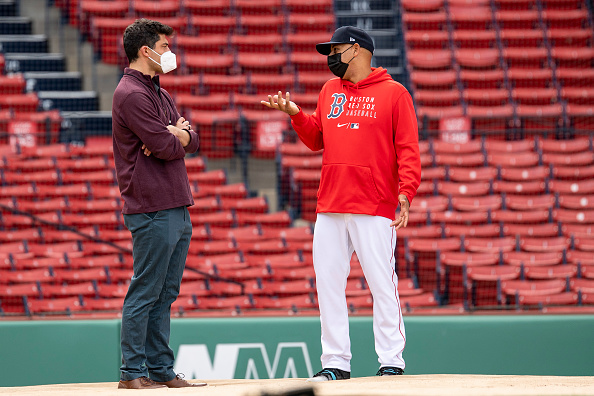
(Picture of Chaim Bloom and Alex Cora: Billie Weiss/Boston Red Sox/Getty Images)
Could Red Sox take overpowering pitching prospect Kumar Rocker with No. 4 pick in 2021 MLB Draft?

It wasn’t too long ago that it seemed like the Red Sox landing Kumar Rocker with the fourth overall pick in this summer’s draft was a pipe dream at best.

The Vanderbilt University right-hander came into the 2021 season regarded by many as the consensus top amateur prospect ahead of the July draft and was projected to go to the Pirates at No. 1 overall.

Since Vanderbilt’s season began in late February, Rocker has seen his stock fall to some degree, while his fellow rotation mate, Jack Leiter, has seen his stock rise.

Rocker, a 21-year-old junior, has posted a 1.64 ERA and a 0.80 WHIP to go along with 81 strikeouts and 15 walks through his first nine starts and 55 innings pitched this year.

Leiter, meanwhile, turned 21 on Wednesday and is a draft-eligible sophomore. The son and nephew of former big-leaguers, Leiter has produced a miniscule 0.98 ERA and 0.70 WHIP while striking out 94 and walking 22 over nine starts and 55 1/3 innings of work. He threw a no-hitter against South Carolina on March 20.

The pair of Commodores are undoubtedly the top amateur pitching prospects in the country, but the two hurlers have seen their draft projections shift in recent weeks.

On Tuesday, MLB Pipeline’s Jim Callis and Jonathan Mayo ran through a 20-pick mock draft on the latest installment of the Pipeline Podcast, and the two will publish a list of their top 150 draft prospects later this week.

Alternating between picks, Callis had the Pirates taking Leiter with the top overall pick, writing, “It feels like a four-man race to go No. 1 right now, but give me the guy who’s dominating the Southeastern Conference and can pitch off his fastball like few can.”

After high school shortstops Jordan Lawlar and Marcelo Mayer were taken off the board by the Rangers and Tigers at picks Nos. 2 and 3, it was Mayo’s turn to pick for the Red Sox at No. 4. He went with Rocker.

“No way I was going to let Rocker go further than this,” Mayo wrote while explaining his pick, “not with that ridiculous fastball-slider combination that comes from his intimidating 6-foot-5 frame.”

Per his MLB Pipeline scouting report, Rocker “is a physical right-hander who can overpower hitters with his fastball and slider. He usually operates at 93-96 mph with his heater, which can reach 99 and features some run and sink but also can get flat at times. He notched all 19 of his whiffs in his no-hitter with his slider, a mid-80s beast with power and depth that grades as plus-plus at its best. 

“Rocker hasn’t used his changeup much, and while his third offering has average potential and some sink, it gets too firm at times. He throws strikes but has just average command, and he’ll need more finesse for days when he doesn’t have his top-notch stuff. He has the makings of a frontline starter but isn’t a finished product and scouts would like to see him dominate more consistently this spring.”

Because the Red Sox will be picking so early in this year’s draft, the club has been able to hone in on a select group of prospects they may be interested in drafting “and scout those players really, really hard,” as amateur scouting director Paul Toboni told The Boston Globe’s Alex Speier in March.

Rocker and Leiter are surely two of the players the Sox have been monitoring closely this spring, and area scout Danny Watkins — who covers Alabama, Mississippi, and Tennessee for the team — recently provided some insight into what makes each of them so intriguing.

“Both of those guys are phenomenal talents,” Watkins explained last month on Podding the Red Sox: A BloggingtheRedSox.com Podcast. “[They] have many differences, but they’re so similar in some ways as well. We’re sitting there at No. 4 in this year’s draft and the thought of having one of them available at 4 is pretty nice.”

At the moment, the Red Sox taking either one of Rocker or Leiter at No. 4 would be pretty nice. But, as MassLive.com’s Christopher Smith notes, the 2021 Draft is not slated to begin until July 11, so there is still plenty of time for rankings and projections to change between now and then.

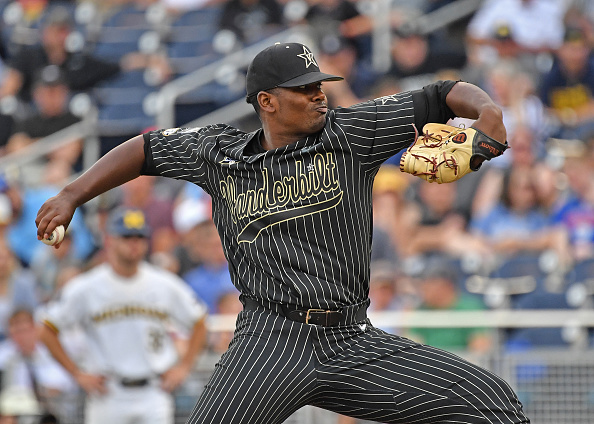
(Picture of Kumar Rocker: Peter Aiken/Getty Images)

Could Red Sox take enticing catching prospect Henry Davis with No. 4 pick in 2021 MLB Draft?

The 2021 MLB first-year player draft is set to begin in just under three months. In case you haven’t heard, the Red Sox will be making their top selection in the draft with the fourth overall pick after finishing with the fourth-worst record in baseball last season.

In his latest 2021 draft prospect rankings, The Athletic’s Keith Law listed University of Louisville catcher Henry Davis as his No. 4 draft-eligible prospect.

“Davis has mashed all year, with huge power and a patient eye, and he’s got a plus arm and enough receiving skills to stay behind the plate,” Law wrote earlier Thursday. “Joey Bart went second overall with less bat and more glove; I don’t think it’s a stretch to think Davis could be the first college position player taken.”

Davis, 21, is listed at 6-foot-2 and 210 pounds. Through the Cardinals’ first 30 games of the season, the third-year sophomore is slashing an impressive .389/.514/.676 with eight home runs, 32 RBI, and an ACC-leading nine stolen bases. He has also thrown out 11 of the 20 baserunners who have attempted to steal against him.

In the history of the first-year player draft — which dates back to 1965 — the Red Sox have taken a catcher in the first round on just four separate occasions, most recently selecting Blake Swihart out of Cleveland High School (Rio Rancho, NM) with the 26th overall pick (compensation pick from the Rangers for Adrian Beltre) in 2011.

The last catcher who played his college baseball at Louisville to be selected in the first round of an amateur draft was the Dodgers’ Will Smith, whom Los Angeles took with the 32nd overall pick in 2016.

Since then, Smith has risen through the prospect ranks and has emerged as one of the top young catchers in the National League, if not all of baseball.

Coming into play on Thursday, the 26-year-old is slashing .261/.438/.652 with two home runs and four RBI through his first eight games of the 2021 campaign.

This is not to say that Davis should be compared to Smith at the moment. Both backstops may be right-handed hitters who attended the same school, but one is already establishing himself as an everyday big-leaguer while the other has yet to go pro.

That said, it is worth mentioning that the last University of Louisville catcher to be selected in the first round of the draft turned out to be someone with plenty of potential in the form of Smith.

As for how Davis — a native of Bedford, N.Y. who played for the Cape League’s Bourne Braves in 2019 — is viewed in the eyes of scouts, his MLB Pipeline scouting report goes as follows:

“Davis’ standout tool is his plus-plus arm strength, and he erased 34 percent of basestealers in his first two college seasons while also displaying quick footwork and good throwing accuracy. His receiving still needs a lot of work because it lacks consistency and he sometimes struggles to handle quality stuff, as evidenced by six passed balls in just 13 starts last spring. Though he has below-average speed and conceivably could try an outfield corner, his value comes from staying behind the plate, so he’ll have to improve. 

“While he doesn’t have a pretty right-handed swing, Davis makes it work at the plate and has a higher offensive ceiling than most catchers. He manages the strike zone well and makes repeated hard contact, even if his stroke lengthens and he gets a bit pull-happy at times. His strength and controlled aggression could produce 20 homers per season.”

Whoever the Red Sox take — whether it be Davis, Marcelo Mayer, Jack Leiter, or someone else — with their top selection in this summer’s draft, chief baseball officer Chaim Bloom, amateur scouting director Paul Toboni and Co. will have approximately $6.64 million in recommended slot value to spend on the No. 4 pick.

On a somewhat related note, The Baseball Prospect Journal’s Dan Zielinski III wrote back in January that during the offseason, Davis caught bullpens for Red Sox relievers Matt Barnes and Adam Ottavino.

(Picture of Henry Davis: Louisville Athletics)

Could Red Sox take exciting shortstop prospect Marcelo Mayer with No. 4 pick in 2021 MLB Draft?

The 2021 MLB Draft is still over three months away, but with the college and high school baseball seasons in full swing across the country, some prospects are beginning to separate themselves from the rest of the pack.

The Red Sox will be making their top selection in this year’s draft with the fourth overall pick, marking the first time since 1967 that the club has made its first pick that early in a draft.

Because they will make their first selection so early on in the draft process this summer, the Sox will surely have their pick of prospects to choose from outside of the players who will be taken by the Pirates, Rangers, and Tigers at picks 1, 2, and 3.

“Right now, at this point in the process, we would be scouting everyone just as hard as we possibly could,” Red Sox area scout Danny Watkins explained last month on Podding the Red Sox: A BloggingtheRedSox.com Podcast.

Earlier this week, MLB.com’s Jim Callis wrote that “it’s very possible that” Vanderbilt’s Kumar Rocker and Jack Leiter and Dallas Jesuit High School shortstop Jordan Lawler could be the first three players off the board in July.

That would lead up to the Sox making their first pick at No. 4, and the best player available in this scenario would be none other than Eastlake High School (Calif.) shortstop Marcelo Mayer.

In their most recent top-300 draft rankings, Baseball America had Mayer listed as their fourth-ranked draft-eligible prospect behind only Rocker, Leiter, and Lawler.

“Mayer started getting attention from scouts at Eastlake as a freshman, where he showed a smooth left-handed stick at the plate and advanced defensive actions up the middle,” BA’s Carlos Collazo wrote of the 18-year-old infielder. “Mayer is arguably the top defensive shortstop in a class that is deep at the position. He glides around the infield dirt with silky smooth actions and has the hands, footwork and arm strength to stick at the position long term. He always seems to slow the game down, and has no problem throwing from multiple angles with an accurate arm.

“Mayer also has upside offensively,” Collazo added. “He has fringe-average power now, but evaluators believe he could tap into above-average power down the line and he controls the zone well with a swing that’s leveraged for fly balls.”

Mayer, who does not turn 19 until December, is listed at 6-foot-3 and 185 pounds. As of April 7, the Southern California commit was slashing .381/.600/.761 with two home runs, 11 RBI, and six stolen bases through his first eight games of the year for Eastlake, per MaxPreps.

As their fourth-ranked draft prospect, Baseball America also had Mayer going to the Red Sox at No. 4 in their most recent mock draft from March 29.

“It seems like Mayer is the clear No. 4 after the top trio of players on the board,” Collazo wrote of the California native. “Whether he is in the mix of the top tier or just on the cusp of joining that top tier is still to be determined. Some scouts believe he has a chance to be the best pure hitter in the draft — college or high school — and with an impressive glove at a premium position, that gives him a two-way toolset that shouldn’t last long on the board.”

Collazo added that “at the moment, it seems like the ‘place to pick’ in this year’s draft class is either No. 3 or 4.”

Last year, in Chaim Bloom’s first draft as Red Sox chief baseball officer, Boston had to wait until pick No. 17 to make their first pick. This year, that wait will be a lot shorter.

“You don’t have control over who’s picked ahead of you at 17,” Red Sox amateur scouting director Paul Toboni told The Boston Globe’s Alex Speier last month. “You’ve got to cover a wider pool of players. This year, we get to make the decision: Let’s figure out who is in our top five, six, seven, eight — whatever number you want to throw out — and scout those players really, really hard.”

The Sox will have more of a chance to get a look at Mayer — as well as the other top high school talent expected to comprise this year’s draft class — at the first-ever MLB Draft Combine, which is slated to take place in Cary, N.C. from June 20 through June 28.

Per Collazo, the combine will feature “the top 88 high school players eligible for the 2021 draft,” all of whom will partake in an eight-game tournament as well as a “pro-style workout.”

Also, for what it’s worth, the recommended slot value assigned to the fourth overall pick in this year’s draft is approximately $6.64 million.

(Picture of Marcelo Mayer: Bodie De Silva, SBLive)

Ranking the top 37 prospects in the Red Sox farm system heading into the 2021 season

The Red Sox are heading into the 2021 season with the 20th-ranked farm system in baseball according to Baseball America. That’s the same ranking they received going into the 2020 campaign as well.

Despite finishing with the fourth-worst record in baseball last year at 24-36, the 2020 season did net some positives for the Sox in terms of producing new, young, and controllable talent.

Just in terms of prospects, Boston acquired the likes of right-hander Connor Seabold from the Phillies, right-hander Jacob Wallace from the Rockies, and infielder Hudson Potts and outfielder Jeisson Rosario from the Padres.

They also drafted infielders Nick Yorke and Blaze Jordan and righties Shane Drohan and Jeremy Wu-Yelland with their four picks in last year’s amateur draft.

From the time the 2021 season ended until now, the Sox have added the likes of catcher Ronaldo Hernandez, infielders Christian Koss and Nick Sogard, right-handers Garrett Whitlock, Frank German, Josh Winckowski, and Zach Bryant.

To put it simply, Red Sox chief baseball officer Chaim Bloom has not only addressed his club’s depth at the major-league level; he’s done it on the minor-league side of things as well.

Taking that point into consideration, it would not be too shocking to see Boston rise through the farm system rankings this year, especially with someone like Yorke getting to play in actual, organized minor-league games at some point.

Having written all that, I would like to present to you who the experts believe are the top prospects in the Red Sox organization at the moment.

To compile this list of Boston’s brightest and youngest talent, I took prospect lists from four baseball or Red Sox-centered publications — Baseball America, SoxProspects.com, FanGraphs, MLB Pipeline — and took the averages of where each of these sites had particular prospects ranked.

For example, Triston Casas was regarded as the Sox’ top prospect by three sites, but the other had him as their No. 2 prospect in the system.

With those numbers in mind, I added 1+1+1+2 to get 5, then divided that number by the total number of sources (4) to get Casas’ average ranking: 1.25, which rounds down to 1.

I hope that makes sense, because here are the top 37 prospects in the Red Sox farm system based off that math heading into the 2021 season.

ProspectBaseball AmericaSoxProspectsFanGraphsMLB PipelineAverage Rank
Triston Casas11211
Jeter Downs22122
Bryan Mata43353
Jarren Duran54744
Bobby Dalbec36935
Gilberto Jimenez75466
Tanner Houck87677
Jay Groome6121288
Thaddeus Ward10813109
Noah Song121151410
Connor Seabold11981511
Nick Yorke91315912
Ronaldo HernandezN/A14N/A1213
Brainer Bonaci1815171614
Aldo Ramirez2210142015
Blaze Jordan1620211116
Matthew Lugo1417281317
Brayan Bello1923111918
Connor Wong1522191719
Jeisson Rosario2016162220
Hudson Potts2418182421
Eduard Bazardo2827102822
Chris Murphy1319431823
Jonathan Arauz2126N/AN/A24
Nick Decker2921242325
Jacob Wallace2524262926
Frank GermanN/A2825N/A27
Garrett Whitlock 1732303028
Chih-Jung Liu2334332129
Durbin FeltmanN/A3031N/A30
Cameron CannonN/A43232631
Ryan ZeferjahnN/A2538N/A32
Jorge RodriguezN/A2934N/A33
Juan ChaconN/A52222534
A.J. Politi2749372735
Ceddanne Rafaela2645N/AN/A36
Jeremy Wu-Yelland30N/A47N/A37
*The N/A you see next to some of these names means that that particular prospect was not included on a specific site’s list.

All in all, it’s not too shocking to see Casas, Jeter Downs, Bryan Mata, Jarren Duran, and Bobby Dalbec come in as the Red Sox’ top five prospects, though Dalbec is surely going to graduate from his prospect status this year.

The same can be said about right-hander Tanner Houck, who comes in at No. 7 on this list.

Other names worth mentioning include outfielder Gilberto Jimenez (No. 6), right-hander Noah Song (No. 10), infielder Brainer Bonaci (No. 14), catcher Connor Wong (No. 19), right-hander Eduard Bazardo (No. 22), right-hander Chih-Jung Liu (No. 29), and outfielder Juan Chacon (No. 34).

One notable snub on here would be 17-year-old outfielder Miguel Bleis, who the Red Sox recently signed out of the Dominican Republic for $1.5 million back in January.

Because I made this list myself, I cannot say with certainty that it is perfect. But, I enjoyed compiling the information to create it, and I hope it can serve as some use to those who find this sort of thing interesting.

(Picture of Jarren Duran: Billie Weiss/Boston Red Sox/Getty Images)
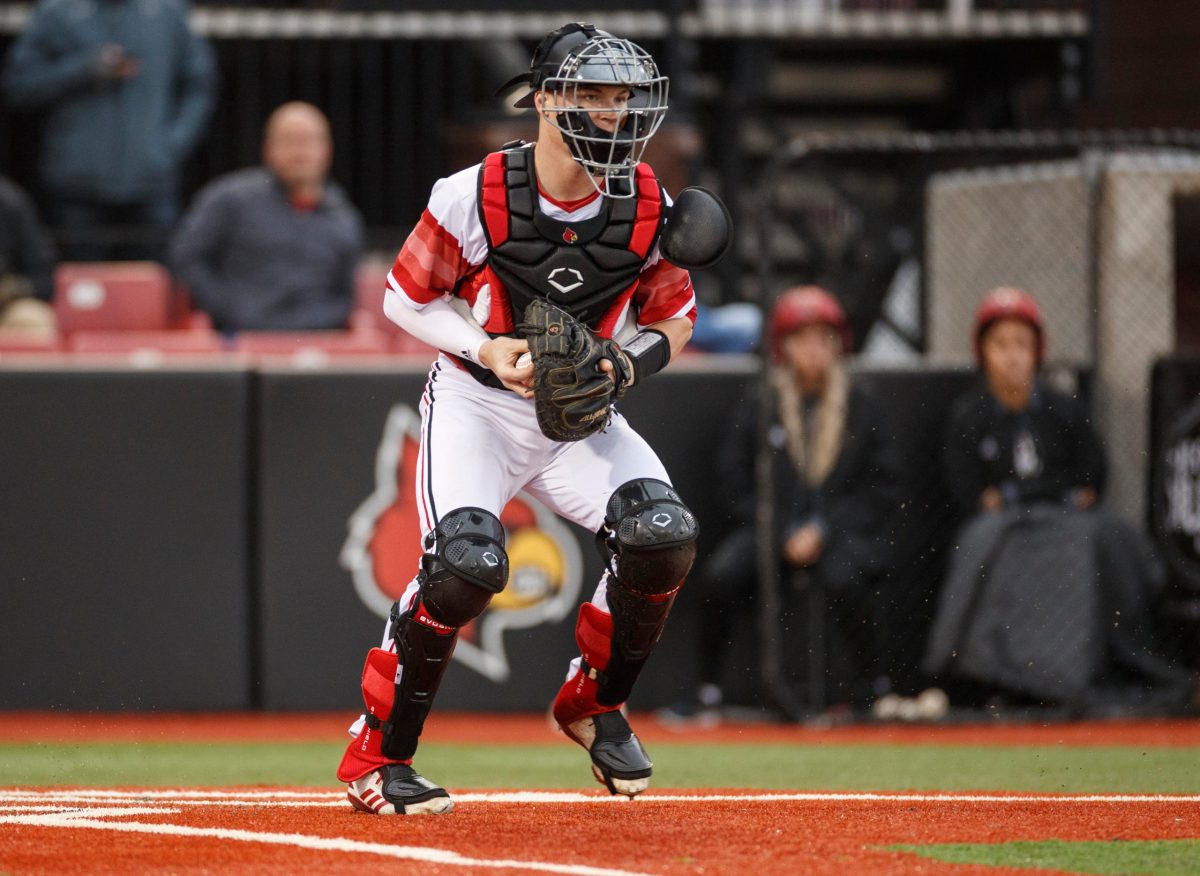
Potential Red Sox draft target, University of Florida outfielder Jud Fabian a name to watch as college baseball season kicks off Friday

The 2021 college baseball season begins on Friday, and with the Red Sox making their top selection in this July’s amateur draft with the fourth overall pick, this season could stand out significantly.

Several draft-eligible prospects have been linked to the Sox already, but sticking with the college baseball theme here, one name to watch in particular this spring is University of Florida outfielder Jud Fabian.

Back in December, MLB.com’s Jim Callis had Boston selecting the 20-year-old with their top pick in the upcoming draft, writing that “Fabian might be the most polarizing prospect among the eight players who seem to have separated themselves from the rest of the Draft class at this point. He could have the most usable power in the Draft and may stay in center field, but he also has hit just .250 with a 22-percent strikeout rate in two seasons at Florida.”

Fabian, who turns 21 in September, is rather young for a junior on account of the fact he enrolled early at Florida and skipped his senior year of high school.

In his first two seasons as Gator, the right-handed hitting, left-handed throwing outfielder has slashed .250/.368/.466 with 12 home runs and 39 RBI over 73 total games played while primarily patrolling center field.

He did carry with him an OPS of 1.010 through his first 17 games of the 2020 campaign before the ongoing COVID-19 pandemic forced the SEC to cancel its college baseball season last March.

According to his FanGraphs scouting report, Fabian “has a rare, unfavorable ‘backwards’ profile — he hits right and throws left, limiting him to 1B/OF — but looks like he’ll hit enough for that not to matter. While his lower half has gotten a little heavier and softer since high school, Fabian still has a fairly athletic swing, and his hitting hands work in an explosive loop that give him low-ball power. His hands load deep and high, and Fabian’s bat path doesn’t always look like it’s going to work, but he still covers the zone from (nearly) top to bottom and can pull his hands in to get the barrel on inside pitches.”

Listed at 6-foot and 190 lbs., the Ocala, Fla. native already has at least one connection to the Red Sox since he was teammates with outfield prospect Wil Dalton for a year in Gainesville.

In a recent appearance on Podding the Red Sox: A BloggingtheRedSox.com Podcast, Dalton, Boston’s eighth-round draft selection in 2019, raved about Fabian and what he can bring to the table at the next level.

“Jud came in my junior year. He was an early grad out of high school, so he enrolled early and skipped his senior year of high school,” Dalton said in January. “Coming in, we were like, ‘Okay, the kid’s obviously going to be good, coming to the University of Florida, but you’re also coming early.’ So, we knew the kid could play.

“But I’ll say this, not only is he doing what I figured he would do now, he worked for every ounce of it,” added Dalton. “And that’s why I have so much respect for him. The dude truly is one of the hardest workers I’ve ever seen. He believes in himself, he’s very confident in his abilities, and it shows when he plays. Everything that he does is a straight reward for all the hard work he puts in, and he deserves every bit of it and it’s been great to see that. Anybody that gets to draft him this year is getting one hell of a player. I wouldn’t mind seeing the Red Sox pick him up, at all. In all honesty, it would be a great pick. Kid comes from a great family, a great work ethic. Most of all, he’s a great overall person to represent an organization.”

When asked if Fabian could surpass Vanderbilt University right-hander Kumar Rocker — the consensus top prospect in this year’s draft class — this spring and become the No. 1 pick in July, Dalton did not mince his words.

“I have no doubt in that,” he said. “I mean, he’s got the ability to do it. I’ve seen the kid hit baseballs farther than somebody his size ever should hit a baseball.”

Fabian’s Florida Gators, the top team in the country, open their season against Red Sox manager Alex Cora’s 21st-ranked Miami Hurricanes in Gainesville on Friday evening.

First pitch is scheduled for 5 p.m. eastern time and you can watch the game on the SEC Network.

(Picture of Jud Fabian: Gary McCullough/AP)

New Podding the Red Sox episode: Red Sox minor-league coach Chris Hess joins the show

On this week’s installment of Podding the Red Sox: A BloggingtheRedSox.com Podcast, I am joined by one of the Red Sox’ newest minor-league coaches in Chris Hess.

Among the topics Hess and I discussed were his college career at the University of Rhode Island, how he found out he got drafted in 2017, his professional career with the Yankees, what led him to join the Red Sox as a minor-league coach, what it will be like to work with Bianca Smith, and much more.

The episode is available to listen to on iTunes and Spotify, among other platforms.

Thanks to Chris for taking some time out of his Thursday night to have a conversation with me. You can check out his 401 Elite Baseball Training program by clicking here.

Thank you for listening and we will see you next time! Please make sure to subscribe and leave a five-star review if you can!

(Picture of Chris Hess: Rhody Rampage)

In Jeter Downs and Nick Yorke, Red Sox have two of the top middle infield prospects in baseball

At this time last year, infielders Jeter Downs and Nick Yorke were not yet members of the Red Sox organization.

Downs, now 22, was preparing for what was supposed to be his fourth (third full) season as a pro, while Yorke, now 18, was preparing for his senior season at Archbishop Mitty High School in San Jose, Calif.

Neither Downs’ nor Yorke’s 2020 went the way they likely expected, with the former getting dealt from the Dodgers to the Sox in February and the latter having his senior season halted due to the ongoing COVID-19 pandemic.

Emerging as the top prospect in Boston’s farm system in wake of the trade that sent Mookie Betts to Los Angeles, Downs, who was born in Colombia, was at least able to salvage his minor-league season-less 2020 thanks to being included in the Sox’ 60-man player pool.

Yorke, meanwhile, was also able to salvage his year after somewhat surprisingly going 17th overall to the Red Sox in the 2020 first-year player draft. He was later added to the club’s 60-man player pool in mid-September.

Both players were able to spend time at the Sox’ alternate training site in Pawtucket over the summer to further their development, though Downs understandably got there a whole lot earlier than Yorke did.

Here’s what former PawSox and current Worcester Red Sox manager Billy McMillon had to say about each young infielder when speaking to reporters in early October, courtesy of MassLive.com’s Chris Cotillo.

On Downs: “Jeter’s kind of interesting. We were introduced to him in Spring Training 1. We could see glimpses of defense and offense. I would say he did better offensively in the first spring training. I think people were thinking about him potentially being a second baseman, everyday, for the Red Sox. I think the strides he made defensively are going to sway some of those questions people had.

“He made tremendous strides defensively. There are some things he needs to work on, like his makeup and his confidence and things like that. I think those issues affected how he did offensively. As far as Jeter, I see tremendous upside. His track record of offensive performance indicates that at 7:05, when the lights are on, he shows up at the plate. I’m hopeful his track record offensively meshes well with the strides he made defensively. If that happens, I think you’ve got a pretty good player. I don’t want to give a comp or anything, but I think he would more than hold his own based on what he did defensively and how much better and more consistent he got.

“I think he would be a better second baseman long-term, but I do believe he could play shortstop. He made some plays that were just unbelievable at shortstop. I personally would see him a better fit at second base if we were talking about 162 games. I think his athleticism, his skills, would be a little better at second base. But he’s still young. I don’t want it to seem like he can’t play shortstop. I think he could do a fine job over there. In my eyes, I see second base when I see him.”

On Yorke: “His first professional at-bat, he gets a single off Bryan Mata. Worked the count full, hit a line drive to right field like it was nothng. That was really, really refreshing, just to see… I’m not saying he should have been intimidated or whatever, but he went up there, playing high school not too long ago, and just worked the count full and went the other way. There’s an approach there.

“One of the things I tried to tell him was, ‘Hey, look. There are going to be some professional guys around here who have approaches, who have work. You have to figure out who you are and don’t try to match what you see other guys do. Just be yourself.’ He kind of took that to heart. Really impressive with his at-bats. Limited action at second base but I watched some of the early work with (coach Bruce Crabbe) and he has got some good actions out there. His body is kind of stocky but he’s not big and he moves well. You can see why he was a high-round pick. He blended in well. He was joking with the guys, he was interacting. If somebody walked into the clubhouse or onto the bench, they wouldn’t have known that this guy was drafted in 2020. They would have thought he was one of the guys. That’s a testament to the scouts who saw something there. There’s a lot to like in a very small sample.”

Because he got to the alternate training site in July as opposed to later in the summer, Downs was not included in the Red Sox’ fall instructional league roster down in Fort Myers

Yorke, however, was, and that gave the right-handed hitter even more of an opportunity to shine in front of Red Sox coaches and scouts alike.

Per SoxProspects.com’s director of scouting Ian Cundall, Yorke “was the most impressive member of the 2020 draft/NDFA class, showing off his offensive ability, but questions about his long-term defensive profile remain an issue. Yorke got off to a strong start at the plate, but as the camp went along, he struggled to pull the ball and seemed to be just trying to push the ball to right field. Regardless of his struggles near the end of camp, scouts were consistent in saying they believe he can hit and they are high on his bat, enough so that even with a questionable defensive profile and below average speed, they still like him.”

After the Red Sox took him off the board with their top pick in the 2020 draft, Yorke ultimately signed with the club for $2.7 million last July. He is currently regarded by MLB Pipeline as Boston’s No. 11 prospect.

Downs, meanwhile, is regarded by MLB Pipeline as the Sox’ No. 1 prospect with a slight advantage over Triston Casas.

Recently, MLB Pipeline released lists for their top-10 prospects at each position, and Downs — listed as a shortstop — and Yorke — listed as a second baseman, both made their respective lists, coming in at No. 8 and No. 10, respectively.

Regarding Downs’ ranking, MLB.com’s Jonathan Mayo did not have any ‘top tools’ or ‘superlatives’ to give the 5-foot-11, 195 lb. infielder. He simply listed him as his eighth-best shortstop prospect.

Regarding Yorke’s ranking, MLB.com’s Jim Callis writes that the 6-foot, 200 lb. infielder was that particular position group’s ‘highest riser,’ though he also has the ‘most to prove.’

“Yorke had shoulder surgery before his high school junior season in 2019, which relegated him to DH duty that spring and curtailed him on the showcase circuit,” Callis wrote earlier this week. “A year later, the Red Sox made him a surprise first-round pick (17th overall) and signed him for $2.7 million.

“While the Red Sox fully believe in Yorke and some clubs regarded him as the best high school hitter on the West Coast, most teams evaluated him as more of a second- or third-rounder,” added Callis. “His arm hasn’t bounced all the way back from his shoulder surgery, so he also has to show he can handle second base.”

While Downs and Yorke are still both prospects under the age of 23, the future of the Red Sox’ middle infield may very well be in strong hands.

Downs could have the chance to put that to the test this coming season, as he’ll likely begin the year at Triple-A Worcester with the opportunity to get called up by the Red Sox if all goes accordingly for him.

Yorke, on the other hand, is still a long ways away from sniffing a major-league roster seeing how he only turns 19 years old in April. He is projected to start the 2021 minor-league season with Low-A Salem, though it is not yet known when the new season will begin for Class-A and Double-A minor-league affiliates.

(Picture of Jeter Downs: Billie Weiss/Boston Red Sox/Getty Images)
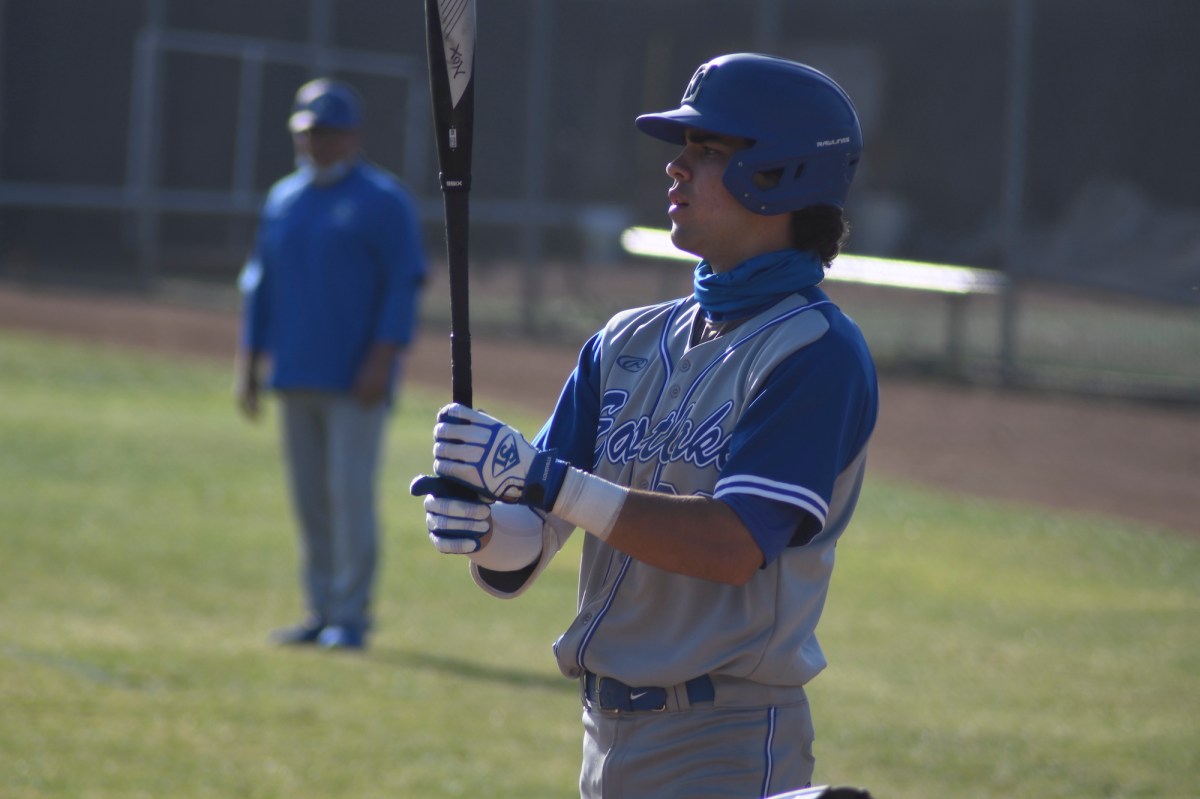
Chaim Bloom explains what went into Red Sox taking infielder Nick Yorke with top pick in 2020 MLB Draft

When the Red Sox selected prep infielder Nick Yorke with their top pick in the shortened 2020 MLB first-year player draft, they were met with quite a bit of blowback from fans and the general public alike.

Going into the June draft, which was cut down to five rounds due to the financial constraints created by the ongoing COVID-19 pandemic, Yorke was not necessarily seen as a bona fide first-rounder.

A recent graduate of Archbishop Mitty High School in the San Jose Area, the 18-year-old was committed to play college baseball at the University of Arizona and it appeared as though that commitment was a strong one.

With that, and perhaps other factors, in mind, Yorke slipped through the draft rankings to the point where Baseball America had him as the No. 96 draft-eligible prospect in the early stages of the summer.

While other clubs targeted more hyped-up and well-known prospects with their respective top selections, the Sox did not shy away from Yorke — a player they had already liked — when they were put on the clock at pick No. 17.

Red Sox chief baseball officer Chaim Bloom said as much when speaking with SoxProspects.com’s Chris Hatfield and Ian Cundall on the SoxProspects.com podcast earlier this week.

“I think at the end of the day, what it came down to is not us trying to do something that was off the board because we got a kick out of doing something that was off the board, but believing in it and not being scared off of it just because it was different,” Bloom said. “If the only reason that we don’t do something is that we’re worried about criticism, that’s not a good enough reason. We should never operate like that. We have to be willing to do what we believe is right, even if we’re going to get criticized.

“We knew that it would come with some blowback,” continued Bloom. “Because Nick wasn’t a hyped player. We also had a lot of belief in the player and there was also belief that if we had had a normal spring, he would have been seen. A lot of things kind of conspired with him having been hurt the year before and not having played the infield the year before. And if you weren’t there really all over him those first few weekends, you did not have enough information on Nick Yorke to really think anything about him.”

Because of the aforementioned pandemic, Yorke’s senior season at Archbishop Mitty was prematurely cut short after just five games. The right-handed hitter went 8-for-15 (.533) with two home runs and six RBI in those five games, though, to finish his high school career with an otherworldly .457/.552/.709 slash line over 94 total games played at the varsity level.

Still, even if Yorke, who is listed at 6-foot and 200 lbs., was able to play a full season’s worth of high school ball in 2020, perceptions of him around the game would have still likely varied.

“We could have had a full spring and there still would have been a lot of different opinions in the industry about the player, about the profile,” said Bloom. “But, we had a really strong belief in the evaluation that we had and we went through a very rigorous process about how to build our board. And look, there’s certainly ways the draft could have fallen where we might have ended up taking someone else. It wasn’t that we were hellbent on saving money in that round to go spend it later.

“But, given what the board looked like when it got to our pick, we felt very, very clearly that it made sense to us to take Nick there,” Bloom added. “We liked the player a lot and also felt like we had some savings we could do damage with later in the draft.”

A little less than a month after drafting him, the Sox managed to sign Yorke for $2.7 million, which fell well below the recommended slot value for the 17th overall pick in the 2020 draft ($3.6 million).

This, in turn, allowed the club to draft and sign fellow prep prospect Blaze Jordan, who was selected in the third round with the 89th overall pick.

With a full ride to Mississippi State University to use to his advantage, Jordan received $1.75 million in signing bonus money from Boston, well above the recommended slot value assigned to pick No. 89 ($667,900).

As you may recall, the reason the Red Sox were docked a second-round pick in last year’s draft was due to their illegal use of the video replay room during the 2018 season, hence the long wait in between their first and second selections.

“It really has to start with believing in the player,” Bloom said of Yorke, his first draft pick as Boston’s CBO. “Because it was going to be a long time before we were going to pick again, and you can’t necessarily count on what you’re going to be able to do with those savings. But, we also felt like we had enough intel — that there were enough clubs that were aligned with us on Nick — that waiting for him to be around at pick No. 89 was also not a good strategy. This was a player we wanted.”

Following impressive showings at both the Red Sox’ alternate training site in Pawtucket and fall instructional league in Fort Myers last year, Yorke has worked his way up to becoming the No. 13 prospect (No. 6 among position players) in Boston’s farm system, per SoxProspects.

The Newport Beach native is projected to begin the 2021 minor-league season — whenever it begins — with Low-A Salem, where he will have the chance to show off his highly-touted hit tool and continue to develop in organized games against other teams for the first time as a professional.

(Picture of Nick Yorke: Kelly O’Connor/sittingstill.smugmug.com)

Jaxx Groshans evaluates some of the top pitching prospects in the Red Sox farm system

He’s caught them. He’s hit against them. When it comes to some of the more intriguing pitching prospects in the Red Sox organization, there aren’t many better people to ask about them than catching prospect Jaxx Groshans.

When speaking with BloggingtheRedSox.com earlier this week, the 22-year-old backstop shared his thoughts on the likes of Jay Groome, Noah Song, and Ryan Zeferjahn, all of whom are regarded by SoxProspects.com as top-15 pitching prospects within Boston’s farm system.

Here are those thoughts put into writing.

LHP Jay Groome (SoxProspects’ No. 7 pitching prospect)

“I’ve faced off against Groomy multiple times and I got to catch him when I was in Lowell and at fall instructs both years (2019 and 2020). His stuff has grown a long way, man. He’s got big-league caliber shit, and I think that’s going to carry him for a while.”

RHP Noah Song (SoxProspects’ No. 6 pitching prospect)

“I caught Noah in his debut in Aberdeen… As far as Songy is concerned, that’s some of the best pure stuff I think I’ve ever seen. I applaud him for going back and serving [in the Navy] like he was supposed to, but that’s a damn shame because that kid probably could have been in the big-leagues this coming year. He probably could have made an appearance in the league out of the ‘pen last year to be honest with you, because his stuff is that good.”

RHP Ryan Zeferjahn (SoxProspects’ No. 11 pitching prospect)

“Zef’s a good dude, man. He’s got some electric stuff, too. I’m very, very excited to see how his career pans out because I think he can be a successful big-leaguer for a long time, especially if he figures out control of all his pitches and finetunes them. We’ll just have to wait and see from here. Like I said, he’s got a lot of special stuff and he’s very blessed with the arm he has.”

Groshans and Zeferjahn both played college baseball together at the University of Kansas. They were both selected by the Red Sox within hours of each other during Day 2 of the 2019 MLB first-year player draft.

“Before we got drafted, we were in Bricktown (Oklahoma City) playing Kansas State in the Big-12 tournament,” Groshans recalled. “Me and Zef were sitting on the bench, and Zef was like ‘Man, how cool would it be if the both of us got drafted by the same team? It would be sick because I’d get to throw to you and we’d be teammates again.’

“And I was like ‘Yeah, dude. That would be sick. That would be awesome,'” continued Groshans. “Then I saw Zef got picked by the Sox in the third [round], and I was like ‘Damn, okay. What’s going to happen? How’s this going to go?’ Then my agent texted me and he was like ‘Red Sox.’ So, I kind of kept it in for a second and as soon as my name got called, Zef was one of the first people to text me. He was like ‘Let’s freaking go! That’s awesome, man!’ I was like ‘Yeah, meet me in Florida and let’s have some fun.'”

BONUS: Former University of Oklahoma outfielder and Oakland Athletics first-round draft pick Kyler Murray, who is currently the starting quarterback for the NFL’s Arizona Cardinals

“I know Kyler. I grew up around the same area — before I moved to Houston — that he was from. So I was from Plano, he was from Allen (Texas). I met him off and on the field, too. He’s a freak athlete, man.

“I saw something the other day where they were putting out on SportsCenter: Who of these NFL athletes would be successful in the minor-leagues if they played?’ It’s Kyler 100% hands down,” Groshans said. “He’s said it before. I don’t believe his time in baseball is done yet. I think if at any point he decides to come back, he could definitely do it. 100%.”

(Picture of Jaxx Groshans: Kelly O’Connor/ sittingstill.smugmug.com)