Red Sox’ Alex Verdugo: ‘Whenever the Season Starts I Think I Will Be Ready’

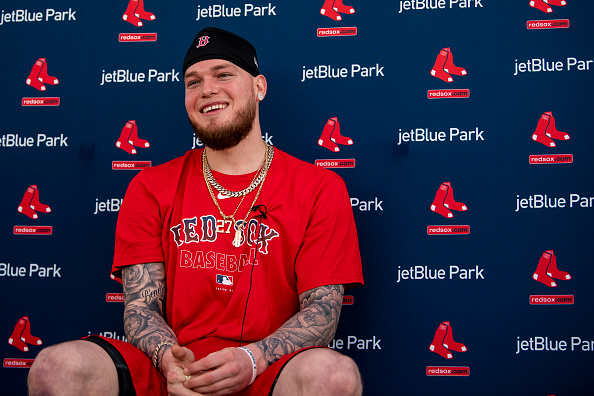
Red Sox outfielder Alex Verdugo is back working out at the Fenway South complex in Fort Myers, and when the 2020 Major League Baseball season does resume, he feels like he’ll be good to go.

Speaking with reporters via conference call on Monday afternoon for the first time since spring training was suspended in March, Verdugo said he is “physically…100%” after fully recovering from the stress fracture in his lower back.

“I feel very good just moving around with everything,” said the 23-year-old. “My swing, my throwing, running. I feel really good. The complex shut down for three weeks when the whole coronavirus and all that started coming out. So I still stayed active at home. I was hitting, throwing a little bit and working out. But obviously didn’t have the amount of resources I do at the facility.”

Here’s some video of Verdugo working out at home in Fort Myers:

From there, Verdugo was able to get back into the facility last week after the Red Sox opened it back up following a brief shutdown period due to a minor-leaguer testing positive for COVID-19 on March 24th.

“When I got back…we took it slow again,” he said. “We just kind of ramped it back up, just seeing how the three weeks, how my body kind of looked and how it felt to my trainers.”

Here’s some video of Verdugo working out at the JetBlue Park complex:

When the Red Sox acquired Verdugo, as well as prospects Jeter Downs and Connor Wong, from the Dodgers in the Mookie Betts and David Price trade in February, they were already aware of the young outfielder’s ailment. Had the 2020 season began as originally planned on March 26th, he probably would not have been ready for Opening Day.

Now, with the start date of the season still up in the air, Verdugo could be ready to start right away.

“I feel like we’re back on track,” he said. “Whenever the season starts, I think I’ll be ready. Whether that is soon, whether it’s a few months down the road or whatever that may be. I think physically I’m ready.”

While he is training every day like there is going to be a season and working out Fenway South four times a week, Verdugo is regularly checking in with Red Sox manager Ron Roenicke “every one or two weeks.” The training staff he is working with at JetBlue is also sending video to Roenicke and hitting coach Tim Hyers.

“I’m going to keep preparing and training and keeping my mind sharp so I’m already mentally locked in and physically ready to go for it,” said Verdugo.

As he came over from the Dodgers earlier in the year, the Arizona native admitted that being traded was at first difficult for him but he now views the move “as a blessing.”

With his new club, Verdugo expects to be as productive as ever, adding “I think I’m at such a good position mentally and physically. I’m just ready to go and just play. I know if I play and I feel the way I feel right now, my numbers will be what they always have been.”

Once touted as one of the best outfield prospects in baseball, Verdugo slashed .294/.342/.475 with 12 home runs and 44 RBI over 106 games played for Los Angeles in 2019.

The centerpiece in the aforementioned deal that sent soon-to-be free agent Mookie Betts to southern California, Verdugo did say that it would be “pretty crazy” and “pretty nuts” if his counterpart never played a game for the Dodgers if the 2020 season winds up getting cancelled. We’ll have to wait and see on that, though.

 

Latest 2020 Mock Draft Has Red Sox Taking Pure-Hitting High School Prospect With Top Pick

Last week, I wrote about who the Red Sox could potentially target in the first round of this year’s amateur draft.

Since that time, it was reported by The Athletic’s Ken Rosenthal and Evan Drellich that the Major League Baseball Players Association rejected a draft-related proposal from MLB on Thursday.

In that proposal, the commissioner’s office suggested that the 2020 draft consist of 10 rounds and be split into two segments, with the picks from the first five rounds having the same assigned slot value as they did the year prior, and the picks from the last five rounds having about 50% of last year’s assigned slot value in addition to having a signing bonus hard cap.

Per Rosenthal and Drellich, “The players would prefer that the draft go as many rounds as possible, giving entry to more players into the sport,” but at the same time, MLB has leverage in that they could tell the players association: “Take 10 rounds, with restrictions, or else the draft will be shorter.”

As pressing as those obstacles may be for the MLBPA, the draft is still expected to be held on June 10th, and the two sides could still reach an agreement before then.

That said, another mock draft, this one consisting of three rounds, organized by the folks over at Prospects Live was live streamed over the weekend and its participants included analysts from various other prospect sites, such as Perfect Game, Rotowire, and Prospects1500 to name just a few.

Representing the Red Sox in this mock draft were Chris Hatfield and Ian Cundall of SoxProspects.com, one of the best places to go for coverage and analysis of the Red Sox farm system on the internet.

The Red Sox this year will be making their first draft selection with the 17th overall pick after finishing with the 17th-worst record in baseball last year.

College prospects such as Garrett Crochet, Patrick Bailey, and Tanner Burns have been linked to this pick recently, but Hatfield and Cundall went with a high school prospect here. His name?

OF Robert Hassell, Independence High School (Thompson’s Station, TN)

Ranked as MLB Pipeline’s No. 16 draft-eligible prospect, Hassell is regarded as the ‘best pure hitter’ in this year’s prep class.

Swinging from the left side of the plate, the 18-year-old led Team USA in hitting in last fall’s U-18 Baseball World Cup in South Korea, slashing .514/.548/.886 with two home runs and 14 RBI over 42 plate appearances.

From his Baseball America scouting report, Hassell is “one of the rare prep hitters who seems to be in control of an at-bat, regardless of the count or the pitcher on the mound facing him. There are few holes in his swing and he doesn’t miss often, hitting the ball hard whenever he makes contact with developing power.”

Hassell can also pitch, and he is currently committed to Vanderbilt University in Nashville.

Moving on to the third round now since the Red Sox will be without a second-round pick in this year’s draft, Hatfield and Cundall have Boston taking a right-hander out of the Big 10 with the 89th overall pick. His name?

RHP Jeff Criswell, University of Michigan

MLP Pipeline’s 58th-ranked draft prospect, Criswell was originally drafted by the Tigers in the 35th round of the 2017 MLB Draft.

Listed at 6’4″ and 225 pounds, the 21-year-old out of Portage, Mich. posted a 4.50 ERA and .205 batting average against over four starts and 24 innings pitched for the Wolverines before the 2020 college baseball season was shut down due to the coronavirus pandemic.

Criswell is capable of pitching in the rotation and out of the bullpen. He even became somewhat as a weapon for Michigan as a reliever in the 2019 College World Series.

From his MLB Pipeline scouting report:

“He maintained his velocity while transitioning from reliever to starter, showing the ability to work at 93-96 mph with heavy sink for several innings at a time. Both his slider and his fading changeup are solid secondary pitches that arrive in the low 80s.”

If the 2020 draft is only five rounds, these two prospects could represent 40% of the amateur talent the Red Sox bring in domestically this year. If it’s 10 rounds, then 20%.

What will Red Sox chief baseball officer Chaim Bloom and Co. have in store for us later in the year? We’ll have to wait and see when the draft happens for real.

Changes Likely Coming to Red Sox’ Uniforms Sometime in Near Future

For the most part, the uniforms donned by the Red Sox have remained unchanged over the last few decades. 

There have been subtle changes here and there, such as the addition of a blue alternate road jersey in 2009 or the decision to go from blue lettering back to red lettering on the primary road jersey in 2014, but out of the 30 clubs that Major League Baseball is comprised of, the Red Sox have one of the more classic looks in the game, as they should.

Still, that has not stopped team higher-ups from discussing how to further modernize the Sox’ look moving forward, especially now that Nike took over as MLB’s official uniform outfitter last winter.

“We are looking at changes as we go forward,” team president Sam Kennedy told The Athletic’s Chad Jennings. “[The changes will be] likely geared to get us to a uniform that is geared towards high performance. We will always be respectful of our incredible traditional look and feel, but we are always open to new and different concepts as time goes by.”

With Nike providing the Red Sox with their uniforms for the foreseeable future, the hope is that more technology can be implemented into any new uniform so that players can be more comfortable while actually playing baseball.

For instance, according to team executive vice president of partnerships Troup Parkinson, Red Sox ownership is really more focused on fit than anything else in talks about potential new uniforms.

“They think that, for example, Nike can bring tons of technology to the fit and hopefully help the performance of the athlete,” Parkinson said. “[It’s] happened in basketball and in football, but, amazingly, in baseball it hasn’t. The [players], if you talk to them, they will say the uniform doesn’t fit.”

Per Jennings, Red Sox principal owner John Henry and team chairman Tom Werner are “heavily involved” in decisions regarding the club’s uniforms and overall aesthetic look. Such decisions include changing primary logos, adding alternate jerseys, changing up batting practice looks, and sticking with batting helmets with a shiny finish rather than a matte one.

“John and Tom are both very engaged in uniform design,” said Kennedy. “They both have a passion for the look and feel of the brand. In terms of the Red Sox, while we have not made dramatic changes in our time here, we had had some relatively minor adjustments, driven by ownership’s desire to preserve our traditional look while modernizing a bit.”

To add on to that, Parkinson himself said that he expects subtle changes to the Red Sox’ uniforms to come at some point in the ‘near future.’

As Jennings puts it, these potential changes “likely won’t be wholesale or drastic changes, but they will be noticeable, especially for a fan base that’s grown attached to the current look. Which is the old look. Which is the classic look.”

What could these changes to Boston’s uniforms look like? Well, it’s tough to say.

As things stand currently, the Red Sox employ a five-jersey rotation (home whites, road grays, red home alternates, navy blue road alternates, and those special Patriots’ Day whites) to go along with white pants at home and gray pants on the road. All these uniforms are worn with the standard navy blue cap with a red ‘B’ front and center.

The home whites with the arching ‘Red Sox’ across the chest and the red piping around the collar and down the front of the jersey, for the most part, have remained a constant throughout the club’s storied history. They went with pullover tops and a predominantly red cap for a little bit there in the 1970’s, but that trend did not last into the following decade.

The road grays, meanwhile, have either featured ‘Boston’ across the chest in red or navy blue font since the turn of the century. The ‘Hanging Sox’ logo was added to the left sleeve of the road jerseys in 2010 and have been present since.

In terms of alternate looks, the red alternates worn at home have been in rotation since 2003 and have since been given a more modern look through the removal of the original blue piping that went around the collar and down the middle of the jersey.

As mentioned earlier, the navy blue alternates worn on the road were added to the mix in 2009. For whatever reason, they do not feature the ‘Hanging Sox’ logo on the left sleeve.

All in all, it’s a pretty solid mix of tradition and color rolled into one set of uniforms. It’s somewhat difficult to see how something already so good could be improved upon.

Then again, Parkinson told Jennings that “he actually likes to hear unusual uniform and branding ideas from outside companies (like Nike in this case) – those outsiders presumably are not as emotionally attached to the current look, and might offer much-needed perspective – but those partners rarely, if ever, suggest anything too far outside the box.”

Nike has proven to get creative with the looks of other historic franchises across different sports while also keeping that team’s history and tradition in tact, like with the Boston Celtics or Los Angeles Lakers.

If I could throw out some ideas here, I’d say that I would not mind seeing the Red Sox go back to wearing gray jerseys with the navy blue ‘Boston’ across the chest while on the road. That incorporates more of the team’s legacy into their look and may be nostalgic for older fans.

Speaking of nostalgia, it’s been said before, but bring back the 70’s throwbacks that we saw briefly in 2015 and 2016. It’s definitely a fun look.

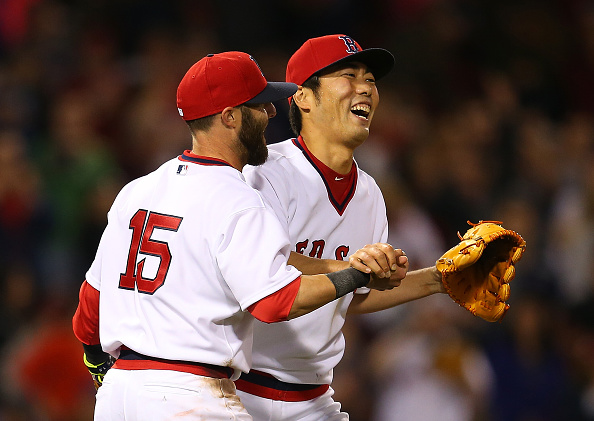
gettyimages-472283080-594x594
BOSTON, MA – MAY 5: Koji Uehara #19 of the Boston Red Sox reacts with Dustin Pedroia #15 after he pitched a scoreless ninth inning to beat Tampa Bay Rays 2-0 at Fenway Park May 5, 2015 in Boston, Massachusetts. (Photo by Jim Rogash/Getty Images)

Also, could it be possible that the Red Sox would remove the red piping from their primary home jerseys? It’s the only jersey in the current mix that still features piping, although it is arguably their most classic feature.

Lastly, I’ve written about it in the past, but it would be interesting to see the Sox wear the red jerseys on the road and the blue jerseys at home. Mix it up a little, you know?

Other than that, I’m definitely curious to see what tweaks Nike and the Red Sox have in store for the team’s look. Not exactly sure when any changes will be revealed to the public, though.

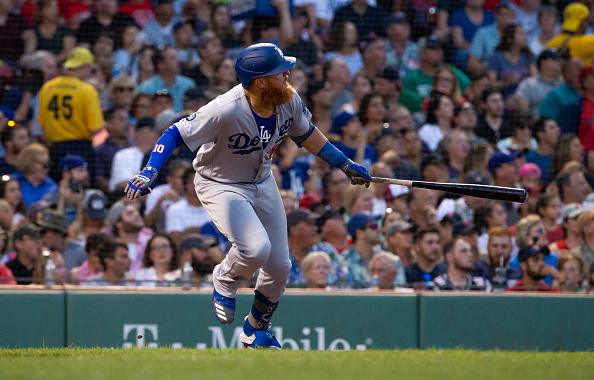
That Time Justin Turner Nearly Signed Minor-League Deal With Red Sox

Justin Turner has been one of the best third basemen in the National League since joining the Dodgers in 2014.

Over the past six seasons, the 35-year-old owns a slash line of .302/.381/.506 with 112 home runs. 383 RBI, one All-Star nod, and three top-15 finishes in NL MVP voting.

As impressive as those numbers may be, Turner’s rise to stardom was far from expected prior to signing with Los Angeles.

A former seventh-round draft pick of the Reds in 2006 out of Cal State Fullerton, Turner’s stay in Cincinnati’s farm system did not last long, as he was part of the trade that sent veteran catcher Ramon Hernandez from Baltimore to the Reds in December 2008.

Making his major-league debut with the Orioles the following September, in a game against the Red Sox, Turner went 0-for-2 with a strikeout and did not do much in a limited role the remainder of the 2009 season.

The 2010 campaign marked a period of turbulence for Turner. He was called up and sent down by the Orioles on three separate occasions before being designated for assignment on May 21st of that year.

Four days later, the Long Beach native found himself a member of the New York Mets after the club had claimed him off waivers, and he reported to Triple-A Buffalo.

Turner got his first real crack with New York in April 2011, and he emerged as a solid utility player who could come off the bench and play multiple positions around the infield.

In terms of bWAR, Turner’s 2012 season was just about identical to what he did in 2011, albeit in 23 fewer games. His 2013 season, in which he was limited to 86 games due to a hamstring injury, was even better using that same metric, but the Mets made the ultimate decision to non-tender the infielder that December rather than pay him the $800,000 he was projected to earn in 2014.

“Don’t assume every non-tender is a function of money,” ex-Mets general manager Sandy Alderson said at the time when asked about Turner being released by New York. Apparently, there were reports that Mets brass questioned Turner’s motivation and lack of hustle.

Despite those reports, Turner was a coveted minor-league free agent in the months following his release. The Red Sox were one of those teams that were interested in his services.

Per WEEI’s John Tomase, who now covers the Red Sox for NBC Sports Boston, former Sox general manager Ben Cherington made a “hard push” to land Turner, and the two sides nearly agreed to a deal. That is, until the Dodgers and Ned Coletti came calling.

“I had to make a decision by midnight or the next morning and the Dodgers called that night,” Turner told Tomase prior to the start of the 2018 World Series. “At the time, it was between the Red Sox and the Twins. Obviously Boston was a world class organization with a lot of good young players and a general manager that expressed his interest in really wanting me to be here. There were a lot of good things coming out of it. I was honestly getting excited about it and looking forward to it.”

With that excitement for Turner also came concern in how the Red Sox utilized their role players under then-manager John Farrell. The Dodgers, meanwhile, showed more of a willingness to use bench players, as would be expected from most National League clubs.

“One of the deciding factors between Boston and L.A., Don Mattingly used his bench players a lot,” Turner said. “You look at Nick Punto and Skip Schumaker and Michael Young all having 300 at-bats the season before as utility players. And then you look at the Boston bench guys having 70 at-bats, 80 at-bats.”

The opportunity to play more, as well as the chance to remain in the National League, ultimately won Turner over, and he inked a minor-league pact with the Dodgers that February.

““Going into free agency that year, my main goal was to stay in the National League for the opportunity to be a utility guy and still get to play,” he said. “So when the Dodgers came into the picture, that kind of answered the question for me, made it not as difficult a choice, although I was excited and looking forward to possibly being a Red Sox.”

As previously mentioned, Turner went onto blossom into a star third baseman with Los Angeles and is now entering the final year of the four-year, $64 million extension he signed in December 2016.

Having failed to sign Turner in 2014, Cherington went out and made a big splash later that same calendar year by bringing in free-agent third baseman Pablo Sandoval on a five-year, $95 million contract.

Sandoval flopped with Boston, and was ultimately designated for assignment and later released on July 19th of the 2017 season. At that same time, Turner was fresh off making his first career All-Star team.

The Red Sox have since found their third baseman of the future in the form of 23-year-old Rafael Devers, but it’s still interesting to look back and wonder what ripple effects signing Turner could have had on the club in 2020 and beyond.


No Trade Talks Involving Red Sox Were ‘Imminent’ at Time MLB Froze Rosters in March, per Report

The Red Sox were not close to making any sort of trade at the time Major League Baseball froze rosters, and roster moves, in late March, a source told WEEI’s Rob Bradford earlier Friday.

This report comes decently close to two months after MLB commissioner Rob Manfred made the decision to suspend the remainder of spring training games on March 12, effectively butting baseball on hold.

Still. clubs were allowed to make moves for about two weeks after that. The Red Sox signed free-agent infielder Yairo Munoz to a minor-league deal on March 24th, for instance.

It wasn’t until March 28th when rosters were frozen as part of an agreement between Major League Baseball and the MLBPA. No transactions have been made since.

Before that freeze went into effect though, as Bradford notes, the Sox were involved in trade rumors ‘almost daily,’ particularly with the San Diego Padres and 29-year-old outfielder Wil Myers.

Going back to a February 18th report from the San Diego Union-Tribune’s Kevin Acee, the Friars were apparently looking to offload ‘about half’ of the remaining $61 million owed to Myers over the next three years, while the Sox were in return looking for young, controllable talent, such as pitching prospect Cal Quantrill or catching prospect Luis Campusano. Basically, in this scenario, Boston would be “buying prospects” by taking on a “bad” contract.

Despite those ever-swirling rumors, no trade talks between Red Sox chief baseball officer Chaim Bloom and the Padres, or other clubs for that matter, ever reached the “imminent” stage at the time the roster freeze went into effect, per Bradford.

Although there is no set date for baseball to return, roster movement between clubs will once again be permitted once a new Opening Day for this year is scheduled, if there is one, that is.


Little League International Cancels 2020 World Series, 2020 MLB Little League Classic Due to Coronavirus Pandemic

One day after the National Baseball Hall of Fame Museum cancelled its 2020 induction weekend this summer due to the COVID-19 pandemic, Little League International announced on Thursday afternoon that its World Series and regional tournaments later this year have also been cancelled for the same reason.

Per an official release, Little League president and CEO Stephen D. Keener said, “This is a heartbreaking decision for everyone at Little League International, but more so for those millions of Little Leaguers who have dreamt of one day playing in one of our seven World Series events. After exhausting all possible options, we came to the conclusion that because of the significant public health uncertainty that will still exist several months from now, and with direction from Pennsylvania Governor Tom Wolf and Secretary of Health Dr. Rachel Levine, as well as senior public health officials and government leaders from locations where our other six World Series are held, as well as the their qualifying regional tournaments, it will not be possible to proceed with our tournaments as we’ve hosted them for nearly 75 years.”

In total, seven Little League World Series events and 82 corresponding regional qualifying tournaments have all been cancelled in the wake of the COVID-19 pandemic that has effectively shut down American sports since March.

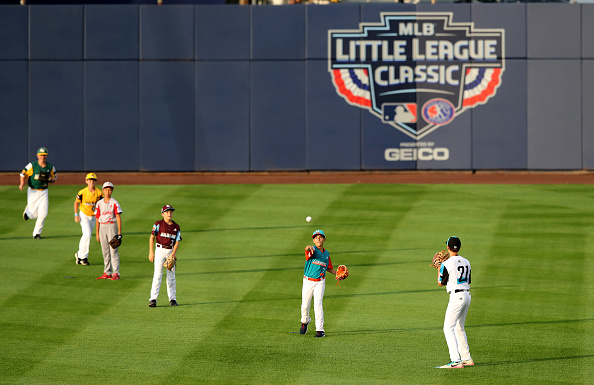
The Red Sox this season were supposed to take on the Baltimore Orioles in the fourth-annual MLB Little League Classic at BB&T Ballpark in Williamsport, Pa. on August 23rd. That event, which allows players on both sides to spend time and make memories for hundreds of little-leaguers, has also been cancelled as part of Thursday’s announcement from Little League International, although MLB has already committed to returning to Williamsport in 2021.

Since its inception in 1947, the Little League World Series has never before had to be cancelled until now.

“Delivering this news comes with a very heavy heart. We have never had to cancel our World Series tournaments, but, right now, as our world comes together, we must do everything we can to help stem the spread of this deadly virus,” said Little League board of directors chairman Hugh E. Tanner. “While we take this pause from the World Series and Regional Tournaments this summer, we are committed to working with our volunteers and staff to continue to provide an unparalleled youth sports experience to all children and be back stronger than ever in 2021.”


National Baseball Hall of Fame Cancels 2020 Induction Ceremony Due to Coronavirus Pandemic

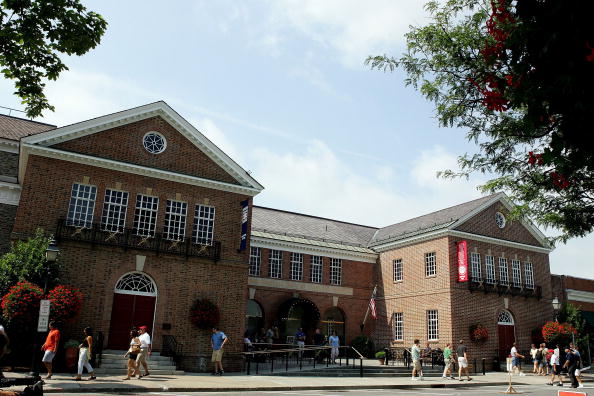
While there is optimism that Major League Baseball could return in July, the National Baseball Hall of Fame and Museum on Wednesday announced that its annual Hall of Fame Induction weekend has been cancelled due the COVID-19 pandemic.

Per a release, the Hall’s board of directors voted ‘unanimously’ to cancel all induction-related activities in Cooperstown during the final weekend of July, when the ceremonies were originally scheduled to take place.

Instead, this year’s inductees — Larry Walker, Derek Jeter, Marvin Miller, and Ted Simmons — will be honored next year along with whoever is inducted into the Class of 2021.

“Induction Weekend is a celebration of our National Pastime and its greatest legends,” said National Baseball Hall of Fame and Museum chairman Jane Forbes Clark. “And while we are disappointed to cancel this incredibly special event, the Board of Directors’ overriding concern is the health and well-being of our new inductees, our Hall of Fame members, our wonderful fans and the hundreds of staff it takes to present the weekend’s events in all of its many facets. We care deeply about every single person who visits Cooperstown.”

This news means that for the first since 1961, an induction ceremony will not be held in Cooperstown this summer, while the 2021 ceremony will mark the first time since 1949 that multiple Hall of Fame classes will be honored simultaneously.

As things stand right now, next year’s induction ceremony is scheduled to kick off on July 23rd.

Former Red Sox right-hander Curt Schilling, who received 278 of a possible 397 votes this past January, could very well finally get into the Hall of Fame in his ninth year on the ballot in 2021. Him and Jeter potentially being part of the same induction ceremony next year would be something to see.

MLB Still Planning on Holding Virtual 2020 Draft on June 10th, per Report

Major League Baseball is still planning on holding its annual first-year player draft on June 10th, its original start date, according to MLB Network’s Jon Heyman

Before the COVID-19 pandemic put sports on hold in the United States and across the world, the 2020 MLB Draft was originally slated to be held in Omaha, Neb. at the same time the College World Series was happening there in June.

Instead, just like we saw with the National Football League this past weekend, this year’s draft will have to be held virtually.

Per the New York Post’s Joel Sherman, the number of rounds the 2020 draft will consist of has yet to be decided. That being the case because back in March, Major League Baseball and the MLBPA reached an agreement that would allow commissioner Rob Manfred to cut the draft from anywhere between 5-10 rounds this year while also holding it as soon as June 10th or as late as July 20th.

If this report is true and the draft will indeed begin on June 10th, that means clubs have a little over a month remaining to continue with their preparations while not having much to work with since high school and college baseball has also been put on hold due to the coronavirus.

Based on how Sherman says that, “The plan now is to return the draft to its original start date of June 10 with the potential to add a day if it is deemed necessary,” I would assume that means this year’s draft will be at most a two-day event compared to three days it usually takes to complete 40 rounds.

The Red Sox will make their first selection with the 17th overall pick in the 2020 draft. You can read more about who they might take with that pick here.

What If the Red Sox Moved to the South Boston Waterfront?

Before purchasing the Los Angeles Dodgers for $430 million in 2004, Frank McCourt had interest in becoming owner of his hometown team, the Boston Red Sox.

The Watertown native, having been the grandson of a Boston Braves co-owner in addition to the man in charge of the McCourt Company, a large asset and investment firm that specialized in real estate, had his eyes on purchasing the Sox when the club went up for sale in late 2000.

Two decades prior to that, McCourt had taken over several acres of land in South Boston, or more specifically, the Seaport District, that had once been an abandoned waterfront rail-yard and converted that land into parking lots.

With that property, McCourt envisioned a new ballpark for the Red Sox had he successfully come out on top in the bidding war.

“Great site for a ballpark,” McCourt told the late, great Nick Cafardo of The Boston Globe in 2004. “We thought so. HOK [Sport in Kansas City, which builds ballparks] told me it was the single best ballpark site in America. And they designed Pac Bell (Oracle Park in San Francisco). We believed it was a great site, but not everyone agreed.”

Thanks to a rendering from StadiumPage.com, we can see what a major-league ballpark in the Seaport District would potentially look like.

At the time, McCourt owned approximately 25 acres of land in the area, and he intended on using 10 of them for the ballpark.

“It’s a prime piece of real estate, and we have an idea about how it could be used to anchor the team in Boston,” McCourt said in 2001. ”It’s snug, but it fits.”

The lot was also conveniently within close proximity of several transportation hubs in the city, including South Station and the Massachusetts Turnpike. That is something McCourt and his aides made sure to point out to local government and business officials as well as reporters.

A las, then-Boston mayor Thomas Menino and then-Red Sox CEO John Harrington never publicly backed McCourt’s ballpark proposal. In fact, at least two of the seven bidding groups had looked into ballpark sites in the South Boston area, according to The Boston Globe’s Meg Vaillancourt.

As it turns out, McCourt was really no where close to successfully winning the bid for the Red Sox, as the club, as well as Fenway Park and New England Sports Network, were sold to a group consisting of John Henry, Tom Werner, and Larry Lucchino for a whopping $700 million in December 2001.

The value of the Red Sox has only skyrocketed since Henry and Co. took over nearly 19 years ago, while McCourt went on to use the Seaport land he owned as collateral to help finance his $430 million purchase of the Dodgers from News Corp.’s Fox Entertainment Group in January 2004.

Despite decent on-the-field success, McCourt’s tenure as Dodgers owner was rather tumultuous. So much so that the Dodgers had to file for bankruptcy in June 2011 before McCourt agreed to sell the club for more than a record-setting $2 billion to a group consisting of the Guggenheim Partners, former Lakers star Magic Johnson, and former Braves and Nationals president Stan Kasten among the others the following March.

McCourt still has a vesting interest in professional sports, as he purchased French soccer club Olympique de Marsielle for about $45 million in 2016.

Per Forbes’ latest MLB valuations from earlier this month, the Dodgers and Red Sox today are the second and third-most valuable franchises in baseball behind only the New York Yankees. It would be interesting to see what those valuations would look like had McCourt been successful in purchasing the Red Sox rather than the Dodgers.

If he had been successful in purchasing the Red Sox, it also would have been fascinating to see what McCourt’s Seaport ballpark proposal would look like in real time.

The thought of the Red Sox calling a ballpark outside of Fenway Park home is odd, to say the least. There have been times where I wished the Sox played in a modern, more comfortable stadium, but at the same time, I understand the desire to keep the team at Fenway. It’s a historic relic at this point that deserves to be preserved.

Still, the allure of the Red Sox playing in a location that could offer great skyline views of the city from a different vantage point is certainly something to ponder, especially since the land in South Boston once owned by McCourt and now owned by developer John B. Hynes and Morgan Stanley remains mostly untouched.


Red Sox’ Eduardo Rodriguez Finishes With Worst Record in Inaugural ‘MLB the Show’ Players League Season

The inaugural ‘MLB The Show Players League’ season might not conclude until Wednesday night, but Red Sox left-hander Eduardo Rodriguez has already secured the league’s worst record.

Having already “played” all 29 other players representing their respective clubs, the 27-year-old finishes the year with an unsightly 2-27 mark.

I put “played” in quotes because, in all honesty, it appears that Rodriguez gave up about halfway through the season.

Take this excerpt from MLB.com’s Juan Toribio weekly league power rankings column from last Friday:

“Where’s E-Rod” was the popular question today as the Red Sox starter has apparently given up. After watching his first 10 games, we can’t really blame him. We’ll miss the Eduardo Rodriguez background on his stream, though.

The background in question:

Rodriguez’s lone pair of victories came against the Angels’ Ty Buttrey and the Pirates’ Cole Tucker. Other than that, pain.

Still, just by participating, the Venezuela native essentially raised $5,000 for a local Boys & Girls club in the Boston area courtesy of Major League Baseball, the MLBPA, and Sony Interactive Entertainment.

Rodriguez has been fairly active on Twitch over these past few weeks, mostly playing Fortnite with Xander Bogaerts. You can follow Rodriguez on the popular streaming platform here.

As for where things stand with the remainder of the ‘MLB The Show Players League’ season, there are two more games remaining, one between the Astros’ Lance McCullers and the Yankees’ Tommy Kahnle, and the other between the White Sox’ Lucas Giolito and the Reds’ Amir Garrett.

Both of those contests will take place at 10 PM eastern time on Wednesday on ESPN2, while the playoffs are slated to kick off this coming Friday.