Red Sox Chief Baseball Officer Chaim Bloom on Not Having a Second-Round Pick in This Year’s Draft: ‘It’s Significant’

As part of their punishment for illegally stealing signs in 2018, the Red Sox on Wednesday were docked a second-round pick in this year’s first-year player draft.

That may not sound too significant on the surface, but when you consider that the 2020 MLB Draft will only be anywhere between 5-10 rounds to cut back on spending, it becomes that much larger of a hurdle.

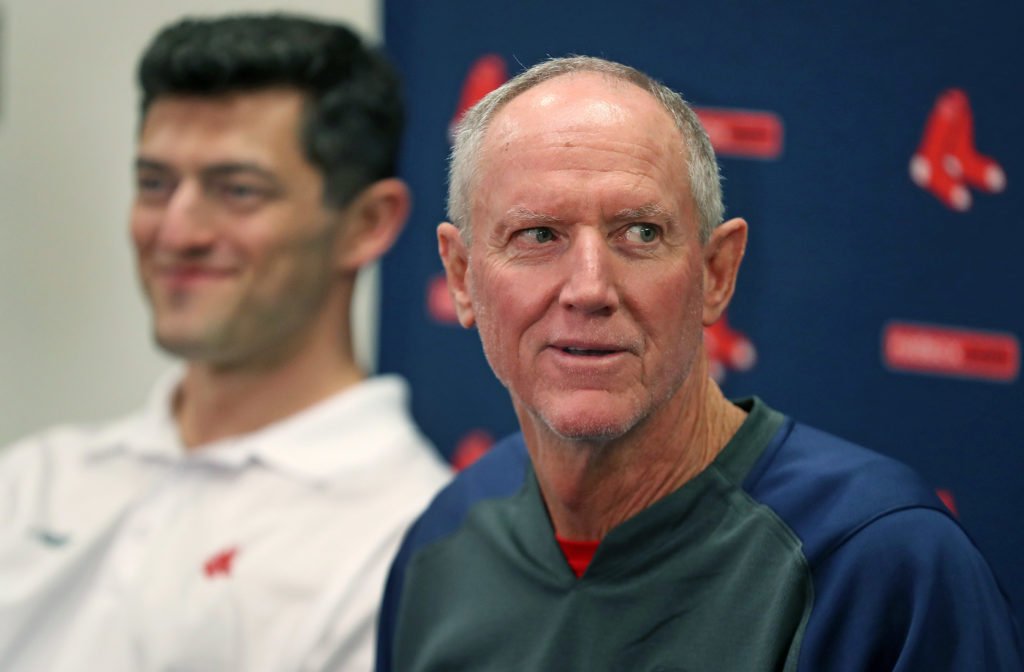
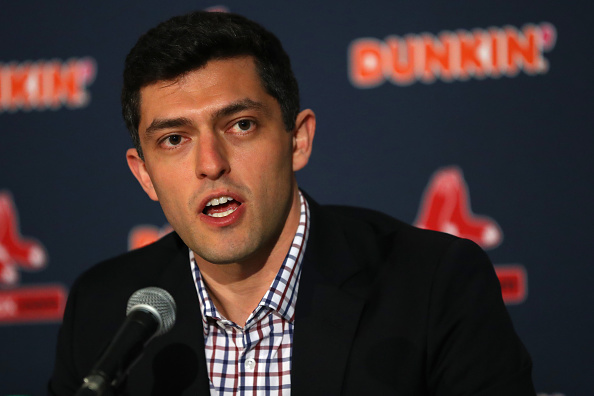
Red Sox chief baseball officer Chaim Bloom echoed that same sentiment when speaking with reporters via a conference call earlier Wednesday evening.

“The potential limitations on the draft this year just makes that punishment larger” he said. “It’s significant.”

According to Baseball America, the Sox were slated to make their second-round pick in this year’s draft with the 52nd overall selection, so all that means is the chance to continue to improve a poorly-regarded farm system has in part been taken away.

Some notable prospects the Red Sox have drafted in the second round of past drafts include Jon Lester, Dustin Pedroia, Justin Masterson, Alex Wilson, Brandon Workman, and Sam Travis.

The loss of a second-round pick in this year’s draft comes a year after the Sox were without a first-round selection in the 2019 draft. That was due to luxury tax-related penalties, though, and they wound up taking infielders Cameron Cannon and Matthew Lugo with their first two selections in the second round.

The exact date of the start of the 2020 draft is not even known at this point. It could begin as soon as June 10th or as late as July 20th. It’s anyone’s guess, really.

On another note, I’m planning on writing something up on who Bloom and Co. could target in the first round of the 2020 draft (Red Sox have the 17th pick), so stay tuned for that in the coming days.

Red Sox to Remove ‘Interim’ Tag From Ron Roenicke’s Title, Name Him Manager for 2020 Season

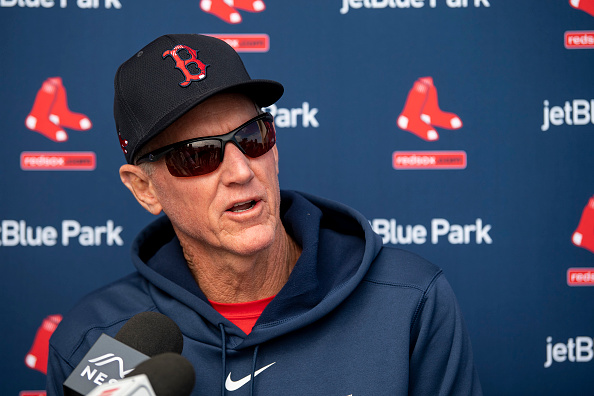
The Red Sox have removed the ‘interim’ tag from Ron Roenicke’s title, making him just the manager now, according to team chairman Tom Werner.

Roenicke, 63, was named interim manager of the Red Sox by chief baseball officer Chaim Bloom back on February 11th, when Boston was still under investigation by Major League Baseball for stealing signs electronically in 2018.

At the time, the ‘interim’ tag was given to Roenicke so that the Red Sox could “respect the [league’s] ongoing investigation,” meaning that permanency would not be addressed until the findings were revealed.

A little more than two months after Bloom said that to the media, MLB commissioner Rob Manfred’s findings have been released, and while the Sox were handed down some punishment for what they did in 2018, Roenicke was exonerated, hence the move to officially name him manager on Wednesday.

Roenicke had served as Alex Cora’s bench coach the previous two seasons with the Red Sox. He has previous big-league managerial experience with the Brewers, where he went 342-311 (.508%) over a five-year tenure from 2011 until May 2015 that included a National League Central title the first season he was at the helm.

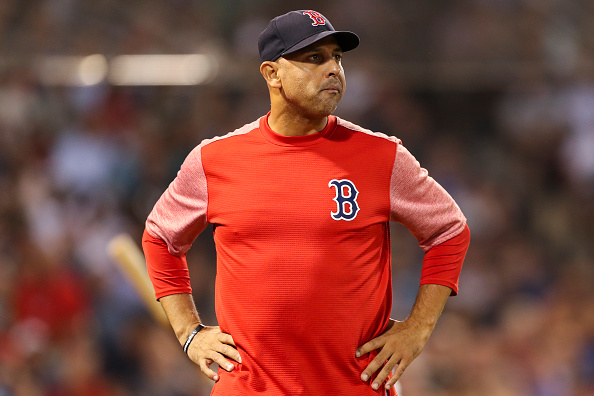
Although Roenicke has officially been named the 48th manager in Red Sox history, the possibility remains that Cora, who was cleared of any wrongdoing while manager of the Red Sox, could return to Boston in 2021 after he was handed down a one-year ban by the commissioner on Wednesday.

That remains speculative, though. For now, I just want to see Roenicke have actual baseball games to manage this year, whether it be in Boston, Arizona, Florida, or Texas. Let’s just get baseball back.

Who Is J.T. Watkins? Red Sox Video Replay Coordinator Violated MLB Regulations During 2018 Regular Season, per Commissioner Rob Manfred

Major League Baseball commissioner Rob Manfred finally released his findings into the 2018 Red Sox and the club’s “improper use of the video replay room” on Wednesday, and fall guy or not, Red Sox video replay coordinator J.T. Watkins took most of the blame for what went down two years ago.

Watkins’ name is mentioned approximately 125 times in the commissioner’s 15-page report, starting with the following statement:

“I find that J.T. Watkins, the Red Sox video replay system operator, on at least
some occasions during the 2018 regular season, utilized the game feeds in the
replay room, in violation of MLB regulations, to revise sign sequence information
that he had permissibly provided to players prior to the game.”

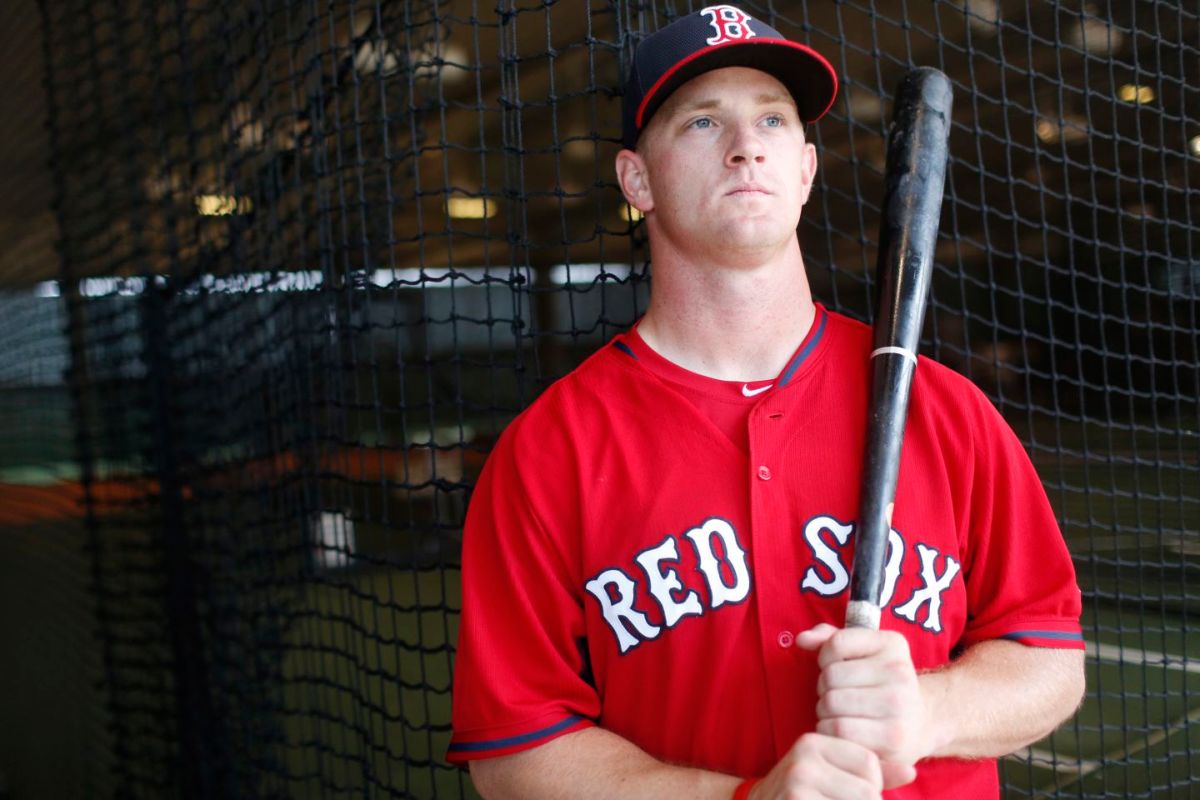
Listed in the Sox’ media guide as the team’s advance scouting assistant, Watkins first joined the organization in 2012 as a 10th-round draft pick out of West Point.

An Alabama-born first baseman, Watkins, now 30 years old, retired from baseball in November 2016 after three minor-league seasons (he missed the 2013 and 2014 seasons while serving in the military for two years) and transitioned into a role with Boston’s advance scouting staff that winter.

A little more than three years after being offered that position, Watkins will be suspended without pay for the 2020 regular and postseason and will not be able to retain his role as replay room operator until the conclusion of the 2021 postseason.

Along with former manager Alex Cora, who was handed down a one-year ban for what he did as Astros bench coach in 2017, Watkins was the only Red Sox employee, player or staff, to be disciplined by Manfred.

Per the commissioner’s report, Watkins “was responsible for attempting to decode an opposing team’s sign sequences prior to and after the completion of the game, which was (and is) permissible under the rules. Watkins conveyed the sign sequence information he learned from his pregame work to players in a meeting prior to the game, or sometimes during the game. The issue in this case stems from the fact that Watkins—the employee responsible for decoding an opponent’s signs prior to and following the game—also was the person stationed in the replay room during the game to advise the Manager on whether to challenge a play on the field. (It was not uncommon for those two roles to be combined in this manner by Clubs in 2018). Therefore, Watkins, who was an expert at decoding sign sequences from video, had access to a live feed during the game that he could have—if he so chose—used to supplement or update the work he had performed prior to the game to decode an opponent’s signs.”

There’s a lot to digest in the report, which you can read in full here, but I did find it interesting that, “Of the 44 players who provided information, more than 30 stated that they had no knowledge regarding whether Watkins used in-game video feeds to revise his advance sign decoding work. However, a smaller number of players said that on at least some occasions, they suspected or had indications that Watkins may have revised the sign sequence information that he had provided to players prior to the game through his review of the game feed in the replay room.”

Despite losing Watkins as video replay coordinator for the next two seasons, it is fair to say that the Red Sox got off lightly here. So much so that Alex Cora will probably be back as manager in 2021.

All in all, it’s just nice to say that after three-plus months of speculation and waiting, it’s nice to say that this league-led investigation into the Red Sox is, at least to my knowledge, complete. They were punished for their actions, now it’s time to move on.


Red Sox Sign-Stealing Penalties Revealed: Second-Round Draft Pick Stripped, Alex Cora Handed Down One-Year Ban, and Replay Operator Deemed ‘Rogue Employee’

At long last, the results of the MLB-led investigation into the 2018 Red Sox have finally been revealed, and according to The Athletic’s Ken Rosenthal, the penalties are light.

As mentioned in the tweet above, the Sox were docked just a second-round pick in this year’s draft, while team replay operator J.T. Watkins was handed down a ban through the 2020 postseason in addition to not being able to return to the same position in 2021, and perhaps most importantly, Alex Cora was also handed down a one-year ban through the 2020 playoffs, but only for his conduct with the Astros, not for what he did as manager of the Red Sox in 2018.

Per Rosenthal, MLB commissioner Rob Manfred “found that Watkins, on at least some occasions during the 2018 regular season, illegally utilized game feeds in the replay room to help players during games” and “acted as a rogue employee” in doing so. In other words, what the Red Sox did was not as egregious as what Houston did in 2017.

Despite illegally utilizing the video replay room throughout the 2018 regular season, “The league did not find that Boston’s impermissible conduct continued during the 2018 postseason or 2019 regular season.”

In a formal statement, Red Sox president Sam Kennedy addressed the results of the investigation Wednesday, saying that “As an organization, we strive for 100% compliance with the rules. MLB’s investigation concluded that in isolated instances during the 2018 regular season, sign sequences were decoded through the use of live game video rather than through permissible means.

“MLB acknowledged the front office’s extensive efforts to communicate and enforce the rules and concluded that Alex Cora, the coaching staff, and most of the players did not engage in, nor were they aware of, any violations. Regardless, these rule violations are unacceptable. We apologize to our fans and Major League Baseball, and accept the Commissioner’s ruling.”

The Red Sox and Cora agreed to mutually part ways back in January shortly after Manfred handed down his punishment to the Astros, which included the docking of first and second-round picks in this year’s draft, as well as a $5 million fine and one-year suspensions for then-general manager Jeff Lunhow and then-manager A.J. Hinch.

Compared to what the Astros got, what just got handed down to the Red Sox does not seem all that bad. In fact, it does not seem out of the realm of possibilities that Cora could return to manage the Sox once again in 2021.

For now, it will be interesting to see how long it takes Boston to remove the ‘interim’ tag from interim manager Ron Roenicke’s title.

UPDATE: Well I guess that answers that.

Red Sox Interim Manager Ron Roenicke on Not Having Any Games to Manage in Late April: ‘This Is so Strange’

In an ideal world, Red Sox interim manager Ron Roenicke would presumably be in his Boston home right about now, preparing for his team’s 26th game of the season against the Blue Jays on Wednesday night.

Instead, the coronavirus pandemic that has halted the sports world has led the baseball lifer to have no games to coach or manage at a point in time he would typically be doing so.

“I’ve been through some strikes, some lockouts, some crazy late starts in spring training, but nothing like this” Roenicke told NESN’s Tom Caron in a TV interview Tuesday. “This is so strange. I wake up every morning knowing and know I should be going to the ballpark and I’m at home. That’s just really weird.”

Roenicke was officially named interim manager by Red Sox chief baseball officer Chaim Bloom on February 11th, so the 63-year-old had a little more than a month to make preparations for the 2020 campaign before Major League Baseball suspended spring training and delayed the start of the season on March 12th.

From that point, Red Sox players, coaches, and staff, for the most part, have all left the Fenway South complex in Fort Myers and returned to their respective homes.

Roenicke, a California native, still has to communicate with his players though, and that has been a lot easier to do now thanks to modern technology.

“With the players, it’s [mostly] texting and phone calls,” Roenicke told Caron. “I know Chaim and [GM Brian O’Halloran] are reaching out to some guys with some things on what’s going on. It’s a lot of text messaging. It’s hard for players also to be sitting at home during this time. Anytime we can be with them in a text or phone call, it’s helpful for them just sitting and wondering what’s going on.”

Although there is no set date for the start of the 2020 MLB season, Roenicke still believes three to four weeks is all his players need to ramp things back up.

“I don’t think we need to go longer than that,” the interim skipper said of the three to four week training period. “If MLB can give us a little bit of a heads up so guys can start getting at it more at their home or wherever they are, it certainly would help to speed this thing up.

“It’s the starting pitching, trying to get them stretched out,” said Roenicke. “If we can get those starters to start throwing some bullpens, even if they’re at home. Some up-downs. And we start up this thing, we won’t need those 3-4 weeks. It will shrink down, and if we can get them maybe three starts or something in a spring….That’s what some of the conversation we had with the commissioner, the managers trying to figure out what we can do and how we can get these starters back in shape.”

Per The Athletic’s Ken Rosenthal, “Commissioner Rob Manfred spoke for one hour [Friday] morning with major-league managers” in which he “offered no specifics on how the season might begin.” That’s the conversation Roenicke was referencing.

Speaking of Manfred, Roenicke, like seemingly everyone else in the Red Sox organization, still does not know when the results of the league’s investigation into the 2018 team will be released.

“I don’t know,” Roenicke said. “I think there’s so many other things that I’m thinking about and just trying to think about getting the season started again. And also obviously concerned about what’s going on in the country with the jobs and with people losing their lives and the people that are sick. These things go on. Sometimes they’re easy for some people and sometimes they last for 4-6 weeks. So, hopefully we can get this controlled.”

That’s the same sort of sentiment Bloom echoed in an interview with WEEI last week, when he said, “It is obviously frustrating that we don’t have that outcome yet. But with what is going on in the last month I think it is understandable. I know the commissioner was on a timetable doing everything he could to wrap it up before the season. Sometime early to mid-March, the coronavirus took over pretty much of every ounce of everybody’s available time and energy. I think we’re still at that stage. We are hopeful at some point when everybody gets a chance to come up for air…I know the commissioner has said the investigation is complete and it’s a question of getting into the report. We’re hopeful there is time to do that so we can all see the results and move forward. I think you have to cut everyone some slack given our industry and everybody has been dealing with something we really haven’t faced before, something for which there is no road map and understandably it has dominated everyone’s attention for the last month or so.”

To watch the full interview between Caron and Roenicke, click here.

Could Alex Verdugo Be Next Two-Way Player for Red Sox?

Coming out of high school in 2014, Red Sox outfielder Alex Verdugo was seen by clubs as both a tantalizing hitting and pitching prospect ahead of that year’s amateur draft.

While attending Sahauro High School in Tucson, Ariz., Verdugo played for the varsity baseball team all four years he was a high school student.

In his final season before graduating, Verdugo put up a gaudy .532/.593/.861 slash line in addition to posting a 2.26 ERA over 10 appearances (nine starts) and 52 2/3 innings of work as one of his team’s standout left-handed pitchers.

Those impressive numbers on both sides of the ball made the Tuscon native one of the top high school players in the state of Arizona, and they also made it difficult for team’s scouting departments to determine what the future held for the young left-hander/outfielder.

The Red Sox, under then-general manager Ben Cherington, had two opportunities to draft Verdugo in the first round of the ’14 draft but passed on him both times. Sox scouts, according to The Athletic’s Chad Jennings, “had him as a hitter on draft day, but it was a close decision and their scouts were split.”

Verdugo instead fell to the Dodgers with the 62nd overall pick. Despite how much they liked him as a pitcher, though, Los Angeles ultimately chose to label him as an outfielder, “believing he could always transition back to the mound if hitting didn’t work out.”

As it turned out, hitting did indeed work out for Verdugo, as he raked his way to becoming one of the top outfield prospects in baseball ahead of the 2017, 2018, and 2019 seasons.

Still, even with a solid track record as a hitter and a solid OPS of .817 in his first full-ish season in the majors last year, Verdugo remains interested in pitching and likens it to his little league days.

“I would be like a little kid again,” he said to Jennings in regards to being a two-way player. “Just playing ball again. Driving to the games or the tournaments, that was cool coming out of center field to go throw one inning … just try to freakin’ blow up the doors, and after that, I go back to center and we have another guy come in.”

As he told Jennings back in March, Verdugo, who turns 24 next month, understands that all this talk about pitching is just a fantasy for the time being. Until he can get through a full season healthy, it will stay that way. If he can stay healthy for a full season and produce at a high level though, Verdugo will then implement a plan that involves an offseason throwing program, building strength and durability in his arm, throwing a full bullpen sessions in Fort Myers during spring training, and then, if the Red Sox are getting blown out in a game, be used as a reliever in mop-up duty.

“I’d be like, ‘All right, I won’t throw hard today, I promise you guys!'” Verdugo told Jennings. “I’ll just go out there, and maybe I’m throwing 70 percent and touching 90 (MPH). And then they’re like, ‘Wait a minute!'”

Red Sox chief baseball officer Chaim Bloom told Jennings via email that although he generally does not like “to take options off the table,” the priority right now is “helping Alex through his rehab so he can impact us at the plate and in the outfield! It just goes to show how confident he is.”

The Rays, Bloom’s former employer, drafted two-way player Brendan McKay out of Louisville in the first round of the 2017 draft, when Bloom was still there. McKay, 24, made his big-league debut for Tampa Bay last June, and posted a 5.14 ERA over 13 outings (11 starts) while going 2-for-10 with one home run at the plate.

Like McKay, Verdugo is both a left-handed hitter and pitcher. It does not seem like the easiest transition to make as a baseball player.”

“It still takes a special player to do both and a lot of work on the part of the staff to help manage workload on both sides of the ball” Bloom said. This is especially important in Verdugo’s case, considering he came to Boston as the centerpiece in the Mookie Betts and David Price trade with a stress fracture in his lower back and will likely be monitored closely once baseball activities do eventually resume sometime in the near future.

For now though, it was fun to ponder on this hypothetical possibility and it will be something to pay even closer attention to in 2021 or 2022.

Red Sox’ Eduardo Rodriguez Has Another Tough Night in ‘MLB The Show’ Players League

Four days after finally picking up his first MLB The Show Players League win this past Tuesday, Red Sox left-hander Eduardo Rodriguez improved to 2-10 in league-play on Saturday after another 1-3 night.

Rodriguez was initially supposed to play on Friday and Saturday, but he was not available to play to kick off the weekend, so he will presumably have to make those games up at some point.

Regarding Saturday’s performance, the Venezuela native got his night started in disappointing fashion, as he blew a late 5-1 lead to the Cardinals’ Matt Carpenter in what would turn out to be a whopping 11-5 defeat.

From there, Rodriguez’s interleague woes ensued in Philadelphia, as he was kept of the board by Phillies slugger Rhys Hoskins in a 2-0 loss.

Fortunately, Rodriguez was able to rebound against another Pennsylvania-based club in the Pittsburgh Pirates, represented by shortstop Cole Tucker.

Using himself as the Sox’ starting pitcher for this contest, which was pretty fascinating to watch, Rodriguez yielded one run over one lone inning of work. An effort good enough to earn him his first winning decision of the season in an eventual 3-2 victory.

Finally, Rodriguez was held to just one hit in another shutout loss at the hands of Padres phenom Fernando Tatis Jr. Not much to say there.

All in all, the 27-year-old now owns a 2-10 record through 12 games played this season. With only 17 more games remaining before the postseason begins, Rodriguez certainly has his work cut out for him, which has already been mentioned on here before.

Rodriguez’s next set of games are scheduled to take place on Tuesday night, where he’ll take on the Rockies’ David Dahl, the Giants’ Hunter Pence, and the Yankees’ Tommy Kahnle. First pitch that day is scheduled for around 9 PM eastern time.

You can follow Rodriguez on Twitch here.

Former Red Sox Prospect and Cubs Star Anthony Rizzo Donates Meals to Doctors and Nurses Across Maine

Chicago Cubs first baseman Anthony Rizzo has not been part of the Red Sox organization for more than nine years, but that did not stop the three-time All-Star from keeping his past in mind as part of his efforts to aid in coronavirus containment efforts through the Anthony Rizzo Family Foundation.

On Friday, Rizzo donated lunches and dinners to several hospitals across the state of Maine, including the Central Maine Heart and Vascular Institute in Lewinston.

Dr. Paul Weldner, whose family hosted Rizzo when Rizzo played for the Double-A Portland Sea Dogs in 2010, is a cardiologist at CMHVI. The two still stay in touch to this day, and Rizzo recently reached out to his former host parent about how he could help in the midst of this pandemic.

“He basically reached out to me and said, ‘Paul I am giving out meals to a bunch of hospitals in your area and I would like your unit to benefit from it,'” Weldner told the Sun Journal’s Nathan Fournier. “So, we arranged it and that happened [Friday].”

Food was ordered from a popular local spot among the nurses, and “They ordered two sets of meals,” Weldner said. “One for the afternoon shift and I guess another meal is coming for the evening shift. And they just ordered a whole bunch of individual meals so people didn’t have to gather in one place.”

Weldner, who went to see Rizzo play in Game 4 of the 2016 World Series in Chicago and attended Rizzo’s wedding in 2018, was also gifted an engraved baseball from the first baseman.

Per The Athletic’s Ken Rosenthal:

“As of Friday, the Anthony Rizzo Family Foundation will have delivered approximately 3,500 meals to front-line workers at 23 hospitals in six different states (Florida, Arizona, New York, New Jersey and Maine), according to executive director Abby Suarez.

Friday’s efforts also will include a shipment of 1,000 boxes of medical gloves to Lurie Children’s Hospital of Chicago, with 50 gallons of hand sanitizer set to be delivered to the same facility on Monday. Next week, the foundation plans to expand its delivery of meals to nursing homes. It also is preparing care packages for pediatric cancer families and seeking to purchase a large amount of personal protective equipment (PPE) to donate, Suarez said.”

For a little more background, the Anthony Rizzo Family Foundation was founded in 2012, four years after Rizzo was diagnosed with Hodgkin’s lymphoma as an 18-year-old in April 2008, just as he was about to begin his first full season as a professional in the Red Sox organization.

Fortunately, Rizzo was able to overcome that adversity and was told by his doctor that he “could live a normal life” again that November.

The main goal of Rizzo’s foundation is to “support pediatric cancer patients and their families,” but in these unprecedented times, it’s certainly encouraging to see them broadening their horizons.

For more information on the Anthony Rizzo Family Foundation, click here.

Revisiting Christian Vazquez’s Contract Extension and Looking Ahead to J.T. Realmuto’s Upcoming Free Agency

Two years ago last month, the Red Sox and catcher Christian Vazquez reached agreement on a three-year, $13.35 million contract extension that included a club option for 2022.

Since that time, Vazquez, now 29 years old, has had the worst and best seasons of his major-league career in several categories, including OPS, wRC+, and fWAR.

In an injury-riddled 2018 campaign, Vazquez slashed a measly .207/.257/.283 with three home runs and 24 runs driven in in just 80 games played. He missed most of July and all of August due to a right pinky fracture.

That led many skeptics to believe that giving the Puerto Rican backstop an extension may have been a mistake, but he rebounded in a tremendous way in 2019.

Emerging as the everyday catcher, Vazquez posted a .276/.320/.477 slash line to go along with a career-high 23 home runs and career-high 72 RBI over 138 games played.

Among the 14 major-league catchers who accrued at least 400 plate appearances last year, Vazquez ranked third in fWAR (3.5). Defensively, he also ranked third among qualified catchers in FanGraphs’ Defense metric (22.2) while throwing out 38% of the 58 base runners who tried to steal against him. That effort behind the plate was good enough for Vazquez to be named a Gold Glove Award finalist, although Indians backstop Roberto Perez was the won that received the honor in the end.

Still, a three-win season in the official first year of that aforementioned three-year extension is nothing to hang your head on.

Vazquez is set to earn approximately $4.2 million this year headed into his age-29 season. Although he’ll likely make less than that in the event of a shortened or cancelled season, that amount currently ranks 16th among salaried catchers, per Spotrac. In other words, if Vazquez continues to make strides offensively and stays consistent as a defender, that could be a bargain.

However, in the event that Vazquez takes a step back if baseball is played in 2020, would it be out of the realm of possibilities for the Red Sox to look to upgrade at catcher this winter?

The 2020-2021 free agency class includes names such as Mookie Betts, George Springer, Marcus Semien, Marcus Stroman, Trevor Bauer, and maybe most importantly in this scenario, All-Star catcher J.T. Realmuto.

Realmuto is set to become a free agent for the first time this winter after spending the 2019 and 2020 seasons with the Phillies.

Coming off a year in which he finished 14th in National League MVP voting while picking up his first Gold Glove and second Silver Slugger Awards, Realmuto is without a doubt one of, if not the best backstop in baseball at the moment.

A client of CAA Sports, Realmuto, who is a little more than five months younger than Vazquez, is likely to demand a lucrative contract if he does indeed hit the open market later this year.

The Phillies, led by general manager and Medfield native Matt Klentak, are probably going to be intent on retaining his services. But, if the Red Sox, led by another Ivy League graduate in the form of Chaim Bloom, want to make a splash this winter, which they should have the ability to do now that they got under the luxury tax threshold, Realmuto could be an appealing option.

As noted great Twitter follow @RedSoxStats points out, Realmuto “forms a great long-term catcher situation with [prospect] Connor Wong. You get the best catcher in the game [who] won’t be a contract monstrosity, [and you] can auction off two years of Vazquez.”

If another club views the remaining two years on Vazquez’s deal after 2020 as a relative bargain for a quality starting catcher, the plan for the Sox could then pertain to “bringing in an elite player and limiting the spread of mediocrity across the team” in a potential trade for Vazquez.

As unlikely as it looks now, the idea of Bloom and Co. pursuing Realmuto and shopping Vazquez this winter is certainly something to think about. If he performs in 2020 as he did in 2019, Vazquez may just be the safe way to go thanks to his relatively cheap salary, but if you have the chance to acquire the services of one of the best players at their respective positions, you at least have to do your due diligence, right?

Red Sox Interim Manager Ron Roenicke: Alex Verdugo’s Rehab From Stress Fracture Slowed by Coronavirus Shutdown

Red Sox outfielder Alex Verdugo has not been able to make as much progress in his rehab as the team was hoping for, according to interim manager Ron Roenicke, who, along with piching coach Dave Bush spoke with reporters in a Zoom call on Tuesday.

Verdugo, who is working his way back from a stress fracture in his lower back, has not been able to progress as much as the Red Sox were hoping for mainly due to the fact that the club had to shut down its facilities in Fort Myers in late March after a minor-leaguer tested positive for COVID-19.

“Unfortunately with the shutdown of the camp in JetBlue, [Verdugoo] hasn’t been able to go and continually progress probably as fast as we’d like him to,” Roenicke said Tuesday. “He is swinging and doing all the things he needs to do. Unfortunately with the shutdown there, we’re having to go basically see him. And then it makes it more difficult for him to work out.”

The Red Sox acquired the 23-year-old outfielder along with prospects Jeter Downs and Connor Wong from the Dodgers in February in the blockbuster trade that sent Mookie Betts and David Price to Los Angeles.

Upon Verdugo’s arrival to the Fenway South complex two months ago, it was revealed by Roenicke that the Arizona native did indeed have a stress fracture in his lower back.

A plan for Verdugo to work his way back from that ailment was laid out at that time, but it would appear that the league-wide, coronavirus-induced shutdown has since hindered that plan.

Still, Verdugo began taking full swings in March and Roenicke was impressed with his arm strength. The interim manager seems hopeful that if there is Major League Baseball to be played in 2020, Verdugo’s ” going to be able to fit in along with the other guys and maybe be ready for us” by the time spring training activities would resume.

In the interim, Verdugo has remained in Florida, as he believed it was the best place for him to continue with his rehabilitation. He’s posted videos of himself swinging a bat on Instagram as recently as last Thursday and may be in line for another MRI in the near future to make sure that the stress fracture is completely healed before he begins playing in games again.