Koji Uehara, Chris Sale Reflect on Recording Final Outs of 2013, 2018 World Series for Red Sox

Despite being born on opposite sides of the world 14 years apart and despite throwing with the opposite hand, Koji Uehara and Chris Sale have something in common: They both recorded the final out of a World Series for the Red Sox in the last 10 years.

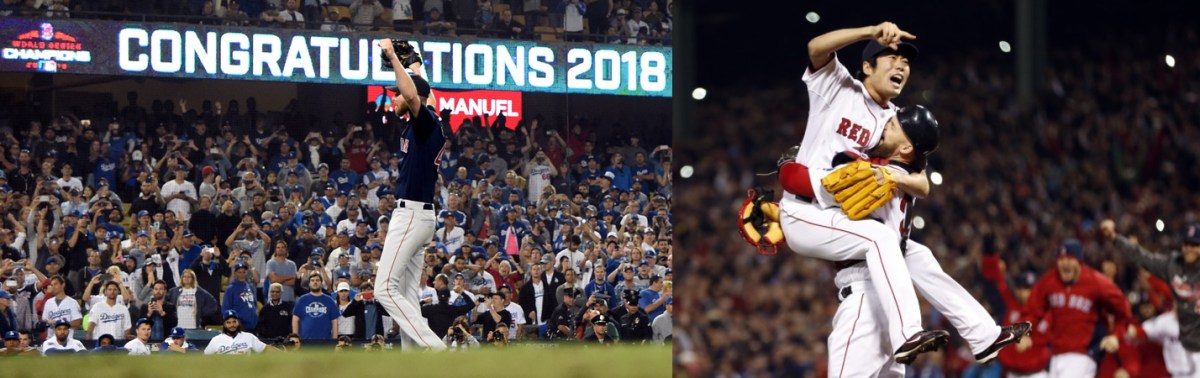
Uehara, then 38, did so for Boston against the St. Louis Cardinals in Game 6 of the 2013 fall classic at Fenway Park, while Sale, then 29, did so for Boston against the Los Angeles Dodgers in Game 5 of the 2018 fall classic at Dodger stadium.

Uehara, a right-hander, got the Cardinals’ Matt Carpenter swinging on a 2-2 splitter on the outer half of the plate, while Sale, a left-hander, got the Dodgers’ Manny Machado to corkscrew into the ground and whiff on a 1-2, 84 MPH slider.

Both hurlers wrapped up historic seasons for the Red Sox with those respective punchouts, and both hurlers recently spoke to The Athletic’s Ken Rosenthal in separate conversations about what they recall from those special nights in late October of 2013 and 2018.

Starting with Uehara, the Japan native was coming off a dominant season in which he didn’t even start the year as Boston’s closer.

Season-ending surgeries for Joel Hanrahan and Andrew Bailey resulted in Uehara sliding into that ninth-inning role in July, and he did not look back from there all the way until coming into the final frame of Game 6 of the 2013 World Series with a 6-1 lead to protect.

With the chance to secure the Sox’ first World Series win at Fenway Park since 1918, Uehara retired Jon Jay and Daniel Descalso in simple fashion, leaving Carpenter as the lone obstacle remaining.

Upon fanning the Cardinals infielder on the seventh and final pitch he would throw in 2013 to secure his club’s eight World Series title in franchise history, Uehara reveled in what he and the Red Sox had just accomplished.

“I realized that I didn’t need to throw anymore,” he said, through team interpreter Mikio Yoshimura. “It came purely from my complete satisfaction…how fulfilled I was. I can still feel the ultimate happiness when I look back at that moment.”

According to Rosenthal, Uehara considers recording the final out of the ’13 World Series the ‘pinnacle of his’ professional baseball career.

Turning to Sale now, the Florida native was slated to start Game 5 of the 2018 World Series for Boston, but that responsibility instead went to fellow left-hander David Price while Sale would be available to pitch out of the bullpen that night.

“We were like, ‘We’re in,'” Sale recalled him and Price’s meeting with then-manager Alex Cora following Boston’s Game 4 win over the Dodgers. “Me and DP high-fived, hugged it out. I looked at him and said, ‘We’re going old-school tomorrow.”

Price delivered with seven-plus quality innings of work in Game 5, while Joe Kelly finished the eighth and the Red Sox entered the ninth with a comfortable four-run advantage.

Sale had begun to warm up in the eighth, but after Kelly got through the frame unscathed, he sat back down until he got the call for the ninth.

“I remember running in from the bullpen,” Sale told Rosenthal. “The only two things going through my mind were, I have a four-run lead and I have three outs to get. Don’t trip on the way in.”

Sale did not trip on the way in, and he mowed down Justin Turner and Kike Hernandez in consecutive order before fanning Machado on four pitches to secure the series victory.

“It was like the chain didn’t catch. It happened so slow for me,” Sale said of the first few moments after recording the final out. “It was almost like strike three, OK, click-click, game’s over, click-click, holy shit, we’re world champions, we just won the World Series. It was like a delay for me. I got the third out. I took a couple of steps. Then boom, it hit me.”

Just recalling what happened that night gave Sale chills, he told Rosenthal. As it should considering how the 119-win, World Series champion 2018 Boston Red Sox are one of, if not the greatest team in the franchise’s storied history.

 

Who Could Red Sox Target in First Round of This Year’s MLB Draft?

The start date and length of the 2020 MLB first-year player draft may both be unknowns at this point in time, but that’s not stopping clubs from doing their due diligence ahead of the annual amateur selection process.

After not having any first-round picks last year due to luxury tax-related penalties from 2018, the Red Sox are slated to make their first selection with the 17th overall pick in this year’s draft. That being the case because at 84-78, Boston finished with the 17th-worst record in baseball last season.

According to Baseball America, the 17th overall pick in the 2020 draft has an assigned slot value of approximately $3,609,700, meaning that’s how much money the Sox will have to spend on that pick, although they can go over that allotted amount if they are willing to incur some tax penalties.

Personally, I’m no draft expert, but since the 2020 MLB Draft is right around the corner, I thought it would be a good idea to look into who Red Sox chief baseball officer Chaim Bloom and Co. could be targeting in the earliest stage of this year’s draft. Let’s get into it.

Target No.1: RHP Nick Bitsko, Central Bucks High School East (Doylestown, PA)

In his mock draft from April 15th, CBS Sports’ Mike Axisa had the Red Sox taking high school right-hander Nick Bitsko out of Doyleston, Pa.

Bitsko, 17, was initially set to graduate from Central Bucks High School East in 2021, but he will instead graduate early, adding on to an already impressive list of draft-eligible pitching prospects this year.

A University of Virginia commit, Bitsko posted a 1.18 ERA over six starts during his sophomore season last year, per MaxPreps.

According to a Baseball America scouting report from 2019, “Bitsko has a great pitcher’s frame, standing at 6-foot-4, 220-pounds and has a smooth and easy operation on the bump, with an overhead windup and clean three-quarter slot.”

From that same scouting report, Bitsko’s arsenal includes a 92-96 MPH fastball, a 76-83 MPH curveball, and an 86-87 MPH “firm” changeup.

If drafted by the Red Sox over the summer, Bitsko would presumably become one of the top right-handed pitching prospects in the organization, although there certainly are some minor concerns given just how young he is and how he didn’t get the chance to really throw in front of scouts this year.

Target No. 2: C Patrick Bailey, North Carolina State University

Moving to the college ranks now, Dan Zielinski III of the Baseball Prospect Journal has the Red Sox taking North Carolina State backstop Patrick Bailey in his latest first-round mock draft.

The 20-year-old out of Greensboro was drafted by the Twins in the 37th round of the 2017 draft, but he opted to honor his commitment to North Carolina State instead, and it looks like that decision is going to pay off for him.

Although he played in just 17 games for the Wolfpack this year due to the college baseball season being shut down last month, Bailey produced over the course of that small sample size, as he slashed .296/.466/.685 with six home runs and 20 RBI.

Per a March scouting report from Perfect Game USA, Bailey “has significant value as a switch-hitting catcher with pop on both sides of the plate to go along with strong defensive skills.”

If taken by the Red Sox this summer, I would guess that Bailey would slide behind Connor Wong as the second-best catching prospect in Boston’s farm system.

Target No. 3: RHP Tanner Burns, Auburn University

The first college hurler on this list, My MLB Draft’s most recent 2020 mock from earlier in the month has the Red Sox taking Auburn right-hander Tanner Burns in the first round.

Another former 2017 37th-round pick, Burns was limited to just four starts and 22 1/3 innings pitched this season due to the aforementioned shutdown. In those four starts though, the 21-year dazzled by posting a 2.42 ERA and averaging nearly 13 strikeouts per nine innings.

Listed at 6’1″ and 205 lbs., MLB Pipeline has Burns ranked as their No. 28 draft prospect. They describe the junior as a hurler, who “can work at 92-97 mph with his fastball and locate it to both sides of the plate. His breaking ball can be a plus pitch at times, combining slider velocity in the low 80s with curveball depth, but it gets slurvy at others. He hasn’t had much need for his changeup, though it has some sink and shows some signs of becoming an average third pitch.”

Burns also comes with some durability concerns, as he dealt with right shoulder soreness throughout the majority of his sophomore season in 2019.

Like Bitsko, Burns would presumably become one of the top right-handed pitching prospects in the Sox’ farm system if he is drafted by Boston at some point this summer.

Target No. 4: LHP Garrett Crochet, University of Tennessee

Sticking with the Southeastern Conference here, Prospects Live has the Red Sox selecting University of Tennessee southpaw Garrett Crochet in their 2020 Mock Draft 2.0.

A native of Mississippi who turns 21 in June, Crochet was only able to make one start for the Volunteers this year due to upper back soreness. To add on to that, the left-hander broke his jaw last May after taking a line-drive to the face in his final start of the 2019 regular season that resulted in him missing two weeks of action.

According to a Prospects Live scouting report from Crochet’s lone outing of the 2020 campaign against Wright State in March, the junior’s pitch arsenal included a fastball that sat around 95-97 MPH and maxed out at 99 MPH, an 84-86 MPH slider, an 80-90 MPH changeup, and an 80 MPH curveball.

MLB Pipeline has Crochet ranked as their 18th-best draft-eligible prospect, so he could very well still be on the board by the time the Red Sox make their first pick at No. 17.

Target No. 5: OF Heston Kjerstad, University of Arkansas

Last but not least, we have the lone outfielder on this list in the University of Arkansas’ Heston Kjerstad, who Perfect Game USA’s Brian Sakowski has going to the Red Sox in the first round of his most recent 2020 mock draft from late last month.

The Amarillo, Texas native did nothing but rake in his three seasons as a Razorback, putting together a .343/.421/.590 slash line to go along with 37 home runs and 129 RBI over 150 total games dating back to 2018.

Sakowski’s scouting report for Kjerstad looks a little something like this:

The left-handed slugger has double-plus raw pop along with the bat speed and impact generation to crush balls with wood. There are some positional questions long-term, but the Red Sox have shown the willingness to take prospects with big power and figure out how to get them into the lineup later.”

MLB Pipeline has Kjerstad ranked as their 10th-best prospect in this year’s draft, so he might not even be on the board by the time the Red Sox make their first selection at No. 17, but if he is, and the Sox take him, that would be quite the addition to an already fascinating mix of outfield prospects that includes Jarren Duran, Marcus Wilson, and Gilberto Jimenez to name a few.

Well, there you have it. Five prospects the Red Sox could take with the 17th overall pick in the 2020 first-year player draft. If they do wind up taking one of these five young players with their first pick, you can come back here and remember that I had it first.

Also, the 17th overall pick is the lowest first-round pick the Red Sox have had since 2016, so it’s probably important that they hit on it in order to improve a poorly-regarded, but steadily-improving farm system.

Red Sox Prospects: The Ultimate Top 30 Rankings for 2020

You ever visit those fantasy sports sites like ESPN or FantasyPros and notice how they compile their rankings into one elaborate chart that curates information from multiple sources/analysts? Well, I decided to do that with the top 30 prospects in the Red Sox farm system.

There might not even be any minor-league baseball played this year due to the coronavirus pandemic in the United States, but I thought it would nonetheless be interesting to compare how different sites–MLB Pipeline, SoxProspects, and FanGraphs–view the top talent that Boston has to offer at the minor-league level.

The following Red Sox prospects were ranked by one of the aforementioned three sites, but not the other two: SS Ceddanne Rafaela, 1B Pedro Castellanos, OF Bryan Gonzalez, OF Eduardo Lopez, OF Juan Chacon, and C Naysbel Marcano.

Prospects Danny Diaz and Tyler Esplin, meanwhile, were ranked by two of the aforementioned sites and left off by the other. They made the list.

Prospect MLB Pipeline SoxProspects FanGraphs Average
IF Jeter Downs 1 2 1 1.33
1B/3B Triston Casas 2 1 2 1.67
RHP Bryan Mata 4 3 3 3.33
1B/3B Bobby Dalbec 3 6 4 4.33
OF Gilberto Jimenez 5 5 6 5.33
RHP Noah Song 6 9 5 6.67
OF Jarren Duran 8 7 10 8.33
LHP Jay Groome 7 4 15 8.67
RHP Tanner Houck 10 8 9 9
RHP Thad Ward 9 11 11 10.33
SS Matthew Lugo 11 15 7 11
OF Nick Decker 12 17 14 14.33
IF Cameron Cannon 17 18 8 14.33
IF C.J. Chatham 13 10 21 14.67
C/IF Connor Wong 16 12 16 14.67
RHP Brayan Bello 18 19 12 16.33
IF Brainer Bonaci 14 20 18 17.33
RHP Chih-Jung Liu 15 27 13 18.33
SS Antoni Flores 19 21 17 19
LHP Chris Murphy 20 16 23 19.67
RHP Ryan Zeferjahn 22 13 29 21.33
3B Brandon Howlett 23 25 20 22.67
OF Marcus Wilson 21 23 25 23
RHP Aldo Ramirez 27 14 31 24
IF Jonathan Arauz 30 28 22 26.67
RHP Durbin Feltman 25 29 28 27.33
IF Danny Diaz 24 32 NR 28
RHP Andrew Politi 26 37 27 30
LHP Yoan Aybar 29 31 34 31.33
OF Tyler Esplin 28 60 NR 44

So, to boil it all down, here’s a more simplified top-30 list based off the math you see in the chart above.

  1. IF Jeter Downs
  2. 1B/3B Triston Casas
  3. RHP Bryan Mata
  4. 1B/3B Bobby Dalbec
  5. OF Gilberto Jimenez
  6. RHP Noah Song
  7. OF Jarren Duran
  8. LHP Jay Groome
  9. RHP Tanner Houck
  10. RHP Thad Ward
  11. SS Matthew Lugo
  12. OF Nick Decker
  13. IF Cameron Cannon
  14. IF C.J. Chatham
  15. C/IF Connor Wong
  16. RHP Brayan Bello
  17. IF Brainer Bonaci
  18. RHP Chih-Jung Liu
  19. SS Antoni Flores
  20. LHP Chris Murphy
  21. RHP Ryan Zeferjahn
  22. 3B Brandon Howlett
  23. OF Marcus Wilson
  24. RHP Aldo Ramirez
  25. IF Jonathan Arauz
  26. RHP Durbin Feltman
  27. IF Danny Diaz
  28. RHP Andrew Politi
  29. LHP Yoan Aybar
  30. OF Tyler Esplin

In total, 26 of the above 30 players were either drafted or signed by the Red Sox, while three were traded for, and one was acquired in the Rule 5 Draft.

For more in-depth analysis, information, and scouting reports on these prospects and even more players, check out one of the sites I used for this piece in SoxProspects.com. Those guys do a great job in covering the Red Sox farm system. You can even read more abut them and how they got their start here.

What If There Is No Minor-League Baseball at All in 2020?

The Pawtucket Red Sox, Portland Sea Dogs, Salem Red Sox, and Greenville Drive should all be a little more than two weeks into their season right about now.

Instead, the COVID-19 pandemic has put the baseball season, major and minor-league alike, on hold for the time being.

Recently, there have been reports about Major League Baseball potentially putting together a plan that would involve having all 30 clubs play their games this season in one central location, such as Arizona, Florida, or even Texas.

As encouraging as those proposals may seem, what has not been discussed much since MLB suspended spring training last month is when the minor-league season will start, or if there will even be one at all.

According to Baseball America’s J.J. Cooper, “In off-the-record discussions with people all around the game, there is a near-universal acknowledgement that there are a massive amount of hurdles that have to be overcome to make any MiLB season happen.”

Cooper gets into more of the financial and logistical side of things in his article, but in this case, I want to focus on the developmental side. More specifically, if no minor-league games are played in 2020, how would that impact a prospect’s development and career trajectory?

Take Red Sox infield prospect Jeter Downs for instance. The top prospect acquired by Boston from the Dodgers in the Mookie Betts and David Price trade is projected by FanGraphs to make his big-league debut at some point during the 2022 campaign. Would having no minor-league games to play in this year result in Downs’ ETA being pushed back another year?

That probably still depends on what the 21-year-old does in 2021, but taking away a year to develop and continue to improve in actual games while being under the eyes of the organization is something worth thinking about nonetheless.

As odd as it would be to see MLB games played in front of no fans in one neutral location this year, it might be even weirder to have no minor-league baseball to look forward to in 2020 at all.

Cape Cod Baseball League Cancels 2020 Season Due to Coronavirus Pandemic

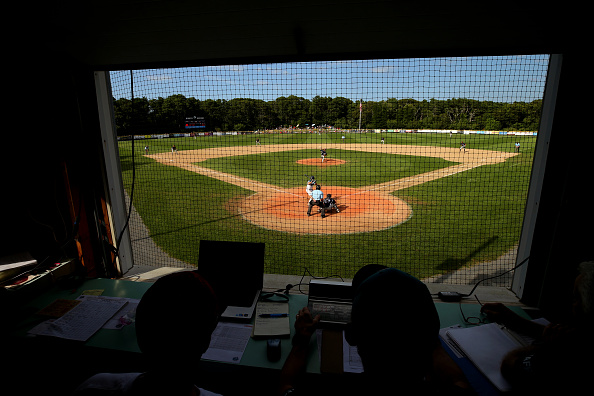
In the midst of the COVID-19 pandemic that has put the sports world on hold, the Cape Cod Baseball League decided to cancel its 2020 season on Friday.

Per an official release, the league’s executive committee “voted unanimously to cancel the 2020 Cape Cod Baseball League season.  The decision was based on the health concerns and safety needs of all involved. Following CDC guidelines and medical recommendations, the league determined it would be impossible to guarantee the safety of players, coaches, umpires, host families, volunteers and fans during this unprecedented health crisis.”

Made up of 10 teams scattered across the cape, the Cape League was founded in 1885 and has become one of the top summer collegiate baseball leagues in the country.

Notable Red Sox players and prospects who spent their college summers on the cape include Chris Sale, Mitch Moreland, Matt Barnes, Jackie Bradley Jr., Brian Johnson, Bobby Poyner, Brandon Workman, Bobby Dalbec, and Cameron Cannon to name a few.

“We would like to thank all our dedicated volunteers and sponsors for their support and look forward to playing again in 2021,” the aforementioned statement read. “Thank you for your continued support and stay safe and healthy.”

On a personal note, this news stinks. Going to a handful of Cape League games every summer was always something I looked forward to. Now, it looks like we’ll have to wait until 2021 for the CCBL to return.

Red Sox’ Xander Bogaerts Says It Would ‘Be Hard’ to Have All MLB Games Played in One City This Season If Baseball Does Return

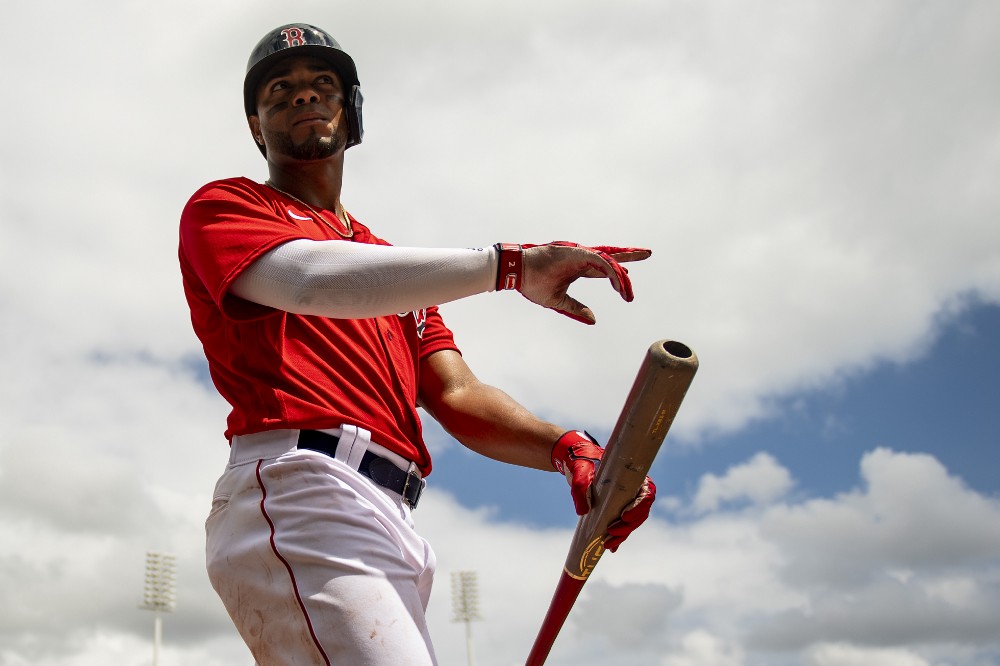
With no baseball to be played for the time being while the world deals with the coronavirus pandemic, Red Sox shortstop Xander Bogaerts has had more time on his hands recently, and he spent some of that time talking to GQ’s Alex Shultz last week.

Discussing a wide range of topics, the two-time All-Star went into depth on what he’s been doing in his native Aruba since Red Sox players and staff went back to their homes last month.

“I don’t wake up at 8 AM doing workouts no more because we don’t have a timetable for returning,” he said when describing what the average day has looked for him recently. “I usually wake up and go to my PlayStation right away, playing lots of FIFA and Fortnite. Then I have breakfast, maybe some eggs or cereal, and do a workout afterwards in the afternoon. I don’t have much to do. If it’s not a workout or PlayStation, I’m playing dominoes with my buddies. Here in Aruba, they want you to social distance, so no more than four people in a group.”

Bogaerts emphasized how he is just trying to maintain right now, telling Shultz that “This is a crazy time and we don’t know if we’re even going to have a season. I don’t want to be the one who’s not doing anything, and then they tell you the season is starting and I’m so far behind. It’s really tough mentally to try and stay in shape.”

To stay in shape, Bogaerts said that he tries to throw with his twin brother Jair everyday in addition to going to the beach, but “in Aruba, you can only go [to the beach] if it’s for workouts. No one can go to chill. Makes the beach a little more boring. But I do some running drills that strengthen your legs and lower body.”

The 27-year-old is coming off a breakout campaign in 2019 in which he finished fifth in American League MVP voting. He accredited that breakout to gaining more experience last season, and how in “the year prior, we had some coaching changes that helped unpack some stuff that I had hidden. It made me become a much better player. All of my hitting coaches have had good, different philosophies, but this one kind of took me to another level.”

In regards to holding out hope for there to be a baseball season in 2020, Bogaerts added that it can be hard to focus at times while working out because there is no set date for a return yet.

Said Bogaerts, “In the offseason, you work out and look forward to February reporting day. You know you have to be ready for that specific day. Now, you don’t have anything like that. We’ll have to wait and see when the experts say it’s the right time to play.”

Another factor in all that uncertainty also includes where games will be played in 2020 if baseball does indeed return.

Several proposals–such as playing games in Arizona, Florida, or even Texas–have been thrown out there, but nothing is definite nor agreed upon at this point in time.

As an international player signed out of Aruba in August 2009, Bogaerts has grown accustomed to being away from his family back home for months at a time. However, he understands that it would be more challenging for American-born players to make such a sacrifice if teams play all their games in one city in 2020.

“That’s going to be hard,” Bogaerts said of the proposed neutral location plan. “I don’t know how they would do that.”

Since signing a six-year, $120 million extension with Boston last April, Bogaerts has emerged as a veteran presence and a leader in the Red Sox clubhouse. It would be nice to see him build on a successful 2019 season sometime this year. We’ll have to wait and see on that, though.

To read Bogaerts’ full interview with GQ, click here.

To follow Bogaerts on Instagram, click here.

Red Sox Chief Baseball Officer Chaim Bloom on Not Having a Second-Round Pick in This Year’s Draft: ‘It’s Significant’

As part of their punishment for illegally stealing signs in 2018, the Red Sox on Wednesday were docked a second-round pick in this year’s first-year player draft.

That may not sound too significant on the surface, but when you consider that the 2020 MLB Draft will only be anywhere between 5-10 rounds to cut back on spending, it becomes that much larger of a hurdle.

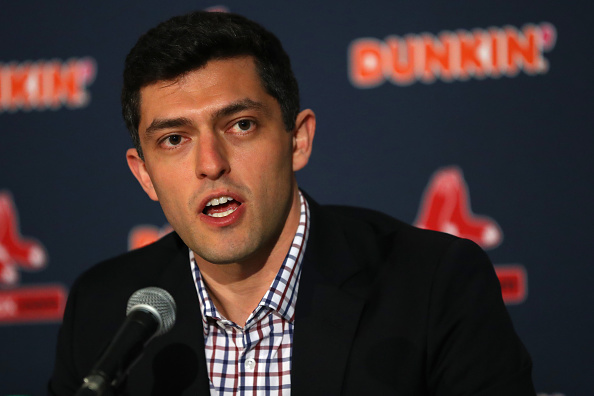
Red Sox chief baseball officer Chaim Bloom echoed that same sentiment when speaking with reporters via a conference call earlier Wednesday evening.

“The potential limitations on the draft this year just makes that punishment larger” he said. “It’s significant.”

According to Baseball America, the Sox were slated to make their second-round pick in this year’s draft with the 52nd overall selection, so all that means is the chance to continue to improve a poorly-regarded farm system has in part been taken away.

Some notable prospects the Red Sox have drafted in the second round of past drafts include Jon Lester, Dustin Pedroia, Justin Masterson, Alex Wilson, Brandon Workman, and Sam Travis.

The loss of a second-round pick in this year’s draft comes a year after the Sox were without a first-round selection in the 2019 draft. That was due to luxury tax-related penalties, though, and they wound up taking infielders Cameron Cannon and Matthew Lugo with their first two selections in the second round.

The exact date of the start of the 2020 draft is not even known at this point. It could begin as soon as June 10th or as late as July 20th. It’s anyone’s guess, really.

On another note, I’m planning on writing something up on who Bloom and Co. could target in the first round of the 2020 draft (Red Sox have the 17th pick), so stay tuned for that in the coming days.

Red Sox to Remove ‘Interim’ Tag From Ron Roenicke’s Title, Name Him Manager for 2020 Season

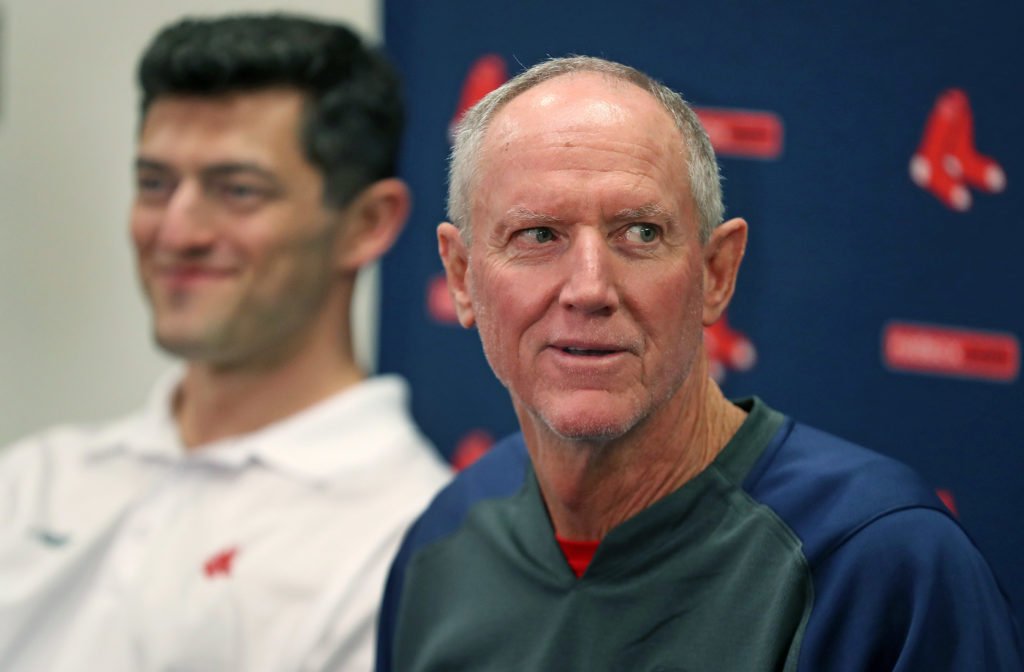
The Red Sox have removed the ‘interim’ tag from Ron Roenicke’s title, making him just the manager now, according to team chairman Tom Werner.

Roenicke, 63, was named interim manager of the Red Sox by chief baseball officer Chaim Bloom back on February 11th, when Boston was still under investigation by Major League Baseball for stealing signs electronically in 2018.

At the time, the ‘interim’ tag was given to Roenicke so that the Red Sox could “respect the [league’s] ongoing investigation,” meaning that permanency would not be addressed until the findings were revealed.

A little more than two months after Bloom said that to the media, MLB commissioner Rob Manfred’s findings have been released, and while the Sox were handed down some punishment for what they did in 2018, Roenicke was exonerated, hence the move to officially name him manager on Wednesday.

Roenicke had served as Alex Cora’s bench coach the previous two seasons with the Red Sox. He has previous big-league managerial experience with the Brewers, where he went 342-311 (.508%) over a five-year tenure from 2011 until May 2015 that included a National League Central title the first season he was at the helm.

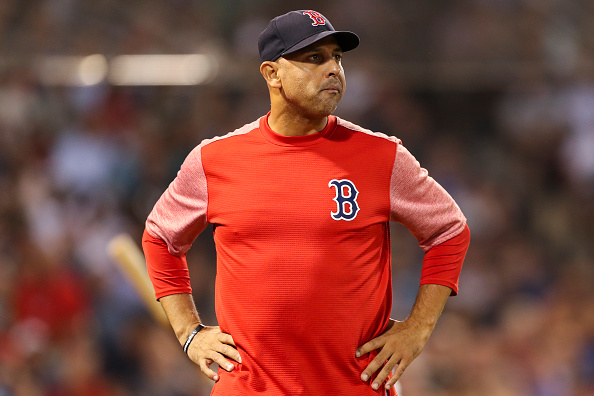
Although Roenicke has officially been named the 48th manager in Red Sox history, the possibility remains that Cora, who was cleared of any wrongdoing while manager of the Red Sox, could return to Boston in 2021 after he was handed down a one-year ban by the commissioner on Wednesday.

That remains speculative, though. For now, I just want to see Roenicke have actual baseball games to manage this year, whether it be in Boston, Arizona, Florida, or Texas. Let’s just get baseball back.

Who Is J.T. Watkins? Red Sox Video Replay Coordinator Violated MLB Regulations During 2018 Regular Season, per Commissioner Rob Manfred

Major League Baseball commissioner Rob Manfred finally released his findings into the 2018 Red Sox and the club’s “improper use of the video replay room” on Wednesday, and fall guy or not, Red Sox video replay coordinator J.T. Watkins took most of the blame for what went down two years ago.

Watkins’ name is mentioned approximately 125 times in the commissioner’s 15-page report, starting with the following statement:

“I find that J.T. Watkins, the Red Sox video replay system operator, on at least
some occasions during the 2018 regular season, utilized the game feeds in the
replay room, in violation of MLB regulations, to revise sign sequence information
that he had permissibly provided to players prior to the game.”

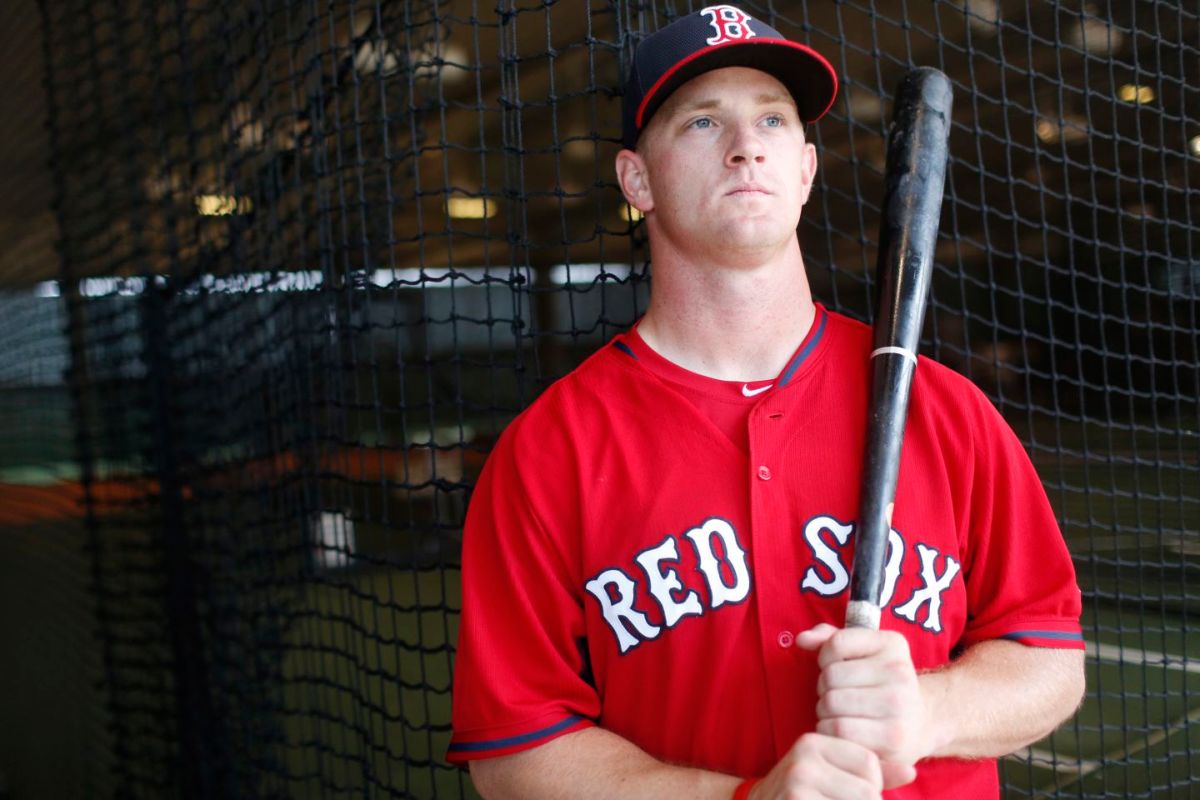
Listed in the Sox’ media guide as the team’s advance scouting assistant, Watkins first joined the organization in 2012 as a 10th-round draft pick out of West Point.

An Alabama-born first baseman, Watkins, now 30 years old, retired from baseball in November 2016 after three minor-league seasons (he missed the 2013 and 2014 seasons while serving in the military for two years) and transitioned into a role with Boston’s advance scouting staff that winter.

A little more than three years after being offered that position, Watkins will be suspended without pay for the 2020 regular and postseason and will not be able to retain his role as replay room operator until the conclusion of the 2021 postseason.

Along with former manager Alex Cora, who was handed down a one-year ban for what he did as Astros bench coach in 2017, Watkins was the only Red Sox employee, player or staff, to be disciplined by Manfred.

Per the commissioner’s report, Watkins “was responsible for attempting to decode an opposing team’s sign sequences prior to and after the completion of the game, which was (and is) permissible under the rules. Watkins conveyed the sign sequence information he learned from his pregame work to players in a meeting prior to the game, or sometimes during the game. The issue in this case stems from the fact that Watkins—the employee responsible for decoding an opponent’s signs prior to and following the game—also was the person stationed in the replay room during the game to advise the Manager on whether to challenge a play on the field. (It was not uncommon for those two roles to be combined in this manner by Clubs in 2018). Therefore, Watkins, who was an expert at decoding sign sequences from video, had access to a live feed during the game that he could have—if he so chose—used to supplement or update the work he had performed prior to the game to decode an opponent’s signs.”

There’s a lot to digest in the report, which you can read in full here, but I did find it interesting that, “Of the 44 players who provided information, more than 30 stated that they had no knowledge regarding whether Watkins used in-game video feeds to revise his advance sign decoding work. However, a smaller number of players said that on at least some occasions, they suspected or had indications that Watkins may have revised the sign sequence information that he had provided to players prior to the game through his review of the game feed in the replay room.”

Despite losing Watkins as video replay coordinator for the next two seasons, it is fair to say that the Red Sox got off lightly here. So much so that Alex Cora will probably be back as manager in 2021.

All in all, it’s just nice to say that after three-plus months of speculation and waiting, it’s nice to say that this league-led investigation into the Red Sox is, at least to my knowledge, complete. They were punished for their actions, now it’s time to move on.


Red Sox Sign-Stealing Penalties Revealed: Second-Round Draft Pick Stripped, Alex Cora Handed Down One-Year Ban, and Replay Operator Deemed ‘Rogue Employee’

At long last, the results of the MLB-led investigation into the 2018 Red Sox have finally been revealed, and according to The Athletic’s Ken Rosenthal, the penalties are light.

As mentioned in the tweet above, the Sox were docked just a second-round pick in this year’s draft, while team replay operator J.T. Watkins was handed down a ban through the 2020 postseason in addition to not being able to return to the same position in 2021, and perhaps most importantly, Alex Cora was also handed down a one-year ban through the 2020 playoffs, but only for his conduct with the Astros, not for what he did as manager of the Red Sox in 2018.

Per Rosenthal, MLB commissioner Rob Manfred “found that Watkins, on at least some occasions during the 2018 regular season, illegally utilized game feeds in the replay room to help players during games” and “acted as a rogue employee” in doing so. In other words, what the Red Sox did was not as egregious as what Houston did in 2017.

Despite illegally utilizing the video replay room throughout the 2018 regular season, “The league did not find that Boston’s impermissible conduct continued during the 2018 postseason or 2019 regular season.”

In a formal statement, Red Sox president Sam Kennedy addressed the results of the investigation Wednesday, saying that “As an organization, we strive for 100% compliance with the rules. MLB’s investigation concluded that in isolated instances during the 2018 regular season, sign sequences were decoded through the use of live game video rather than through permissible means.

“MLB acknowledged the front office’s extensive efforts to communicate and enforce the rules and concluded that Alex Cora, the coaching staff, and most of the players did not engage in, nor were they aware of, any violations. Regardless, these rule violations are unacceptable. We apologize to our fans and Major League Baseball, and accept the Commissioner’s ruling.”

The Red Sox and Cora agreed to mutually part ways back in January shortly after Manfred handed down his punishment to the Astros, which included the docking of first and second-round picks in this year’s draft, as well as a $5 million fine and one-year suspensions for then-general manager Jeff Lunhow and then-manager A.J. Hinch.

Compared to what the Astros got, what just got handed down to the Red Sox does not seem all that bad. In fact, it does not seem out of the realm of possibilities that Cora could return to manage the Sox once again in 2021.

For now, it will be interesting to see how long it takes Boston to remove the ‘interim’ tag from interim manager Ron Roenicke’s title.

UPDATE: Well I guess that answers that.