Red Sox sign former Athletics right-hander Daniel Gossett to minor-league deal, per report

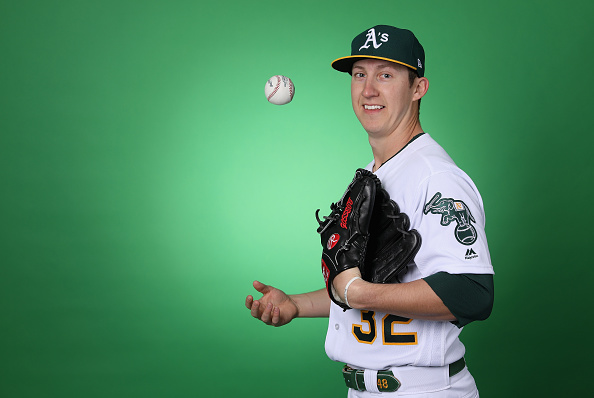
The Red Sox have signed free-agent right-hander Daniel Gossett to a minor-league contract for the 2021 season, according to USA Today’s Bob Nightengale. The deal also includes an invite to major-league spring training.

Gossett, 28, was originally drafted by Boston out of high school in the 16th round of the 2011 amateur draft, but he opted to honor his commitment to Clemson University as opposed to signing with the club.

Later drafted out of Clemson by the Athletics in the second of the 2014 amateur draft, the South Carolina native made 23 big-league starts with Oakland between the 2017 and 2018 seasons.

He posted a 5.91 ERA and 5.67 FIP over 115 2/3 total innings of work in those outings before undergoing Tommy John surgery in August 2018.

Since going under the knife, Gossett may have missed the remainder of 2018 and the entirety of 2019, but he did make five starts for the Mesa Solar Sox in last year’s Arizona Fall League.

In those five starts, the 6-foot, 185 lb. hurler yielded just four earned runs on 10 hits and three walks to go along with 12 strikeouts over 14 innings pitched. That’s good for an ERA of 2.57 and .204 batting average against.

Following that impressive showing in the desert, Gossett opened up the shortened 2020 campaign on the Athletics’ 40-man roster and at the team’s alternate training site in San Jose. But, the once-highly touted pitching prospect was designated for assignment and subsequently released in late July.

According to The Athletic’s Melissa Lockard, Gossett “is healthy and ready for a full season in 2021.”

If anything, Gossett could provide intriguing starting rotation depth to a Red Sox team in need of it at the moment.

Working primarily with a four-seam fastball, slider, changeup, curveball, and sinker, the former A’s righty owns a lifetime 3.36 ERA over 23 appearances (21 starts) and 128 2/3 innings spanning parts of three seasons, as noted by MassLive.com’s Chris Cotillo.

With that in mind, Gossett could begin the 2021 season in Triple-A Worcester’s rotation depending on how well he performs in spring training. We will have to wait and see on that.

So far this offseason, Red Sox chief baseball officer Chaim Bloom and Co. have either signed — Gossett included — or re-signed the following players to minor-league deals:

C Roldani Baldwin
C Jhonny Pereda
1B Joey Meneses
1B Josh Ockimey
OF Cesar Puello
OF Michael Gettys
OF Johan Mieses
LHP Emmanuel De Jesus
LHP Stephen Gonsalves
RHP Kevin McCarthy
RHP Seth Blair
RHP Raynel Espinal
RHP Caleb Simpson
RHP Zack Kelly
RHP Jose Disla
RHP Daniel Gossett

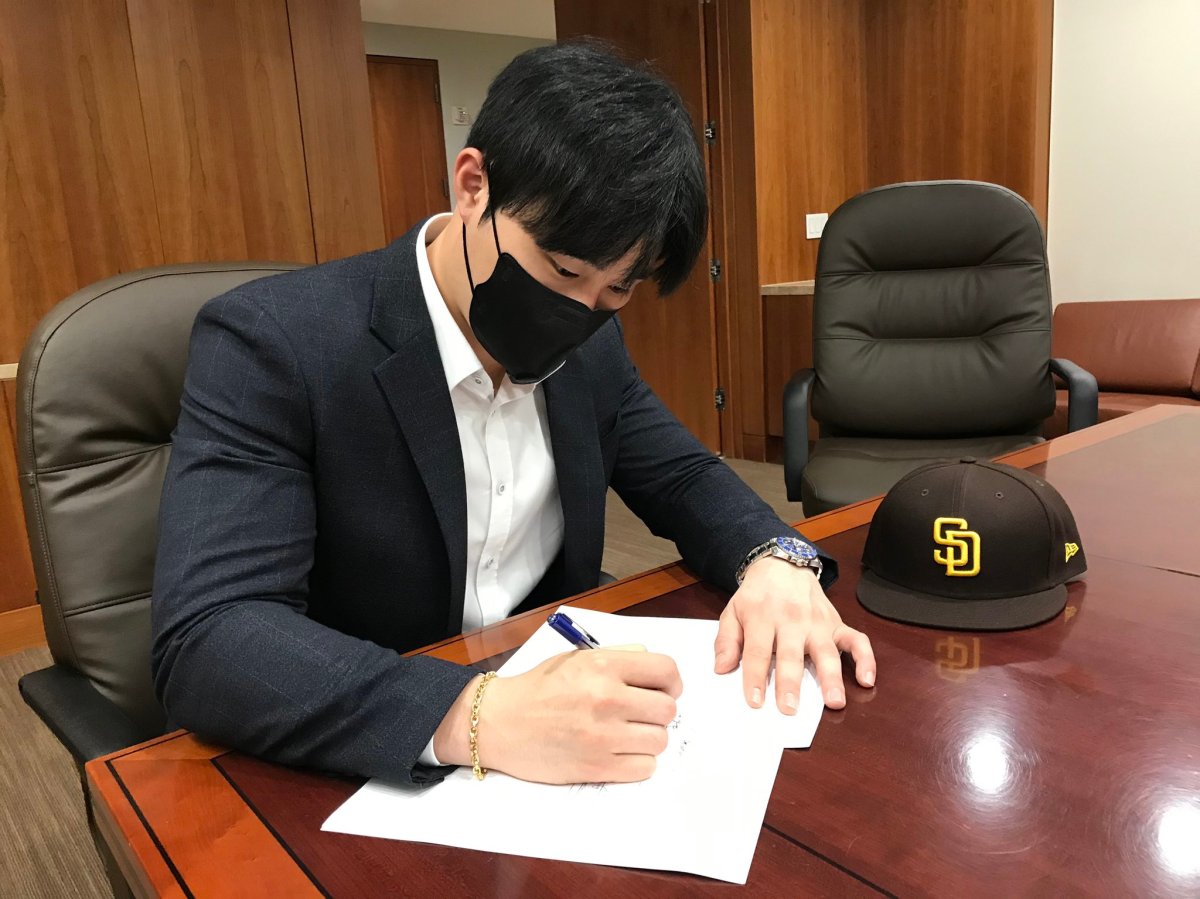
Newest Padres infielder Ha-Seong Kim viewed Red Sox as potential suitor before signing with San Diego, per report

South Korean sensation Ha-Seong Kim may have inked a four-year, $28 million deal with the Padres this past Thursday, but according to multiple reports out of South Korea, the 25-year-old strongly considered the Red Sox as a potential suitor.

As noted by DRaysBay’s Homin Lee, the right-handed hitting Kim may have thought his ‘pull-heavy swing style’ would be best suited for Fenway Park and its Green Monster in left field, but he ultimately picked the Padres on account of San Diego’s warm weather.

According to The Boston Globe’s Pete Abraham, the Red Sox “made a strong bid” for Kim prior to him signing with the Padres.

That point backs up MLB Network’s Jon Heyman’s report from Thursday, which states that the versatile infielder “had five and six-year offers” on the table but he “wanted to bet on himself.”

With the ideas that Kim preferred a city with warmer weather and wanted to bet on himself in mind, it’s important to look back on what Red Sox chief baseball officer Chaim Bloom said this past Wednesday in regards to recruiting international free agents posted from countries such as Japan and South Korea.

“I think in different situations, you will sometimes see — especially when the money amount is smaller — there are other factors that come into play more,” Bloom told WEEI hosts Rob Bradford and Jon Meterparel. “Players will sometimes pick teams, pick from similar offers based on certain other factors that are important to them. Whenever we’re involved in that type of situation, we want to put our best foot forward and make sure that we can show a player how we can appeal to them. But, people are different and everybody’s got different things that they like and value. Money’s part of that and sometimes there are other factors that are part of that.”

By signing a four-year pact with the Friars that runs through the end of the 2024 season, Kim could become a free agent again at 29 years old, though the deal does include a mutual option for a potential fifth season in 2025.

In San Diego, the plan at the moment is for Kim to see the majority of his playing time come at second base, per the New York Post’s Joel Sherman. That likely would have also been the case had he landed with the Sox opposed to the Padres.

Instead, Boston will have to look elsewhere to address their issues at second base this offseason coming off a 2020 campaign in which that position group posted an American League-worst .586 OPS and league-worst wRC+ of 55.

On that front, the Sox are reportedly interested in free-agent utilityman Kike Hernandez, who can play second base as well as all three outfield positions.

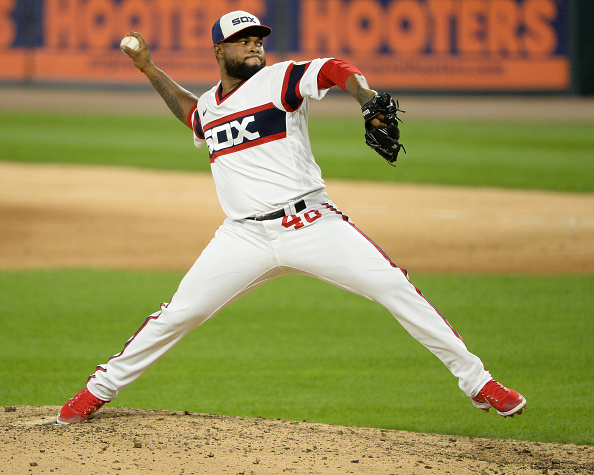
Red Sox one of several teams interested in free-agent reliever Alex Colomé, per report

The Red Sox are among the teams reportedly interested in free-agent reliever Alex Colome, per FanSided’s Robert Murray.

Colome, who recently turned 32, is coming off a 2020 campaign with the White Sox in which he posted a superb 0.81 ERA and .460 OPS against over 21 appearances and 22 1/3 innings of work while converting 12 out of a possible 13 save opportunities.

The veteran right-hander is projected by MLB Trade Rumors to net himself a one-year deal worth somewhere around $6 million this offseason, though MLBTR does have him returning to the South Side.

That being said, Colome does have connections to the Red Sox, as the above tweet mentions, thanks to chief baseball officer Chaim Bloom.

Both Bloom and Colome spent plenty of time together with the Rays following the latter’s big-league debut in 2013, which came more than six years after he signed with Tampa Bay out of the Dominican Republic in March 2007.

Listed at 6-foot-1 and 225 lbs., Colome works with just two pitches: a cut and four-seam fastball, per Baseball Savant. He posted a 15.3% whiff rate with those pitches last season.

The Red Sox, coming off a 2020 campaign in which they ranked 27th in baseball in bullpen ERA (5.79), are in need of upgrades to their relief corps.

Colome, despite owning a lifetime 5.31 ERA at Fenway Park, certainly fits that mold and could even emerge as the club’s closer if he is indeed signed.

For the time being, though, that remains just a possibility since it is not yet known how aggressively the Red Sox are pursuing the experienced hurler.

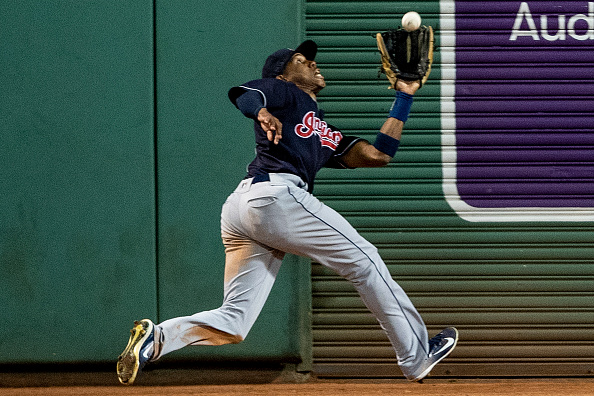
Red Sox should consider claiming former Indians outfielder Greg Allen off waivers

So far this offseason, the Red Sox have done a fine job in bolstering their outfield depth.

Slugging outfielder Hunter Renfroe signed a one-year deal with the club last month, while the likes of Cesar Puello and Michael Gettys have been signed to minor-league contracts for 2021.

That being said, you can never have enough depth at any position, and it just so happens an intriguing outfielder technically became available earlier this week. That outfielder’s name? Greg Allen.

The 27-year-old was designated for assignment by the Padres on Thursday in order for the club to make room on its 40-man roster for South Korean infielder Ha-Seong Kim.

With San Diego this past season, Allen appeared in just one game after being part of the trade that sent Mike Clevinger from the Indians to the Friars in late August.

Prior to that blockbuster trade, Allen spent parts of four major-league seasons with the Tribe starting in 2017, accruing a .239/.295/.344 slash line to go along with eight home runs, 57 RBI, and 31 stolen bases over 220 total games played.

Seven of those 220 games have come at Fenway Park, where Allen owns a career-best 1.249 OPS over 27 plate appearances.

In addition to providing speed on the base paths, the California native has proven to be a capable major-league defender who can play all three outfield positions adequately.

Looking back at the 2019 campaign, Allen posted a positive-six defensive runs saved and ultimate zone rating of 5.0 while logging 570 1/3 innings — 360 2/3 in left, 132 2/3 in center, 77 in right — in the Indians outfield.

He also ranked sixth among major-league left fielders in sprint speed (29 feet per second) and 44th among major-league outfielders in outs above average (3) in 2019, per Statcast.

Having presented all this information, the Red Sox could very well look into adding Allen to their outfield mix despite the former top prospect’s light-hitting ways.

It’s a scenario that is reminiscent of Christian Arroyo’s over the summer.

Boston claimed the infielder off waivers from the Indians on August 13, promptly designated him for assignment a week later, and then outrighted him on August 23 before purchasing his contract on September 8.

It’s a unique — and somewhat risky — way to go about adding depth, but the Sox managed to do it with Arroyo, who is out of minor-league options, as is the case with Allen.

On top of that, trying to stash Allen away would address an offseason need by bolstering Boston’s outfield defense. Chief baseball officer Chaim Bloom conveyed this school of thought last month in the wake of the Renfroe signing.

“I always talk about depth and it’s so important, but I do think we still have room to add without straining our roster,” Bloom said when speaking with reporters via Zoom. “The good thing here is we have a number of outfielders who are all good enough athletes to play center field. But we still also have room to augment that with a center fielder or a corner outfielder. So we now have options and different paths we can take. But it would be nice to increase our depth as we go forward.”

Bringing on Allen seems like a potentially sound way for Bloom and Co. to increase the Red Sox’ depth going forward. But, another roster move would be required in order for that to happen.

This is the case because the club’s 40-man roster is currently at full capacity.

To make it clear, this is just a suggestion. Allen won’t clear waivers until late next week, and I’m assuming he doesn’t have enough service time to refuse an outright assignment to the minors given the fact he isn’t supposed to reach free agency until the conclusion of the 2024 season.

Red Sox’ Chaim Bloom on pursuing international free agents posted from Japan, South Korea: ‘That’s a market we need to involve ourselves in just like any other’

While exploring options to improve their roster this offseason, the Red Sox have looked towards the international market for potential additions.

So far, the Sox have been in on the likes of Japanese right-hander Kohei Arihara and Korean infielder Ha-Seong Kim, both of whom recently signed with other clubs in the Rangers and Padres.

That being said, Boston, by all accounts, is still in pursuit of another free-agent hurler out of Japan in Tomoyuki Sugano, a two-time winner of the Sawamura Award (Japan’s equivalent to the Cy Young Award) who was posted by the NPB’s Yomiuri Giants earlier this month.

Appearing on WEEI earlier Wednesday afternoon, Red Sox chief baseball officer addressed his club’s interest in the 31-year-old righty.

“I think it’s more difficult in a sense than it is with a pitcher who has pitched a lot domestically, where you just have more information,” Bloom said when asked about evaluating an international talent such as Sugano. “But, that doesn’t necessarily mean a pitcher from that market is an unwise investment. I think… there’s a lot more unknowns when you’re bringing someone over to compete in a different league, on a different schedule than they’re used to competing. But, baseball’s baseball. We have a number of examples, including in this organization, of guys coming from that market and having success. I think we have, as an industry, a decent ability to predict how they’ll do. So, that’s a market I think we need to involve ourselves in just like any other.”

Going back to Arihara and Kim, Bloom emphasized that while recruiting the pair of international sensations was important, there were other factors out of the team’s control to consider as well.

“I think with some of these other guys, [recruiting] is still part of what you do,” he said. “You want to put your best foot forward. You want to engage with the player to the extent that you can through the process and get to know them. I think there’s a little less of that now, obviously because it can’t happen in person, but it’s still something you do with those guys.

“But, I think to different degrees with different players, the money is obviously going to be a huge factor,” Bloom added. “And I don’t blame the players for that. Obviously, they want to make sure they’re comfortable with there they go — and that is a factor in some cases — but you also never know how many chances you’re going to have to set yourself up financially. And they’re right to care about that as well.”

Neither Arihara, who at 28 signed a two-year, $6.2 million deal with Texas, nor Kim, who at 25 reportedly signed a four-year, $25 million deal with San Diego, received too large of a payday. As previously alluded to, that would make it seem as though both players had other priorities in mind when deciding which major-league club to sign with.

“I think in different situations, you will sometimes see — especially when the money amount is smaller — there are other factors that come into play more,” stated the Sox’ CBO. “Players will sometimes pick teams, pick from similar offers based on certain other factors that are important to them. Whenever we’re involved in that type of situation, we want to put our best foot forward and make sure that we can show a player how we can appeal to them. But, people are different and everybody’s got different things that they like and value. Money’s part of that and sometimes there are other factors that are part of that.

“I think historically, there’s a certain type of player that draws to Boston, and there’s certain types of players that would rather play elsewhere,” Bloom said. “This place is not for everybody, and you want to make sure that the players we’re bringing here in those circumstances are guys that are going to thrive playing here and really want to be here.”

So, if Sugano is indeed someone who Bloom and Co. believe fits the above criteria and really wants to play in Boston, the Red Sox have until 5 p.m. eastern time on January 7 to sign him.

ESPN’s Kiley McDaniel predicted earlier this month that a two-year, $24 million deal could be enough for a team to land the veteran right-hander’s services. We will have to wait and see on that, but January 7 is approaching rather quickly.

Chaim Bloom says trading for Blake Snell would have put Red Sox ‘further behind in our goal to win as many championships as we can’ over the long-term

Even with starting pitching issues to address this offseason, the Red Sox were likely never close to trading for former Rays left-hander Blake Snell.

The Rays dealt Snell to the Padres earlier this week in exchange for right-handed pitchers Luis Patino and Cole Wilcox as well as catchers Francisco Mejia and Blake Hunt.

Besides Mejia, who at 25 years old has already graduated from his prospect status, the other three players acquired by Tampa Bay were regarded by MLB Pipeline as some of the best prospects in San Diego’s farm system, with the 21-year-old Patino even ranking as baseball’s No. 23 overall prospect.

Having said that, the Padres were able to acquire a player of Snell’s caliber because of the strength of their minor-league pipeline.

Dealing for a 28-year-old who won the American League Cy Young Award in 2018 and is under team control for three more seasons is no simple task, but the Pads, led by aggressive general manager A.J. Preller, were able to accomplish this.

The Red Sox, meanwhile, do not have the luxury of having one of the top farm systems in baseball, an honor they had enjoyed for a healthy portion of the 2010s.

Due to the recent decimation of their farm system and the urgency to build it back up to its once elite status, Boston felt as though it could not part with the pieces they would need in order to acquire a frontline starter such as Snell via trade. Chief baseball officer Chaim Bloom made that much clear when appearing on WEEI earlier Wednesday afternoon.

“That’s not something I would ever want to get into in detail, but I would just say, generally, that we try to be involved in everything,” Bloom told Rob Bradford and Jon Meterparel. “With a deal like that, what that deal amounted to was taking an enormous amount of long-term value and pushing it into the here and now. And pushing it into the short-term. When you look at the amount of talent that came back for Blake and the length of time over which that talent can impact the Rays, that’s exactly the sort of deal, given the cost and given the price tag, that would not make sense for where we’re positioned right now.

“I think it would put us further behind in our goal to win as many championships as we can over the course of the long-term,” he continued. “It’s our job to be involved in everything and we’re remiss if we don’t check in every player who might be available. When it comes to taking an enormous amount of value and consolidating it into a smaller amount that impacts us right now, I think that’s the opposite of what we need to do at the moment.”

While the Rays, led by general manager Erik Neander, received plenty of flak for parting ways with a homegrown star like Snell as they have become accustomed to doing in recent years — think David Price, Evan Longoria — Bloom, who served as one of Neander’s right-hands for a few years before taking charge of the Sox’ baseball operations department last fall, defended the club’s and his former boss’ decision.

“The reason that the Rays are as good as they are right now is because they have the guts to do these things even though they were painful,” he said. “Regardless of what your budget is — it’s certainly more critical to do it on a smaller budget — planning for the future and seeing around corners is important. The Rays have figured out how to win over time because they’ve placed an emphasis on that.

“As difficult as it is emotionally, I think it’s easy to look at that and say ‘Hey, look at the Rays. Look how they win despite the fact that they do these things,'” added Bloom. “I would argue that they win because they do these things. Because they recognize that in order to have a consistently bright future, they have to consistently place great emphasis on it. And when you do that relentlessly over time, you end up with a really good, really sustainable team despite the limited budget they have.”

Though it’s safe to assume that the Red Sox will be operating on a larger budget than the Rays this offseason and for the foreseeable future, there are certain measures that need to be taken in order to achieve sustained success over an extended period of time, as Bloom alluded to.

One way to do that is to ensure the right kind of players are added through a variety of methods such as trade, free agency, or even waiver claim. While it’s not exactly known what the Red Sox specifically look for in the players they target, Bloom did provide some insight into what his ‘offseason check list’ looks like at the moment.

“Right now, there’s a lot of players on it,” he stated. “Part of that is a function of where we are, where there’s a lot of different ways we can improve, and part of it is how we are looking to improve. In the short-term, we have touched base with so many different players who we think could help us, who could fit us. There’s pitching, obviously, but also on the position player side. I think there’s different ways we can improve and different profiles of players we can bring in to help us.

“We also don’t want to take our eye off the ball that at the end of the day, we’re not just looking to put a little plaster in here and patch some holes,” said Bloom. “We’re looking to take this organization back to where we can compete for championships consistently, year in and year out. And that means we got to be open to different moves, different acquisitions that might not just be about 2021. But, it just speaks to [the fact] that there’s a lot of different ways that we can improve. The No. 1 question we ask ourselves on anybody is: Is this pushing us towards that goal of sustaining a championship contender here? If the answer is yes, then we can explore it further, we can figure out how it impacts us in the near-term, what it might mean for other players, and hopefully we check as many of those boxes as possible.”

So far this winter, the Red Sox have only added two major-league players via free agency in the forms of outfielder Hunter Renfroe and right-hander Matt Andriese, both of whom agreed to one-year contracts with the club earlier this month.

24-year-old righty Garrett Whitlock was also added to the major-league roster via the Rule 5 Draft, but Bloom and Co. are still hoping to add more pieces as the offseason ensues and the calendar flips to January.

“I would hope that by the end of this offseason, there’s a number of different guys we’ve brought in here,” Bloom said. “There’s certain possibilities on the trade market, creative things that could come together. They may not, because those things are harder to do — they take at least two to tango. But, different things that hopefully can impact us beyond just this year as well.”

For what it’s worth, the Red Sox’ 40-man roster is currently at full capacity following the Andriese signing, so that should give you a good idea of where things stand right now in terms of potential, upcoming movement.

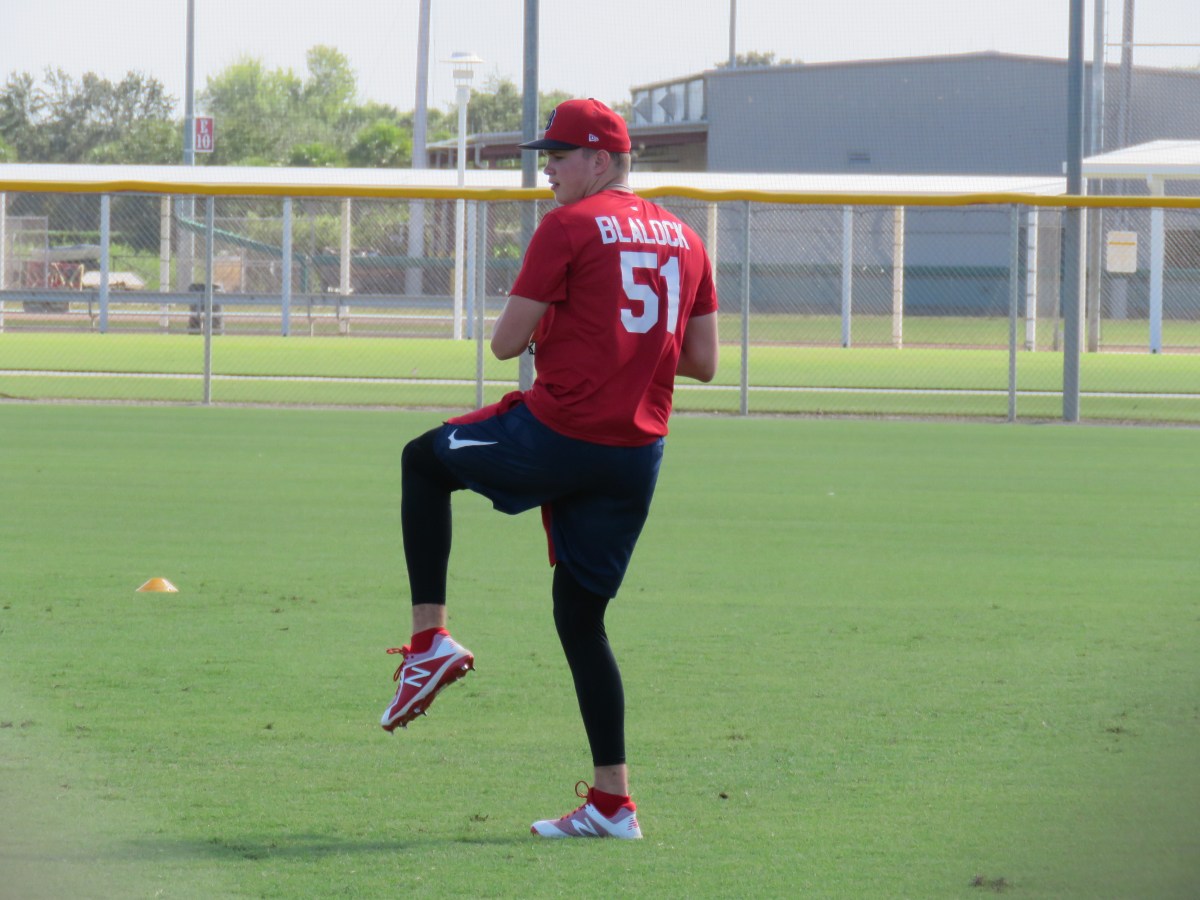
Red Sox pitching prospect Bradley Blalock reflects on unique 2020 for minor-leaguers, looks ahead to 2021

This year was supposed to serve as Bradley Blalock’s springboard into professional baseball.

After being selected by the Red Sox in the 32nd round of the 2019 amateur draft, the right-hander made just four appearances (three starts) in the Gulf Coast League on account of how much he had pitched earlier in the spring while still in high school.

2020 was going to be the year in which Blalock formally introduced himself as a legitimate pitching prospect, but the ongoing COVID-19 pandemic prevented that from fully happening.

Rather than pitch a full season at one or multiple minor-league levels, Blalock was limited to just the fall instructional league in terms of throwing in front of team officials.

The 20-year-old hurler recently spoke with BloggingtheRedSox.com about how this year has gone for him as well as a number of other topics.

“Once I got [to fall instructs], I definitely started working,” Blalock said. “Got to pitch in two intrasquad games. First one, just threw one inning but it was a little rough since I got hit around a little bit. In my second outing, I pitched six innings — went six up, six down — so it was definitely really exciting to do that in front of everyone that was there. And my third one, I was supposed to throw three innings on the last day, but it got rained out. But, I was able to throw a bullpen, so it was good.”

While fall instructs this year were certainly different from fall instructs the year before, Blalock has enjoyed his time with the Red Sox organization thus far. The Georgia native signed with the club for $250,000 last July as opposed to attending Kennesaw State University.

“It was a personal decision for me,” Blalock said of his choice to go pro out of high school. “Me and my family talked about it, and we thought that was the best decision because you don’t know if three years down the road, you’re ever going to get that opportunity [again]. You might get hurt or something, so we just took a chance and we love it so far. I do.”

As a 32nd round pick, Blalock could have signed with Boston for just $125,000, that round’s assigned slot value, but he actually managed to sign for double that amount last summer.

“We just did some negotiations and we found a price that worked for both of us: me and the Red Sox,” said Blalock. “So we definitely came to an easy deal, quick deal on that.”

Even before signing with the Sox, Blalock started to garner at least a little major-league interest starting his junior year of high school in Loganville, Ga. He provided some insight on what that whole process was like.

“I didn’t really talk to a lot of pro scouts my junior year,” Blalock said. “I talked to one [with the Minnesota Twins] and we built a close bond. My senior year, I definitely had a lot more attention. Had to fill out a couple questionnaires that I had to fill out from each team.”

One of those interested teams was obviously the Red Sox, and their interest in Blalock gave the righty the chance to get to know his eventual signing scout Brian Moehler, who covers Georgia and South Carolina for the team as an amateur scout.

“Once I met him, we built a close bond,” Blalock said of Moehler. “He was the one that was really talking to my dad, because I don’t have an agent right now so my dad’s really my agent. So, we built a close bond and we talk a couple times every month.”

The Red Sox viewed Blalock, who originally committed to Kennesaw State as a two-way player, as a pitcher from the get-go. That likely had something to do with his pitch selection, which the 6-foot-2, 190 lb. righty broke down in-depth.

“In high school, I threw a four-seam fastball, a slider, a changeup, and a knucklecurve,” he explained. “When I got to the GCL, I didn’t bring the slider along because my curveball was definitely my better offspeed pitch as the year advanced. So, I had my fastball, curveball, changeup — but my changeup wasn’t really there so I was really just a two-pitch guy.

“After instructs last year, they were like ‘Hey, let’s work on a changeup,'” Blalock continued. “So, all instructs and all offseason I worked on getting my changeup back to where it needed to be. I came into spring training with a four-seam fastball, a knucklecurve, and a changeup. And during spring training — during my bullpens — my curveball was always down for a strikeout pitch. It was like an 0-2 or 1-2 pitch, so we working on trying to get that and land it for a strike.

“But then I realized I need something better that I know I can land for a strike,” he added. “So I talked to [Lowell Spinners pitching coach Nick Green] and [performance pitching coordinator] Shawn Haviland about going back to my slider and figuring that back out. During quarantine, I worked on getting my feel back for my slider. They were excited, and I brought that into instructs with me.”

While he was able to hone his pitch mix in the weeks leading up to fall instructs thanks to tools such as video and Rapsodo, Blalock also continued to use training methods inspired by Driveline Baseball, which is something he has done since his freshman year of high school.

“At the facility I train at, it’s called Full Count Baseball, we do Driveline stuff,” he stated. “We have all the Driveline balls, shoulder tubes, wrist weights, and we have core velocity belts, which helps you get your core engaged.”

The use of Driveline’s weighted balls specifically seemed very important to Blalock, as he attributed them to his uptick in fastball velocity over the past few years.

“To think my freshman year, I was probably [sitting at] 75 mph,” Blalock said. Just to think that then I was like ‘Hey, I don’t even know if I’ll get to play college baseball.’ Just to continue to work, keep staying with the process, and using the weighted balls and the jaeger bands. It’s definitely been [something] I really like and I’m going to keep doing it.”

Blalock’s fastball, which today tops out at 95 mph, can be attributed to the proper use of weighted balls, weight lifting, and two to three long toss sessions per week. He still believes his four-seamer has room to grow, though.

“That still has room to grow,” Blalock said of his heater. “I’ve been working this offseason still trying to gain some velocity. I mean, it’s always good to try and get some more. One of the guys I work out with, he throws 99-100 mph, so I’m trying to get there with him.”

As for how Blalock will get there, the 2021 season serves as a good first step. Though it’s unclear which affiliate he will start the season with, Blalock does not necessarily care about which role — starter or reliever — he undertakes as long as it helps him contribute at the major-league level sooner.

“I just want to be able to help [the Red Sox] get to the World Series. Starter or reliever, I just want to be able to make it to the bigs and help the Red Sox get there, again.”

Blalock, who does not turn 21 until next December, is currently regarded by SoxProspects.com as the organization’s No. 35 prospect. He is projected to begin the 2021 campaign with the GCL Red Sox, though he certainly would not mind getting called up to Salem, or even Greenville, either.

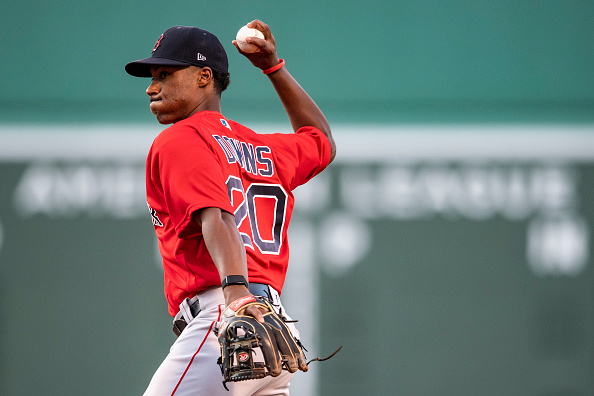
Red Sox feel top prospect Jeter Downs needs to gain more experience at second base in minors before getting big-league consideration

While the Red Sox continue to explore their options at second base this offseason, one thing is apparent: Don’t expect top prospect Jeter Downs to fill that gap next year, at least not right away.

This is the case because according to WEEI’s Rob Bradford, the Red Sox would like to see the 22-year-old infielder gain more experience at second base at the minor-league level.

“The organizational perception is that [Downs] needs to experience the ups and downs of a semi-normal Triple-A season at this new position,” Bradford wrote over the weekend.

One of the three players (two prospects) Boston got in return from the Dodgers in the blockbuster Mookie Betts trade back in February, Downs has accrued significant playing time as a middle infielder in the minors, but little of that playing time as come at second.

Since being selected by the Reds with the 32nd overall pick in the 2017 amateur draft out of Monsignor Pace High School (Fla.), the Colombia native has played 195 games (1,672 2/3 innings) at shortstop and just 84 games (698 1/3 innings) at second, with just one of those 84 coming above the High-A level in 2019.

FanGraphs does not get too in-depth with defensive metrics for minor-leaguers, but Downs recorded one error and helped turn seven double plays while patrolling second base for High-A Rancho Cucamonga and Double-A Tulsa last year.

This year, the ongoing COVID-19 pandemic prevented the minor-league season from taking place, so coveted prospects such as Downs were limited to working out at their club’s respective training sites, which in Downs’ case was in Pawtucket.

There, as noted by SoxProspects.com, the young infielder primarily focused on improving his defense with coach Bruce Crabbe.

“Crabby’s amazing,” Downs said via Zoom back in August. “Almost everyday now we go out there and we get a little work in with a couple other guys as well. It’s a good learning curve, everybody does extra hitting, so I felt like I wanted to do that same thing with my defense. As much as I hit, I also want to do the same amount of defense. I want to be elite at both sides of the ball, so that’s where I’m trying to get it to.”

As it turns out, Downs did put in the work at the alternate site to improve his defensive capabilities at both middle infield positions. At least that’s what Worcester Red Sox manager Billy McMillon said when speaking with reporters in October.

“He made tremendous strides defensively,” McMillon said of Downs. “There are some things he needs to work on, like his makeup and his confidence and things like that. I think those issues affected how he did offensively. As far as Jeter, I see tremendous upside. His track record of offensive performance indicates that at 7:05, when the lights are on, he shows up at the plate. I’m hopeful his track record offensively meshes well with the strides he made defensively. If that happens, I think you’ve got a pretty good player. I don’t want to give a comp or anything, but I think he would more than hold his own based on what he did defensively and how much better and more consistent he got.

“I think he would be a better second baseman longterm, but I do believe he could play shortstop,” added McMillon. “He made some plays that were just unbelievable at shortstop. I personally would see him a better fit at second base if we were talking about 162 games. I think his athleticism, his skills, would be a little better at second base. But he’s still young. I don’t want it to seem like he can’t play shortstop. I think he could do a fine job over there. In my eyes, I see second base when I see him.”

Depending on how the rest of the offseason pans out, Downs will presumably get the opportunity to play second base on an everyday basis with Triple-A Worcester in 2021.

There, as Bradford alluded to, the Red Sox will obviously be keeping a close eye on the right-handed hitter as he prepares to make the jump to the majors — or at least Boston’s 40-man roster — in the months leading up to him being eligible for the 2021 Rule 5 Draft.

In the meantime, The Boston Globe’s Alex Speier wrote earlier this month that while the plan is for Downs to continue to develop at Triple-A, the Sox could pursue free-agent second base options, like Kike Hernandez or Kolten Wong, who would sign one or two-year deals in order to “serve as a bridge to Downs.”

Of course, as Speier points out, it’s not out of the question that chief baseball officer Chaim Bloom and Co. could use Downs as a trade chip in order to acquire a bigger piece from another club.

That possibility likely depends on how the club views Downs, as well as its other second base candidates such as Jonathan Arauz, Christian Arroyo, and Michael Chavis, internally.

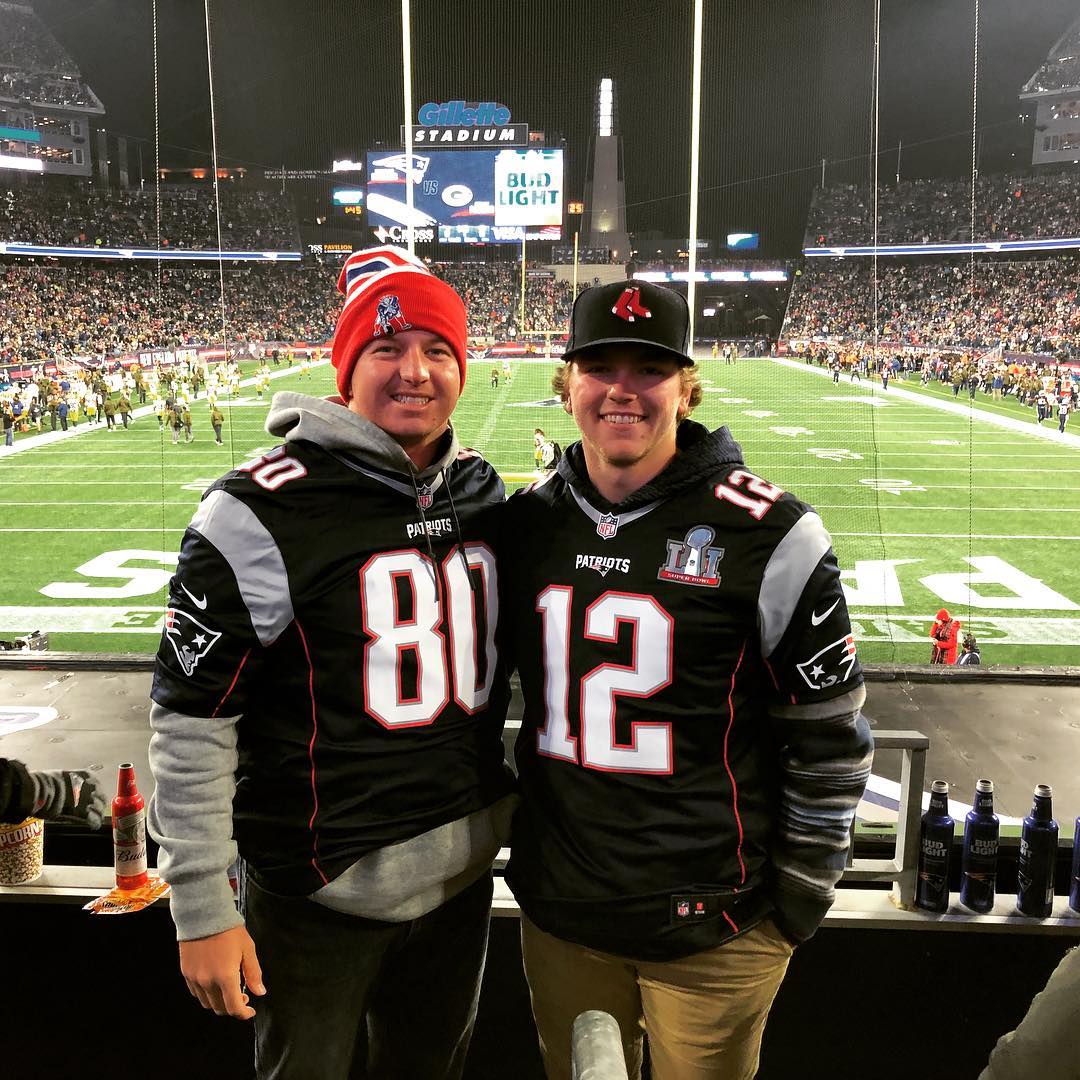
Red Sox pitching prospect Durbin Feltman, a Texas native, grew up a Patriots fan thanks to Super Bowl 38

Even before he was drafted by the Red Sox in the third round of the 2018 amateur draft, Durbin Feltman’s New England connections ran deep.

Despite being born and raised in the Houston area, the 23-year-old right-hander grew up a fan of the New England Patriots.

One might think that may be due to former Patriots quarterback Tom Brady’s rise to stardom in the early 2000s, but Feltman’s fandom actually goes back to the days leading up to Super Bowl 38 in Houston.

Then six years old, Feltman had the chance to attend some of the fan-centered events with his family the week of the big game.

“They came to play in Houston in the Super Bowl in ’04 against the [Carolina] Panthers, so we went downtown to all the fan events,” Feltman explained to BloggingtheRedSox.com last week. “I’m like six at the time and at that age, you have no idea what’s going on in football. So, I was like ‘Ooh, I like this team’ and ever since then I was like ‘All right, well, they won the Super Bowl then.’ I picked them the week before the Super Bowl, and then I was just hooked ever since.”

Still, even though Brady may not have been Feltman’s sole reason for becoming a Patriots fan, the six-time Super Bowl champion certainly helped seal the deal.

“Once I actually got to know what was going on, Brady just solidified it,” the righty said. “Just watching how he works and just being a winner and doing whatever it takes to win. Probably the hardest worker out there [yet] he’s not the most talented guy. He’s got some gifts, obviously, but I try to take that same mindset of: I’m not 6’6”, I’m not super physically gifted, so it’s just ‘Hey you got to work. You got to work.’

“And he goes day in and day out, just does everything he can,” added Feltman. “Does his job, puts his head down, and goes to work. He solidified it, but he wasn’t the only reason — he wasn’t the main reason I picked them.”

Because Brady was not the main reason Feltman chose to support the Patriots way back when, he still closely follows the team today despite their struggles. The flame-throwing hurler gave his prognosis on what’s gone wrong in New England in 2020.

“It’s been a tough year,” he said. “We need some weapons, we really need some weapons. It’s been tough watching Brady. I’m still rooting for him down in Tampa, but man, it’s almost unnatural to watch the Patriots do what they’re doing. They were two plays away from being 8-4, three plays away from being 9-4, now they’re 6-8 after losing to Miami.

“We got to either find a new quarterback — I don’t feel like Cam [Newton] is too bad — but we need some new receivers, new tight ends,” Feltman continued. “We got a whole running back corps, just got to fix up the offense to do something. We haven’t scored a [passing] touchdown since [Jarrett] Stidham threw one three weeks ago, so it’s been tough.”

As a Patriots fan himself, Feltman had the opportunity to live with some native New England football fans when he played for the Falmouth Commodores of the Cape Cod Baseball League in 2017.

“They were awesome,” Feltman said of his host family that summer. “They came up to Lowell and saw me play. I flew up there, we went to a Patriots game together, got to watch Tom Brady beat up on Aaron Rodgers on Sunday Night Football, which was awesome. They were awesome.”

Feltman, then in between his sophomore and junior seasons at Texas Christian University, posted a 1.69 ERA and 1.13 WHIP over five appearances and 5 1/3 innings pitched for Falmouth in 2017.

Red Sox showing ‘strong interest’ in free-agent utilityman Kiké Hernandez, per report

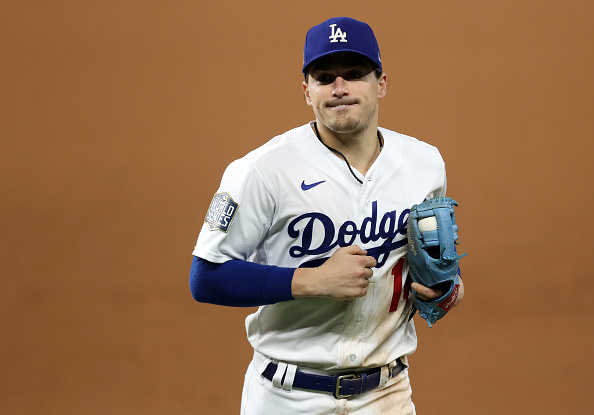
The Red Sox reportedly have strong interest in free-agent utilityman Kike Hernandez, according to MassLive.com’s Chris Cotillo.

Per Cotillo, “a deal is not believed to be imminent between the sides but Boston is one of the teams in pursuit of the former Dodger.”

Hernandez, 29, has spent the last six seasons with the Dodgers after beginning his major-league career with the Astros and Marlins in 2014.

Most recently, the right-handed hitting Puerto Rico native put together a 2020 campaign in which he slashed .230/.270/410 with five home runs and 20 RBI across 48 regular season games for Los Angeles, though he did post a .755 OPS in the postseason before being declared a free agent in late October.

Over the course of his tenure with the Dodgers, Hernandez has proven to be quite versatile defensively, as he has logged time at every position besides catcher since 2015.

This past season, the former sixth-round draft pick saw the majority of his playing time come at second base (220 1/3 innings). According to FanGraphs, he was worth positive-8 defensive runs saved at that position despite posting a negative-2.6 ultimate zone rating.

Given their struggles at second base in 2020, the Red Sox, as noted by Cotillo, “would likely view Hernandez as an option there with the added ability to play all three outfield spots.”

In addition to his versatility, Hernandez should also be familiar with Red Sox manager and fellow Puerto Rican Alex Cora, who served as Hernandez’s and Team Puerto Rico’s general manager during the 2017 World Baseball Classic.