Chaim Bloom says trading for Blake Snell would have put Red Sox ‘further behind in our goal to win as many championships as we can’ over the long-term

Even with starting pitching issues to address this offseason, the Red Sox were likely never close to trading for former Rays left-hander Blake Snell.

The Rays dealt Snell to the Padres earlier this week in exchange for right-handed pitchers Luis Patino and Cole Wilcox as well as catchers Francisco Mejia and Blake Hunt.

Besides Mejia, who at 25 years old has already graduated from his prospect status, the other three players acquired by Tampa Bay were regarded by MLB Pipeline as some of the best prospects in San Diego’s farm system, with the 21-year-old Patino even ranking as baseball’s No. 23 overall prospect.

Having said that, the Padres were able to acquire a player of Snell’s caliber because of the strength of their minor-league pipeline.

Dealing for a 28-year-old who won the American League Cy Young Award in 2018 and is under team control for three more seasons is no simple task, but the Pads, led by aggressive general manager A.J. Preller, were able to accomplish this.

The Red Sox, meanwhile, do not have the luxury of having one of the top farm systems in baseball, an honor they had enjoyed for a healthy portion of the 2010s.

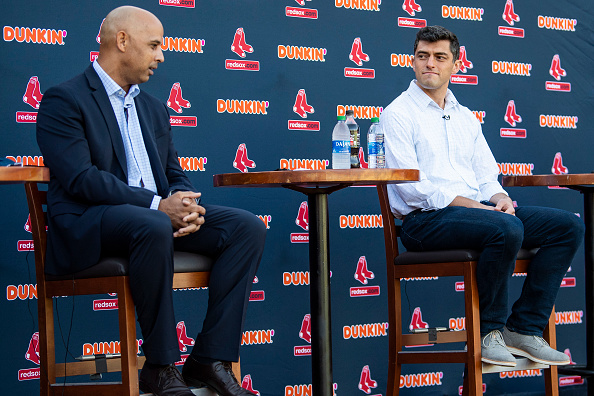
Due to the recent decimation of their farm system and the urgency to build it back up to its once elite status, Boston felt as though it could not part with the pieces they would need in order to acquire a frontline starter such as Snell via trade. Chief baseball officer Chaim Bloom made that much clear when appearing on WEEI earlier Wednesday afternoon.

“That’s not something I would ever want to get into in detail, but I would just say, generally, that we try to be involved in everything,” Bloom told Rob Bradford and Jon Meterparel. “With a deal like that, what that deal amounted to was taking an enormous amount of long-term value and pushing it into the here and now. And pushing it into the short-term. When you look at the amount of talent that came back for Blake and the length of time over which that talent can impact the Rays, that’s exactly the sort of deal, given the cost and given the price tag, that would not make sense for where we’re positioned right now.

“I think it would put us further behind in our goal to win as many championships as we can over the course of the long-term,” he continued. “It’s our job to be involved in everything and we’re remiss if we don’t check in every player who might be available. When it comes to taking an enormous amount of value and consolidating it into a smaller amount that impacts us right now, I think that’s the opposite of what we need to do at the moment.”

While the Rays, led by general manager Erik Neander, received plenty of flak for parting ways with a homegrown star like Snell as they have become accustomed to doing in recent years — think David Price, Evan Longoria — Bloom, who served as one of Neander’s right-hands for a few years before taking charge of the Sox’ baseball operations department last fall, defended the club’s and his former boss’ decision.

“The reason that the Rays are as good as they are right now is because they have the guts to do these things even though they were painful,” he said. “Regardless of what your budget is — it’s certainly more critical to do it on a smaller budget — planning for the future and seeing around corners is important. The Rays have figured out how to win over time because they’ve placed an emphasis on that.

“As difficult as it is emotionally, I think it’s easy to look at that and say ‘Hey, look at the Rays. Look how they win despite the fact that they do these things,'” added Bloom. “I would argue that they win because they do these things. Because they recognize that in order to have a consistently bright future, they have to consistently place great emphasis on it. And when you do that relentlessly over time, you end up with a really good, really sustainable team despite the limited budget they have.”

Though it’s safe to assume that the Red Sox will be operating on a larger budget than the Rays this offseason and for the foreseeable future, there are certain measures that need to be taken in order to achieve sustained success over an extended period of time, as Bloom alluded to.

One way to do that is to ensure the right kind of players are added through a variety of methods such as trade, free agency, or even waiver claim. While it’s not exactly known what the Red Sox specifically look for in the players they target, Bloom did provide some insight into what his ‘offseason check list’ looks like at the moment.

“Right now, there’s a lot of players on it,” he stated. “Part of that is a function of where we are, where there’s a lot of different ways we can improve, and part of it is how we are looking to improve. In the short-term, we have touched base with so many different players who we think could help us, who could fit us. There’s pitching, obviously, but also on the position player side. I think there’s different ways we can improve and different profiles of players we can bring in to help us.

“We also don’t want to take our eye off the ball that at the end of the day, we’re not just looking to put a little plaster in here and patch some holes,” said Bloom. “We’re looking to take this organization back to where we can compete for championships consistently, year in and year out. And that means we got to be open to different moves, different acquisitions that might not just be about 2021. But, it just speaks to [the fact] that there’s a lot of different ways that we can improve. The No. 1 question we ask ourselves on anybody is: Is this pushing us towards that goal of sustaining a championship contender here? If the answer is yes, then we can explore it further, we can figure out how it impacts us in the near-term, what it might mean for other players, and hopefully we check as many of those boxes as possible.”

So far this winter, the Red Sox have only added two major-league players via free agency in the forms of outfielder Hunter Renfroe and right-hander Matt Andriese, both of whom agreed to one-year contracts with the club earlier this month.

24-year-old righty Garrett Whitlock was also added to the major-league roster via the Rule 5 Draft, but Bloom and Co. are still hoping to add more pieces as the offseason ensues and the calendar flips to January.

“I would hope that by the end of this offseason, there’s a number of different guys we’ve brought in here,” Bloom said. “There’s certain possibilities on the trade market, creative things that could come together. They may not, because those things are harder to do — they take at least two to tango. But, different things that hopefully can impact us beyond just this year as well.”

For what it’s worth, the Red Sox’ 40-man roster is currently at full capacity following the Andriese signing, so that should give you a good idea of where things stand right now in terms of potential, upcoming movement.

Red Sox pitching prospect Bradley Blalock reflects on unique 2020 for minor-leaguers, looks ahead to 2021

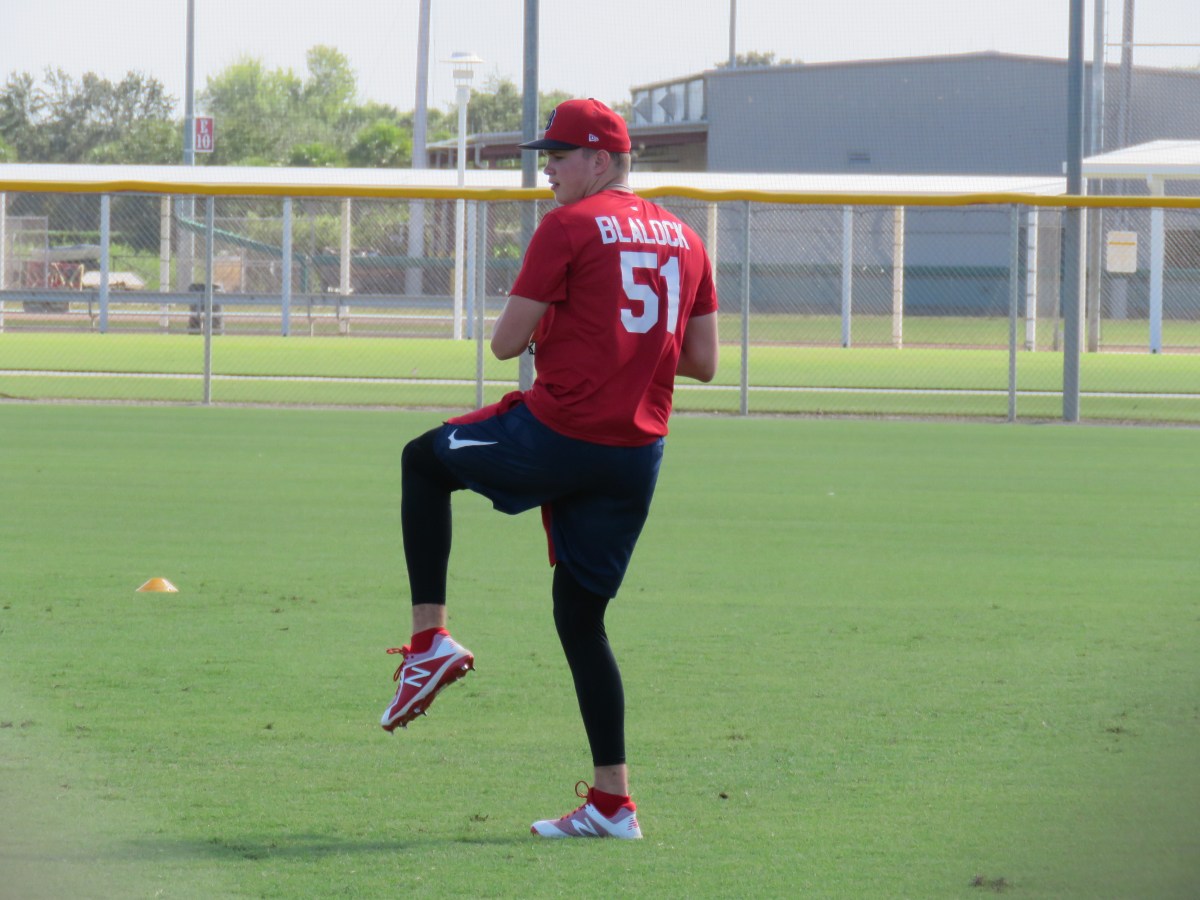
This year was supposed to serve as Bradley Blalock’s springboard into professional baseball.

After being selected by the Red Sox in the 32nd round of the 2019 amateur draft, the right-hander made just four appearances (three starts) in the Gulf Coast League on account of how much he had pitched earlier in the spring while still in high school.

2020 was going to be the year in which Blalock formally introduced himself as a legitimate pitching prospect, but the ongoing COVID-19 pandemic prevented that from fully happening.

Rather than pitch a full season at one or multiple minor-league levels, Blalock was limited to just the fall instructional league in terms of throwing in front of team officials.

The 20-year-old hurler recently spoke with BloggingtheRedSox.com about how this year has gone for him as well as a number of other topics.

“Once I got [to fall instructs], I definitely started working,” Blalock said. “Got to pitch in two intrasquad games. First one, just threw one inning but it was a little rough since I got hit around a little bit. In my second outing, I pitched six innings — went six up, six down — so it was definitely really exciting to do that in front of everyone that was there. And my third one, I was supposed to throw three innings on the last day, but it got rained out. But, I was able to throw a bullpen, so it was good.”

While fall instructs this year were certainly different from fall instructs the year before, Blalock has enjoyed his time with the Red Sox organization thus far. The Georgia native signed with the club for $250,000 last July as opposed to attending Kennesaw State University.

“It was a personal decision for me,” Blalock said of his choice to go pro out of high school. “Me and my family talked about it, and we thought that was the best decision because you don’t know if three years down the road, you’re ever going to get that opportunity [again]. You might get hurt or something, so we just took a chance and we love it so far. I do.”

As a 32nd round pick, Blalock could have signed with Boston for just $125,000, that round’s assigned slot value, but he actually managed to sign for double that amount last summer.

“We just did some negotiations and we found a price that worked for both of us: me and the Red Sox,” said Blalock. “So we definitely came to an easy deal, quick deal on that.”

Even before signing with the Sox, Blalock started to garner at least a little major-league interest starting his junior year of high school in Loganville, Ga. He provided some insight on what that whole process was like.

“I didn’t really talk to a lot of pro scouts my junior year,” Blalock said. “I talked to one [with the Minnesota Twins] and we built a close bond. My senior year, I definitely had a lot more attention. Had to fill out a couple questionnaires that I had to fill out from each team.”

One of those interested teams was obviously the Red Sox, and their interest in Blalock gave the righty the chance to get to know his eventual signing scout Brian Moehler, who covers Georgia and South Carolina for the team as an amateur scout.

“Once I met him, we built a close bond,” Blalock said of Moehler. “He was the one that was really talking to my dad, because I don’t have an agent right now so my dad’s really my agent. So, we built a close bond and we talk a couple times every month.”

The Red Sox viewed Blalock, who originally committed to Kennesaw State as a two-way player, as a pitcher from the get-go. That likely had something to do with his pitch selection, which the 6-foot-2, 190 lb. righty broke down in-depth.

“In high school, I threw a four-seam fastball, a slider, a changeup, and a knucklecurve,” he explained. “When I got to the GCL, I didn’t bring the slider along because my curveball was definitely my better offspeed pitch as the year advanced. So, I had my fastball, curveball, changeup — but my changeup wasn’t really there so I was really just a two-pitch guy.

“After instructs last year, they were like ‘Hey, let’s work on a changeup,'” Blalock continued. “So, all instructs and all offseason I worked on getting my changeup back to where it needed to be. I came into spring training with a four-seam fastball, a knucklecurve, and a changeup. And during spring training — during my bullpens — my curveball was always down for a strikeout pitch. It was like an 0-2 or 1-2 pitch, so we working on trying to get that and land it for a strike.

“But then I realized I need something better that I know I can land for a strike,” he added. “So I talked to [Lowell Spinners pitching coach Nick Green] and [performance pitching coordinator] Shawn Haviland about going back to my slider and figuring that back out. During quarantine, I worked on getting my feel back for my slider. They were excited, and I brought that into instructs with me.”

While he was able to hone his pitch mix in the weeks leading up to fall instructs thanks to tools such as video and Rapsodo, Blalock also continued to use training methods inspired by Driveline Baseball, which is something he has done since his freshman year of high school.

“At the facility I train at, it’s called Full Count Baseball, we do Driveline stuff,” he stated. “We have all the Driveline balls, shoulder tubes, wrist weights, and we have core velocity belts, which helps you get your core engaged.”

The use of Driveline’s weighted balls specifically seemed very important to Blalock, as he attributed them to his uptick in fastball velocity over the past few years.

“To think my freshman year, I was probably [sitting at] 75 mph,” Blalock said. Just to think that then I was like ‘Hey, I don’t even know if I’ll get to play college baseball.’ Just to continue to work, keep staying with the process, and using the weighted balls and the jaeger bands. It’s definitely been [something] I really like and I’m going to keep doing it.”

Blalock’s fastball, which today tops out at 95 mph, can be attributed to the proper use of weighted balls, weight lifting, and two to three long toss sessions per week. He still believes his four-seamer has room to grow, though.

“That still has room to grow,” Blalock said of his heater. “I’ve been working this offseason still trying to gain some velocity. I mean, it’s always good to try and get some more. One of the guys I work out with, he throws 99-100 mph, so I’m trying to get there with him.”

As for how Blalock will get there, the 2021 season serves as a good first step. Though it’s unclear which affiliate he will start the season with, Blalock does not necessarily care about which role — starter or reliever — he undertakes as long as it helps him contribute at the major-league level sooner.

“I just want to be able to help [the Red Sox] get to the World Series. Starter or reliever, I just want to be able to make it to the bigs and help the Red Sox get there, again.”

Blalock, who does not turn 21 until next December, is currently regarded by SoxProspects.com as the organization’s No. 35 prospect. He is projected to begin the 2021 campaign with the GCL Red Sox, though he certainly would not mind getting called up to Salem, or even Greenville, either.

Red Sox pitching prospect Durbin Feltman, a Texas native, grew up a Patriots fan thanks to Super Bowl 38

Even before he was drafted by the Red Sox in the third round of the 2018 amateur draft, Durbin Feltman’s New England connections ran deep.

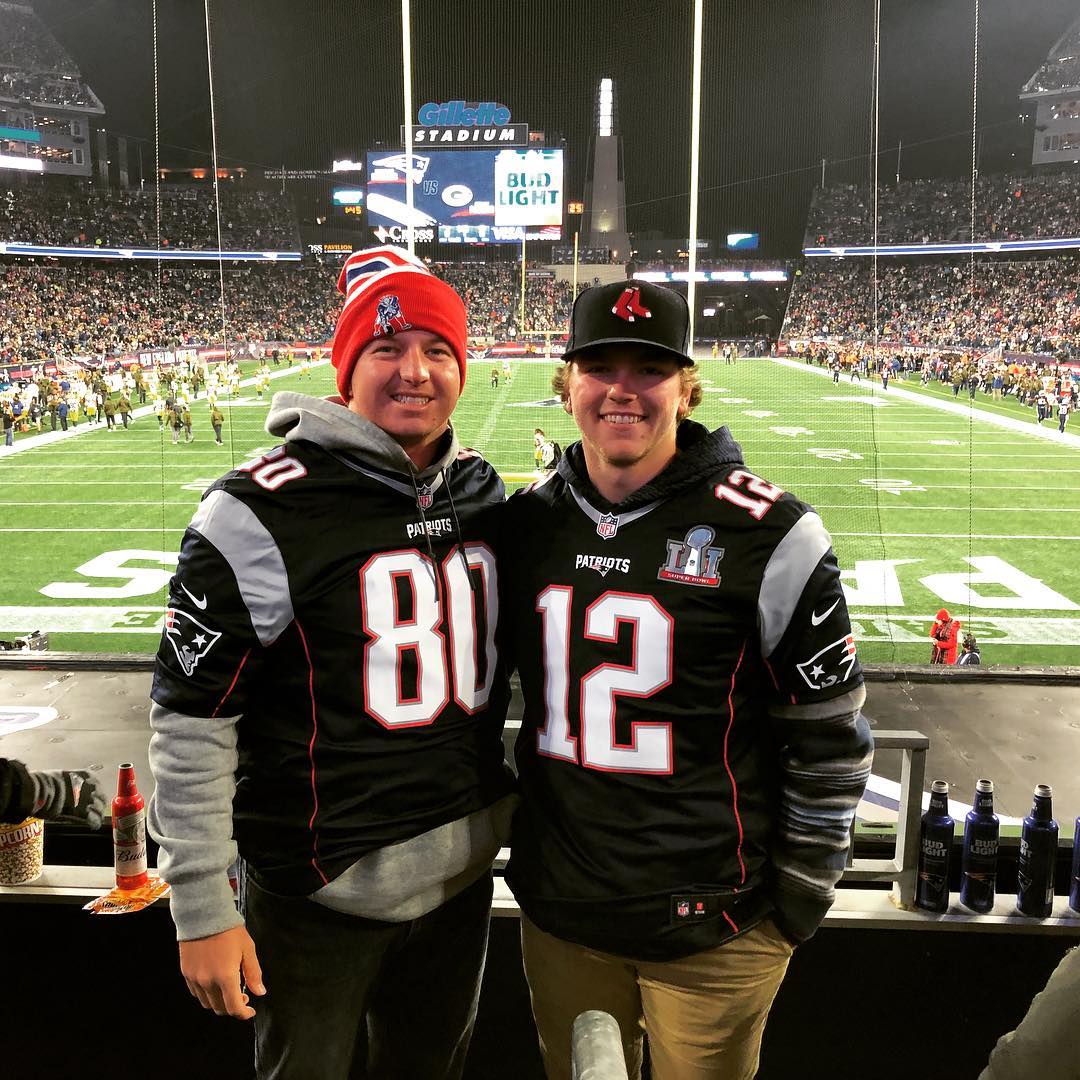
Despite being born and raised in the Houston area, the 23-year-old right-hander grew up a fan of the New England Patriots.

One might think that may be due to former Patriots quarterback Tom Brady’s rise to stardom in the early 2000s, but Feltman’s fandom actually goes back to the days leading up to Super Bowl 38 in Houston.

Then six years old, Feltman had the chance to attend some of the fan-centered events with his family the week of the big game.

“They came to play in Houston in the Super Bowl in ’04 against the [Carolina] Panthers, so we went downtown to all the fan events,” Feltman explained to BloggingtheRedSox.com last week. “I’m like six at the time and at that age, you have no idea what’s going on in football. So, I was like ‘Ooh, I like this team’ and ever since then I was like ‘All right, well, they won the Super Bowl then.’ I picked them the week before the Super Bowl, and then I was just hooked ever since.”

Still, even though Brady may not have been Feltman’s sole reason for becoming a Patriots fan, the six-time Super Bowl champion certainly helped seal the deal.

“Once I actually got to know what was going on, Brady just solidified it,” the righty said. “Just watching how he works and just being a winner and doing whatever it takes to win. Probably the hardest worker out there [yet] he’s not the most talented guy. He’s got some gifts, obviously, but I try to take that same mindset of: I’m not 6’6”, I’m not super physically gifted, so it’s just ‘Hey you got to work. You got to work.’

“And he goes day in and day out, just does everything he can,” added Feltman. “Does his job, puts his head down, and goes to work. He solidified it, but he wasn’t the only reason — he wasn’t the main reason I picked them.”

Because Brady was not the main reason Feltman chose to support the Patriots way back when, he still closely follows the team today despite their struggles. The flame-throwing hurler gave his prognosis on what’s gone wrong in New England in 2020.

“It’s been a tough year,” he said. “We need some weapons, we really need some weapons. It’s been tough watching Brady. I’m still rooting for him down in Tampa, but man, it’s almost unnatural to watch the Patriots do what they’re doing. They were two plays away from being 8-4, three plays away from being 9-4, now they’re 6-8 after losing to Miami.

“We got to either find a new quarterback — I don’t feel like Cam [Newton] is too bad — but we need some new receivers, new tight ends,” Feltman continued. “We got a whole running back corps, just got to fix up the offense to do something. We haven’t scored a [passing] touchdown since [Jarrett] Stidham threw one three weeks ago, so it’s been tough.”

As a Patriots fan himself, Feltman had the opportunity to live with some native New England football fans when he played for the Falmouth Commodores of the Cape Cod Baseball League in 2017.

“They were awesome,” Feltman said of his host family that summer. “They came up to Lowell and saw me play. I flew up there, we went to a Patriots game together, got to watch Tom Brady beat up on Aaron Rodgers on Sunday Night Football, which was awesome. They were awesome.”

Feltman, then in between his sophomore and junior seasons at Texas Christian University, posted a 1.69 ERA and 1.13 WHIP over five appearances and 5 1/3 innings pitched for Falmouth in 2017.

Red Sox pitching prospect Durbin Feltman intends to be more aggressive in the strike zone in 2021

Right-hander Durbin Feltman entered the 2019 season as the Red Sox’ No. 11 prospect according to Baseball America.

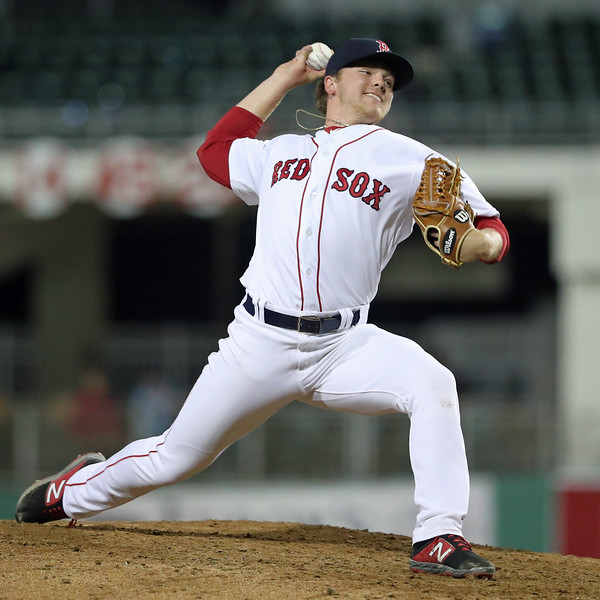
Fresh off an inaugural 2018 campaign in which he split time between short-season Lowell, Low-A Greenville, and High-A Salem and posted a miniscule 1.93 ERA over 22 total appearances, the third-round draft pick out of Texas Christian University was facing rather lofty expectations as he embarked on his first full professional season.

Spending the entirety of the 2019 season with Double-A Portland, Feltman struggled to the tune of a 5.26 ERA and 5.02 FIP over 43 outings and 51 1/3 innings of work.

This summer, after the 2020 minor-league season had already been cancelled due to the ongoing COVID-19 pandemic, the Red Sox decided against including Feltman in its 60-man player pool while a number of the organization’s top pitching prospects, such as Tanner Houck, Bryan Mata, and Jay Groome were.

These prospects spent their summers working out and playing in intrasquad games at the Sox’ alternate training site in Pawtucket. Prospects such as Feltman, meanwhile, remained at their respective homes.

The 23-year-old recently spoke with BloggingtheRedSox.com about this experience.

“I was frustrated, upset,” Feltman said of not being included in the 60-man pool. “Just not being invited [after] thinking I was going to go — I was frustrated the whole time because I figured ‘Hey, I’m going to use this time the best I can.’ I’m not going to get time like this again, barring another pandemic, to be able to do whatever I want and work on things. So, I used it the best I could and figured out some stuff. I feel like I figured out a lot.”

Having seemingly turned a corner on his own time, Feltman went into the Red Sox’ fall instructional league in Fort Myers and thoroughly impressed thanks to some added motivation.

“I came in there with a chip on my shoulder and was like ‘Hey, this is what you missed out on at the alternate site,'” he added. “Hopefully I showed enough, I felt like I did. And I’m carrying that into 2021 as well.”

While he had to wait a little bit to report to fall instructs in early October, Feltman was able to hone his craft while at home as opposed to the alternate training this summer. The Red Sox even gave him some things to work on.

“I was in a sticky situation,” said Feltman. “They were taking MLB depth and they didn’t see me as MLB depth yet because I’m obviously really young. They gave us stuff to work on, stuff I had been working on — having a repeatable delivery and just getting back to what I used to do in 2018. I feel like I’m closing in, and I’m not trying to revert back to [2018], but I’m also trying to get better. So, I feel like I’m in a really good spot right now, going down there and working with them and then working on my own.”

An aspect the Red Sox would like to see Feltman improve upon, as he mentioned, was having a more repeatable delivery. The flame-throwing righty went into more depth with that.

“I worked a lot on making things easier — more repeatable and easier,” the Houston-area native said. “I got into the mindset of trying to create more with everything, just trying to create more, and that’s not what I needed to do. So now, it’s just being easy and letting it go. The velocity’s ticking back up, it’s not quite where I want it to be yet, but it’s getting back up there. The ball’s coming out better now just playing catch than it was in instructs and even during the summer.

“Just continuing to work and figuring out those little things,” Feltman continued. “Just making it smooth and basically just being an athlete on the mound instead of worrying about every little thing.”

One thing Feltman does have to worry about while on the mound is which pitch he is going to throw and where said pitch is going to end up. The former Horned Frog’s pitch arsenal currently consists of a fastball, a slider, and a curveball. He discussed how he can use each of those pitches to his advantage.

“Obviously I have my fastball,” Feltman stated. “It has a little bit of a cut to it sometimes when I throw it to the glove side, so I try to throw it up in the zone and then to my glove side. Then I have my slider. I’m finally getting back to how I throw my upper-80s power-slider and just getting a feel for that, being able to throw it in any count. And then, I switched back my grip to my old curveball, just a 12-6 to play off that high fastball or drop it in when I need a get-me-over strike to show them something else. I don’t throw any changeups or anything that moves arm-side, so just being able to show a change of speed from hard to power breaking ball and then flip in a low-80s curveball. It just puts that in the back of the mind that ‘Hey, you got to watch out for that, too.'”

Despite this sound strategy, there were instances last year in Portland where Feltman would regularly fall behind in counts, which in turn led to 13.9% walk rate. He attributed this to a tendency to nibble the corners of the strike zone after falling behind in counts, and is now aiming to be more aggressive in the strike zone moving forward.

“I feel like it was just a snowball effect of one thing led to another led to another led to another,” Feltman said. “I go up there and it’s cold, so my velo’s down a little bit, so I’m trying to create more. Obviously, I’m getting in hitter’s counts because I’m not commanding like I should and then you’re obviously going to have higher batting averages in hitter’s counts. So, I’m giving up hits here and there, so I’m like ‘Okay, they’re hitting me.’ Well, no, you’re doing it to yourself, getting in 3-0, 3-1 counts. That kind of led to ‘I’ve got to nibble here, nibble there.’ I can’t let him hit it early in the count and that’s just getting away from what I do.

“I’ve gone back to ‘Hey, get ahead early in the count, don’t try to nibble, just be aggressive in the strike zone. My stuff’s going to play in the strike zone,'” he added. “It’s amazing what happens, you get swings and misses left and right if you’re confident throwing it in the strike zone. That’s kind of the mentality I’ve gone back to: Get ahead early. You get ahead early, it’s a whole different ballgame. It makes it so much easier… The odds are in your favor if you’ve got two strikes.”

With this more aggressive approach in mind, Feltman is going to take what he learned from 2019 and work to throw more strikes earlier in counts in 2021.

“That’s going to help two things,” he said. “It’s going to help increase strikeouts, so your strikeout rate, and it’s also going to help decrease my walk rate. What I’m working on is being able to throw all three of my pitches for strikes — and not just strikes — quality strikes, and then just keeping that same mentality: Be aggressive early, be aggressive early. I feel like if I do that, everything will take care of itself.”

Feltman, who turns 24 in April, is currently regarded by SoxProspects.com as Boston’s No. 28 prospect. The TCU alum, listed at 6-feet and 205 lbs., will be eligible for the Rule 5 Draft next December, but he has not thought about that too much and is more focused on getting to the big-leagues as soon as possible.

“Obviously, I don’t want to have to go through the Rule 5 Draft, because if you’ve been in the big-leagues you’re not getting Rule 5 drafted,” he said.

(Top photo of Feltman: Kelly O’Connor/sittingstill.smugmug.com)

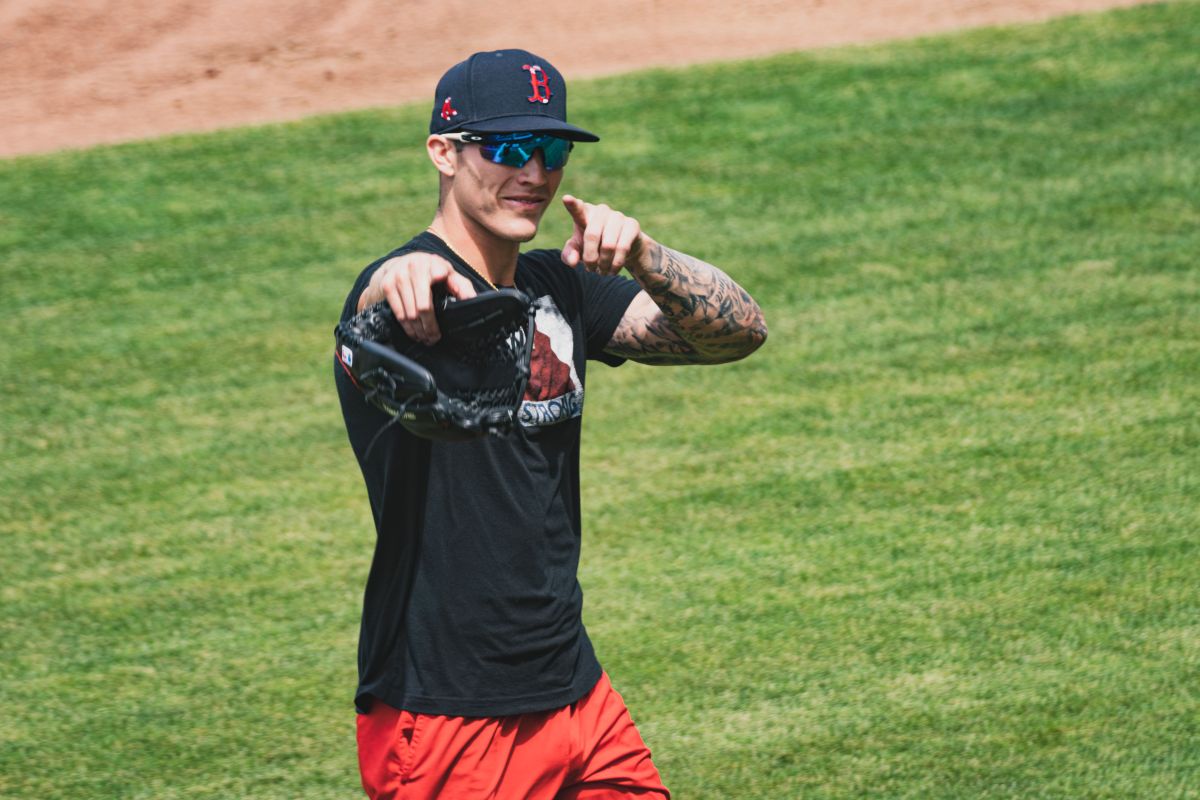
Red Sox outfield prospect Jarren Duran heating up in Puerto Rico

This offseason, Red Sox outfield prospect Jarren Duran has been playing for Criollos de Caguas of the Puerto Rican Winter League.

The 24-year-old got off to a slow start with his new team, accruing just three hits through his first 37 plate appearances, but has since picked things up.

Over the course of a three-game series against RA12 over the weekend, Duran went 7-for-13 (.538) at the plate with four RBI and five runs scored, raising his line on the season to a modest .250/.429/.278 through 11 games played. He also leads Caguas in stolen bases with six on the year thus far getting without getting caught.

Regarded by MLB Pipeline as Boston’s No. 1 outfield prospect and No. 8 overall prospect, Duran is one of the fastest players in the Sox’ system.

FanGraphs grades the California native’s speed tool at a 70 out of 80, which trails only fellow outfielder Gilberto Jimenez for the best mark among Red Sox prospects.

In addition to his speed, Duran, who is listed at 6-foot-2 and 187 lbs., made some adjustment to his swing last offseason and hit the ball further at the Red Sox’ alternate training site in Pawtucket over the summer as a result of said adjustments.

Portland Sea Dogs hitting coach Lance Zawadzki, among others, contributed to Duran’s swing evolution.

(For more on Zawadzki, check out this story from The Athletic’s Jen McCaffrey)

“Working on my swing with Lance everyday here, Lance Zawadzki, and I worked with Doug Latta a little bit,” the Long Beach State product said back in August. “Just my swing path and cleaning things up, making things much simpler than they used to be, and just having a simple approach. I kind of owe it to those guys because I come here everyday and I grind it out with Lance everyday. Every day’s a struggle to find your swing. You can go home, not play baseball for a day, and it feels like you haven’t swung in two weeks.”

Though he is not yet on Boston’s 40-man roster, Duran very well could make his major-league debut at some point in 2021 given how close he already is.

Red Sox chief baseball officer Chaim Bloom seemed impressed with what the former seventh-round draft pick did in 2020 when speaking with reporters last month.

“He had a tremendous 2020,” Bloom said of Duran. “He made strides hitting-wise and physically, didn’t lose any of his speed. He just had a really good year. I think for all players who didn’t play at the major league level, and even for some of those who did — because we had a shorter season — it’s tougher to feel confident in exactly what you know about them. He came into the year as someone who had spent some time in Double-A, but not with particularly distinguished performance, and then you see him put the year together that he had, and we have to try to figure out what that all means.”

For now, expect Duran to begin the 2021 campaign with Triple-A Worcester, though he will likely get plenty of time to shine once spring training begins in February.

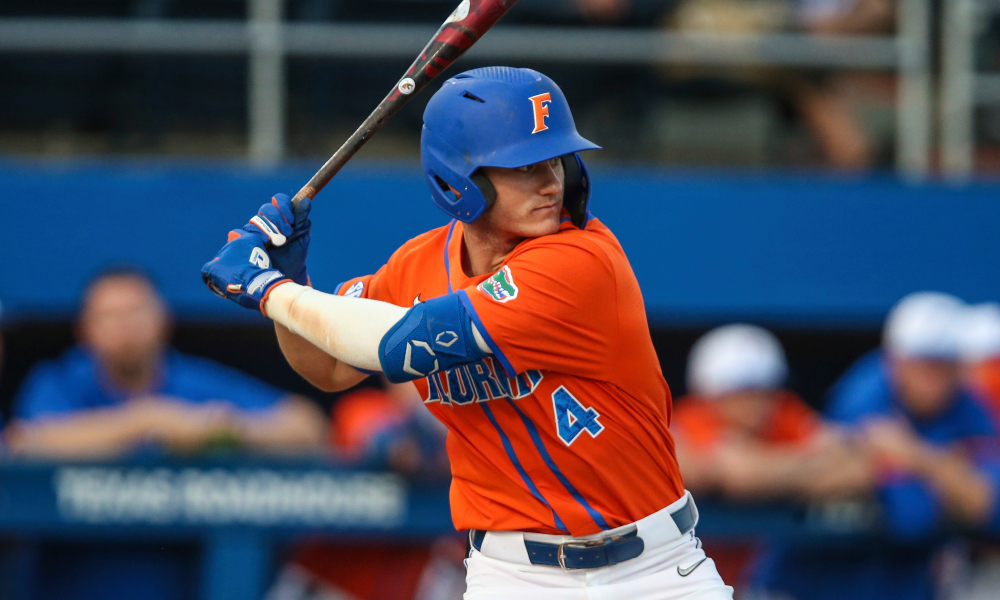
Latest 2021 mock draft has Red Sox taking University of Florida outfielder Jud Fabian with top pick

The 2021 Major League Baseball first-year player draft may still be seven months away, but the Red Sox already know they will be picking fourth in said draft thanks to finishing the 2020 season with the fourth-worst record in baseball (24-36).

Since the inception of the amateur draft in 1965, Boston has made its first selection within the top four on just two occasions in 1966 and 1967, so it goes without saying the upcoming draft will serve as an important hallmark for the franchise.

Though the 2021 high school and college baseball seasons are still a ways away from starting, next year’s potential draft class is already starting to take shape, even with possible COVID-19-related obstacles on the horizon.

That being said, MLB.com’s Jim Callis recently released his first round of predictions for which amateur prospects will be taken within the top-10 picks of July’s draft, and he has the Red Sox selecting University of Florida outfielder Jud Fabian at No. 4.

“Fabian might be the most polarizing prospect among the eight players who seem to have separated themselves from the rest of the Draft class at this point,” Callis wrote. “He could have the most usable power in the Draft and may stay in center field, but he also has hit just .250 with a 22-percent strikeout rate in two seasons at Florida.”

Fabian, who turned 20 in September, is about to embark on his junior season for the Gators this coming spring.

The right-handed hitting, left-handed throwing center fielder out of Ocala, Fla. came into 2020 as a preseason All-Southeastern Conference second teamer. He posted an impressive .294/.407/.603 slash line to go along with five home runs and 13 RBI over 17 games played before the ongoing coronavirus pandemic forced the SEC to suspend its baseball season in mid-March.

Still, Fabian managed to salvage the year by taking part in the Florida Collegiate Summer League, where he went 14-for-46 (.304) at the plate with a pair of homers and 11 runs driven in across 19 games for the Orlando Scorpions.

He also spent the summer of 2019 on the Cape with the Bourne Braves.

Listed at 6-foot-2 and 190 lbs., Fabian very well could have been drafted out of Trinity Catholic High School in 2019 had he not skipped his senior season in order to enroll early at Florida. He has the advantage over other college prospects on account of the fact that he will be younger than the average junior.

Per his FanGraphs scouting report, Fabian “has a rare, unfavorable ‘backwards’ profile — he hits right and throws left, limiting him to 1B/OF — but looks like he’ll hit enough for that not to matter. While his lower half has gotten a little heavier and softer since high school, Fabian still has a fairly athletic swing, and his hitting hands work in an explosive loop that give him low-ball power. His hands load deep and high, and Fabian’s bat path doesn’t always look like it’s going to work, but he still covers the zone from (nearly) top to bottom and can pull his hands in to get the barrel on inside pitches.”

In recent years, the Red Sox have leaned more towards taking high school talent — Nick Yorke, Triston Casas, Jay Groome, Michael Chavis, Michael Kopech — with their first-round selection.

As it turns out though, the last two college prospects Boston has taken in the first round have both come out of the SEC, as right-hander Tanner Houck was drafted out of Missouri with the 24th overall pick in 2017 and outfielder Andrew Benintendi was drafted out of Arkansas with the seventh overall pick in 2015.

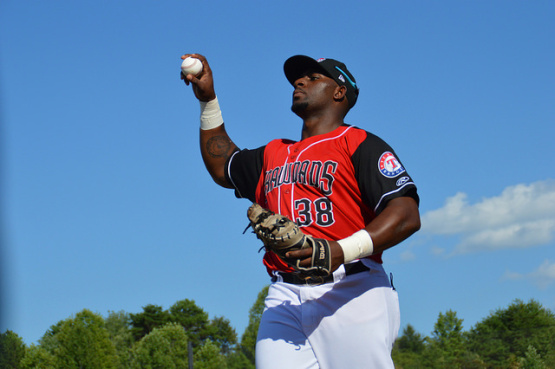
Newest Red Sox prospect Tyreque Reed someone club had ‘kept an eye on’ even before selecting him in minor-league phase of 2020 Rule 5 Draft

Even before selecting him in the minor-league phase of last week’s Rule 5 Draft, the Red Sox had been interested in former Texas Rangers first base prospect Tyreque Reed for quite a while, according to the club’s vice president of pro scouting Gus Quattlebaum.

“With Tyreque — a power bat — he’s going to enter his 24-year-old season. [He’s] currently 23,” Quattlebaum said of Reed when speaking with reporters via Zoom this past Thursday. “Big, physical right-handed hitting first baseman with big, big power that you see not only with the scouts’ naked eye, but also with the batted-ball data.”

A former eighth-round draft selection of the Rangers back in 2017 who was previously committed to Mississippi State, Reed has proven that his power tool has plenty of potential in his short time as a professional. The Itawamba Community College (MS) product hit exactly 18 home runs in each of his first two full minor-league seasons.

Before the 2019 campaign even began, Reed entered the year as Texas’ No. 21 prospect, per Baseball America.

In addition to the 18 home runs he belted, the Mississippi native also racked up 24 doubles and 67 RBI while slashing .270/.365/.487 over exactly 100 games played between three minor-league levels.

Despite posting a solid .852 OPS in 2019, Reed also dealt with his fair share of strikeouts, as he punched out in 28.6% of his 126 plate appearances with High-A Hickory. That aspect of his offensive approach is certainly something the Red Sox are aware of.

“There’s some prepotency for some strikeouts,” Quattlebaum added. “We know he’s not immune to that. But, we really believe in the power potential, so we’re excited to bring him into the organization. He’s been someone we’ve kept an eye on even outside of the Rule 5 context.”

A former three-sport athlete in high school, Reed initially played some corner outfield in his debut season upon signing with Texas in 2017, but he has since reverted to becoming a full-time first baseman due to a limited defensive profile.

As noted by SoxProspects.com’s Ian Cundall, Reed, who was not included in the Rangers’ 60-man player pool at any point this past year, is projected to begin the 2021 season with either Low-A Salem or High-A Greenville.

And although he was selected in the minor-league phase of the Rule 5 Draft, the 6-foot-1, 250 lb. infielder does not face any kind of roster restrictions moving forward now that he is a member of the Red Sox organization.

Red Sox select right-hander Garrett Whitlock from Yankees in major-league phase of 2020 Rule 5 Draft

For the second consecutive year under chief baseball officer Chaim Bloom, the Red Sox partook in in the major-league portion of Major League Baseball’s Rule 5 Draft, selecting right-hander Garrett Whitlock from the Yankees organization.

Whitlock, 24, was originally drafted by New York in the 18th round of the 2017 amateur draft out of the University of Alabama at Birmingham.

A native of Georgia, Whitlock most recently pitched at the Double-A level in 2019, posting a 3.07 ERA and 3.09 xFIP over 14 starts and 70 1/3 innings pitched for Trenton before undergoing Tommy John surgery last July.

The 6-foot-5, 190 lb. righty relies on a three-pitch mix that includes an average sinker, slider, and changeup, per his FanGraphs scouting report. He also works from a lower arm slot, which allows him to add more deception to his delivery.

Based off the fact he underwent Tommy John last summer, Whitlock should be ready for the start of the 2021 season, especially when you consider the fact he was up to 94 mph in August.

Assuming Whitlock is healthy and is still on the team come February, one might expect him to compete for a spot either at the back end of Boston’s starting rotation or as a swingman capable of providing multiple innings out of the bullpen. We will have to wait and see on that.

With the addition of Whitlock, the Red Sox’ 40-man roster currently sits at 39 players.

And of course, as noted by MassLive.com’s Christopher Smith, “Boston paid New York $100,000 for [Whitlock]. He must remain on the active roster the entire 2021 season (barring an injured list stint) or be offered back to his previous club, the Yankees, for $50,000.”

Red Sox cut ties with Lowell Spinners for 2021, extend invites to four other minor-league affiliates

As part of Major League Baseball’s new minor-league player development structure, the Red Sox’ farm system got a bit shaken up earlier Wednesday afternoon.

Boston invited four of its previous affiliates — Worcester Red Sox, Portland Sea Dogs, Greenville Drive, Salem Red Sox — “for continued professional affiliation,” per a team release.

While the Sox’ Triple-A club will be moving from Pawtucket to Worcester next season and its Double-A affiliate will remain in Portland, the full-season, Class-A affiliates were the ones reshuffled the most.

For starters, Boston’s High-A affiliate had been Salem and its Low-A affiliate had been Greenville. Those two clubs will now switch roles for 2021 and beyond, with the Drive being the Red Sox’ new High-A team and the Salem Sox being its new Low-A team.

Greenville will be a part of the new Mid-Atlantic League, while Salem will head to the South Atlantic League.

On top of that, the short-season Lowell Spinners will not be affiliated with the Red Sox in 2021, though the club and the City of Lowell “are in the early stages of evaluating various opportunities for the 2021 season, and will continue to discuss longer-term options in the weeks ahead.”

According to The Boston Globe’s Michael Silverman, Lowell could host either an independent league team or a team in the brand new MLB Draft League next year. The possibility also still remains that Lowell could once again realign itself with the Red Sox in 2022.

The Spinners had been part of the Sox’ minor-league pipeline since 1996.

Could Red Sox trade Bobby Dalbec in order to upgrade pitching staff?

Could the Red Sox trade power-hitting prospect Bobby Dalbec sometime between now and next season’s trade deadline?

After putting up ridiculous home run numbers in his inaugural season with Boston this year, Dalbec being dealt seems unlikely. However, in a recent article for MLB.com, MLB Pipeline’s Jim Callis, Jonathan Mayo, and Mike Rosenbaum identified the 25-year-old as a prospect the Sox could trade:

Dalbec’s power, arm and third-base defense are assets, and he homered eight times in 80 at-bats during his big league debut this summer. He could be part of the Red Sox’s future, but he’s also blocked by Rafael Devers at third base and could be used to acquire some much-needed pitching.

Called up from the alternate training site in late August, Dalbec burst onto the scene at the major-league level almost immediately. In 23 games played, the former fourth-round draft pick slashed .263/.359/.600 (152 wRC+) to go along with eight home runs and 16 RBI over 92 plate appearances. In terms of isolated power (.338), he was the Sox’ most dangerous hitter from August 30 through the end of September, per FanGraphs.

All that being said, Dalbec’s success didn’t come without its deterrents. The University of Arizona product punched out 39 times in his 92 plate appearances (42.4 K%), good for the highest strikeout rate among qualified major-league rookies. He still managed to boast a .359 on-base percentage despite all the swings-and-misses, but those strikeout numbers are nonetheless still concerning.

Seeing how this was his first taste of Major League Baseball, the Red Sox could sell high on Dalbec this winter if they so choose. As mentioned in the excerpt above, the right-handed hitting infielde is naturally a third baseman, and he is currently blocked at that position by Rafael Devers, hence the move over to first base.

Of course, one could make the argument that Dalbec established himself as Boston’s everyday first baseman moving forward thanks to what he did at the plate this past season.

With Dalbec, there comes roster flexibility as well, or more specifically, the ability to play both corner infield positions at a quality level defensively. Red Sox chief baseball officer Chaim Bloom said as much about Dalbec last month.

“With Bobby, we want to be able to maintain his ability to play both [corner infield] positions,” said Bloom. “I think the versatility is going to be great for him. That could be important on day one or it could be important in a year or two years. The fact that he is capable [of playing third] is huge. You never want somebody who has the ability to play other positions to be pigeonholed at first base.”

It would appear that Bloom is high on Dalbec, who will enter the 2021 season looking to graduate from his top prospect status.

The Red Sox may be a team in need of starting pitching and bullpen help, that much is true. But is it worth subtracting from the major-league roster in order to make that happen? Is filling one hole in the club’s roster makeup worth creating another one?

Sure, there are options, internal and external, who could take Dalbec’s place and play first base for the Sox. However, as the team enters the next stage of its rebuild/transition process under Bloom, Dalbec should be the primary guy at that position for 2021 and maybe even beyond.